Showing posts with label history. Show all posts

Monday, 19 April 2021

Great men who joined the Military under Bizarre circumstance.


Infact mostly of those who join the Nigeria Military in the early days, joined under Bizarre Circumstances, today we are looking at the top 5 on the list. 


1. Brig Gen Alabi Isama (rtd) : 

Brigadier General Alabi Isama book


Sport attracted him into the army, he doesn't even have an idea of how much is their salary, make the story worse, where he was from is totally against that idea of joining the Army, he was from Ilorin and any one family that joined the military, his family ostracized or pitied, he was the only son of his mother Alhaja, he joined the Military without informing her, after she knew, she cried all round begging islamic clerics to pacify God who she thinks he is using it to punish her. Brig Gen Alabi Isama went into the military, battle tested back to back even with coups, mutiny intrigues and the likes, yet he is alive today bouncing strong! Old soldiers never die.  


Sunday, 15 December 2019

Ethiopia the only African territory that repel colonial powers.

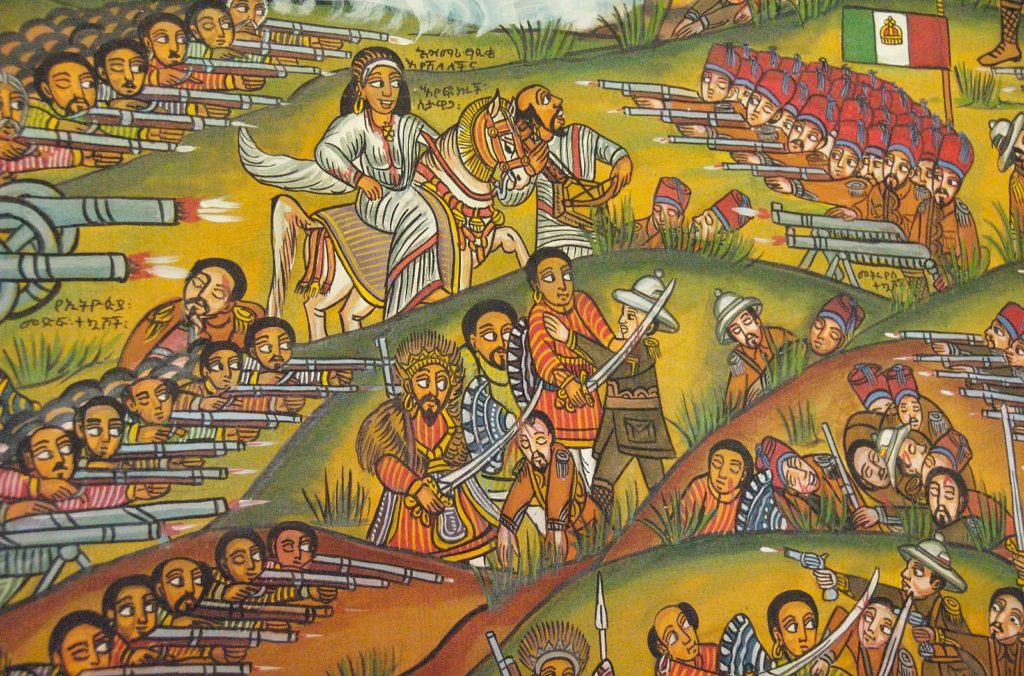
The people of Ethiopia have fought several battles and wars to preserve the dignity and the territorial integrity of their nation throughout its long history. In the 1870s and 1880s, Ethiopia successfully defeated Khedive Ismail Pasha of Egypt, who sought to bring the Nile River basin under his rule, the invading Mahdist army of Sudan and the Italians trying to turn the country into an Italian protectorate under the leadership of Emperor Yohannes IV (1837-1889).
The importance of Adwa
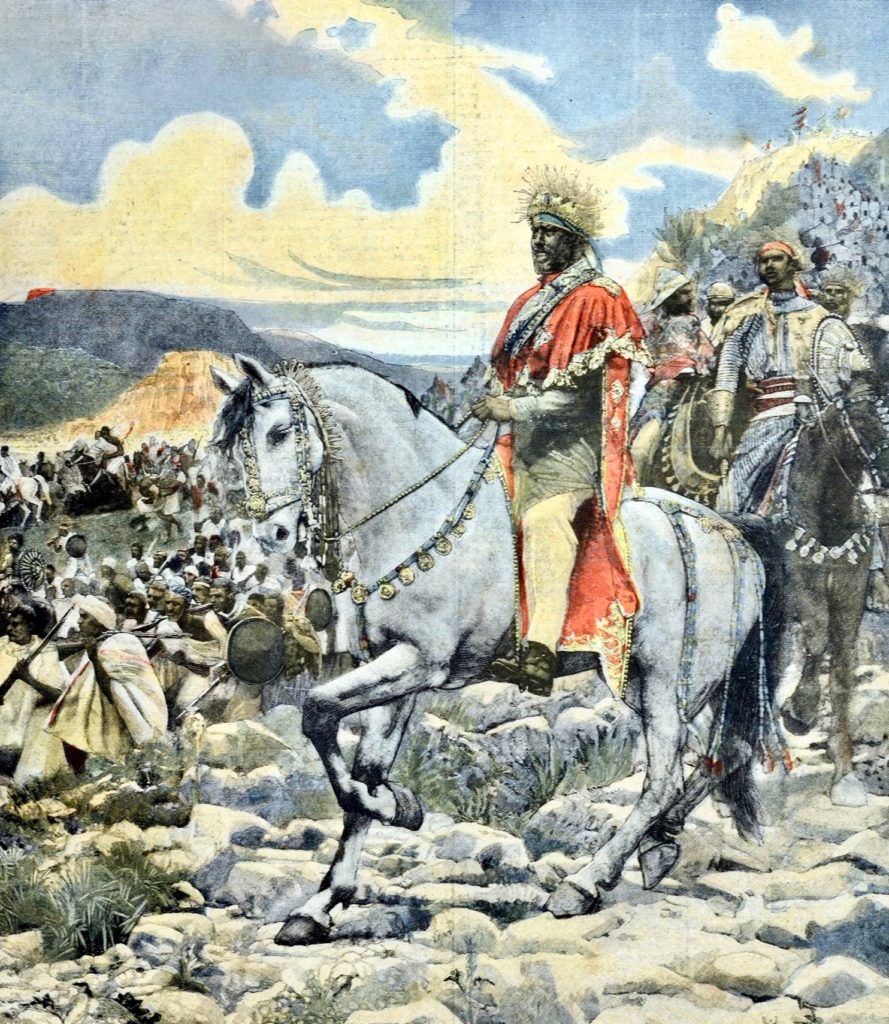
But the Battle of Adwa fought on 1 March 1896 holds a special place in Ethiopian History. By repelling the Italians, Ethiopia, led by Emperor Menelik II, defeated one of Europe’s major powers in an age of relentless European expansion into Africa. This victory changed the country’s destiny and transformed the consciousness of Ethiopians and people of African descent all over the world as a symbol of resistance to colonialism. Thanks to their heroic resistance, Ethiopians managed to remain the only independent African country of that time, which is why they cherish the victory of Adwa for the generations to come. As we celebrate this important part of Ethiopia’s modern history, we should also seize this opportunity to investigate many aspects of that famous chapter, and numerous revelations probably still await us as many aspects of the battle are still not well researched.

Historical Context
It is important to remind the current generation of the historical background of Adwa, the preparation for the battle, its aftermath and the various consequences of the battle, at the local, regional and international levels. In the late 19th century, the opening of Suez Canal in 1896 coupled with the Scramble for Africa by European powers increased the strategic importance of Ethiopia as several European Powers (notably France, Italy and Great Britain) sought influence in the area. Ethiopia was a country with a long history of civil war, but at the same time, it also had its share of resistance against foreign aggression. Egyptians, Sudanese, Ottoman Turks, and Portuguese had all tried and failed to dominate Ethiopia. Emperor Tewodros and Yohannes IV both died to protect the safety and security of their land and peoples.

Tuesday, 29 January 2019

The 5 Deadliest Terrorist Groups on the Planet

Here is a list of the five deadliest terrorist groups that are operating today, and the five that are no doubt at the top of Washington’s radar as at 2014:
 toughest terrorist organization


1.The Islamic State of Iraq and the Levant :

It takes a special kind of terrorist organization to force the world’s most powerful and professional military into action halfway around the globe. The Islamic State of Iraq and the Levant (ISIL, ISIS or simply the Islamic State) is exactly this type of organization: strong enough to rout several divisions of a national army, and rich enough to sustain their operations at an impressive pace.


Estimated by the Central Intelligence Agency to have a size of 31,000 fighters, ISIL has single-handedly swept across an area of the Middle East roughly the size of Belgium. The swift and easy capture of Iraq’s second-largest city, Mosul, by several thousand ISIL fighters in June 2014 had the effect of not only embarrassing the Iraqi government in the eyes of its people, but revealing how poorly led and pathetic the Iraqi security forces had become. Absent President Barack Obama’s decision to authorize targeted airstrikes against ISIL positions in early August, there was a very real possibility that several more divisions of the Iraqi army could have collapsed.

A major difference between ISIL and the litany of other Islamist terrorist organizations competing for fundraising and recruits is that the former is succeeding in a task that not even Al Qaeda could accomplish: capturing territory, holding that territory and declaring an Islamic caliphate in the very heart of the Arab world. And ISIL is doing it in the most brutal way imaginable: rounding up and executing anyone who shows the slightest bit of resistance to its domination. At least four cases of mass killings by ISIL terrorists have been documented, including the execution of 250 Syrian troops in August after the group captured the al-Tabqa air base. Several weeks ago, over 200 Iraqi tribesmen were massacred west of Ramadi in what can only be described as an attempt by ISIL to extinguish any competitor, however passive, who dares to rise up and challenge its authority.

Combined with a Treasury Department study that assesses ISIL’s crude oil revenue at a value of $1 million per day, it’s safe to say that the United States and the coalition it has assembled has a lot of work ahead of them.


Boko Haram :The jihadist group in northeastern Nigeria catapulted to the world’s attention when a boarding school in the Nigerian border town of Chibok was raided in the middle of the night. Around 300 Nigerian schoolgirls were taken captive by Boko Haram militants and threatened with forced marriage and forced conversion.
Yet Boko Haram has been menacing Nigeria’s northern communities for years. Public reports state that the organization was founded in 2002, but it’s activities only reached global spotlight in 2009, when Boko Haram’s new leader, Abubakr Shekau, launched what can only be described as an insurgency against the Nigerian government using nothing but terrorist tactics.
Boko Haram has razed entire villages to the ground, its inhabitants often killed with bullets to the head or burned alive. The Council on Foreign Relations estimates that at least 6,742 people have been killed as a result of Boko Haram’s violence since May 2011—although the murky nature of violence in Nigeria and multiple claims of responsibility guarantee that this is an incredibly conservative figure. No target is off limits for Boko Haram either; last Monday, over fifty schoolchildren were killed in a suicide bombingthat many speculate was a Boko Haram member. This wouldn’t be all that surprising, given the group’s history of destroying schools and burning students alive in their dormitories.

What’s perhaps more discouraging than the actual violence is the inept and incompetent way that the Nigerian government has chosen to fight Boko Haram. The three northeastern states of Borno, Yobe and Adamawa have been locked down and under a state of emergency since May 2013, which has essentially allowed the Nigerian army to use the kinds of tactics that would otherwise be prohibited by international humanitarian law. Extrajudicial killings of suspected Boko Haram sympathizers, many of whom are innocent civilians, are thru the roof, and the abuses have gotten so out of control that the United States has suspended some military equipment to the army.

3. Islamic Revolutionary Guard Corps-Quds Force :

The covert, external operations wing of the elite Revolutionary Guard is not designated a foreign terrorist organization by the United States government (members of Congress have been trying to designate the Quds Force through legislation ), but this highly-secretive branch of the Islamic Republic is nonetheless incredibly effective at what it does: connect with, maintain and support terrorist groups in the region that will enhance Iran’s regional posture and keep its enemies off balance. And that is why the Quds Force is so dangerous.

Led by its mysterious commander, Qassem Suleimani (dubbed “ The Shadow Commander ” by the New Yorker’s Dexter Filkins), the Quds Force is one of the most valuable assets that Iran possesses in its mission to expand its presence in the Arab Middle East and create the kind of leverage that allows Tehran to dictate the terms of the region’s ongoing conflicts. Lebanese Hezbollah, Kataib Hezbollah, Asaib Ahl al-Haq, Hamas, Palestinian Islamic Jihad and Syria’s Bashar al-Assad are all beholden to the Iranians in one way or another, thanks in large part to the money, arms shipments and battlefield advise that the Quds Force provides. In October 2007, the U.S. Treasury Department designated the IRGC-QF as a “ specially designated global terrorist entity ” for its support to a variety of terrorist organizations, including, but not limited to, a yearly donation to Hezbollah of $100-200 million.

The role of the IRGC-QF has only grown in importance. President Bashar al-Assad and his overstretched and tired Syrian army have the Quds Force to thank for pulling his regime away from the brink of implosion. It’s difficult to believe that Lebanese Hezbollah was not pushed by the Quds Force to deploy inside of Syria on behalf of the Assad regime, and it’s equally unlikely that Syria could have established a pro-government militia so effectively on its own. Behind it all, Qassem Suleimani is pulling the strings. As a former CIA operative told the New Yorker , “Suleimani is the single most powerful operative in the Middle East today, and no one’s ever heard of him.”


4. Haqqani Network :

Although the Haqqani network was only designated a terrorist organization by the U.S. State Department in the fall of 2012, the organization has been and remains the most lethal strain of the anti-U.S., anti-ISAF insurgency in Afghanistan. Whenever a high-profile, coordinated terrorist attack occurs in the Afghan capital, Kabul, those watching Afghanistan almost immediately pin the blame on the Haqqanis—a testament not only to its propensity for daring assaults, but its ability to pull them off, despite a heavy Afghan security presence.


It’s not the attacks, however, that make this strand of the wider Taliban insurgency dangerous. Rather, it’s the Haqqanis’ deep tribal relationships in eastern Afghanistan and willingness to work with, facilitate and host other terrorist organizations that strike fear into the hearts of Afghans and Pakistanis alike. Al Qaeda, the Islamic Movement of Uzbekistan, the Pakistani Taliban, the Turkistan Islamic Party and the Quetta Shura Taliban all rely on the Haqqanis for access across the Afghan-Pakistani border or for tactical advice on how to conduct the most effective operations against Afghan and coalition troops. The Combatting Counterterrorism Center at West Point says it best in a lengthy and comprehensive report about the organization:


The Haqqanis have resources, tribal connections, local support, land, manpower and financing that will persist long after U.S. and NATO combat troops withdraw from Afghanistan at the end of 2016. As the Pentagon acknowledged in its own report to Congress on the state of the Afghan conflict, “[t]hey [the Haqqani network] will likely remain the most significant threat to coalition forces in the post-2014 noncombat mission, especially if they are not denied sanctuary in Pakistan.”


5. Kataib Hezbollah :

Large groups of men wearing baklavas raid a house in the dead of night, take several young men into custody, and drag them to a field where they are tortured and executed with bullets to the head. Sounds like the menacing behavior of ISIL, right? Well, there’s another organization using the same exact tactics—wreaking destruction in Iraq and tearing at the country’s social fabric in the process. This time, it’s a Shia militia with close ties to the Iraqi government, the Iraqi army and Iran.


Kataib Hezbollah, formed in 2006 or 2007, was once known for ambushing U.S. troops during their patrols of Iraqi neighborhoods and for placing armored-piercing IED’s on the roads that U.S. Humvees would use. The killing of U.S. soldiers and the frequent rocket attacks that KH would launch directly into Baghdad’s Green Zone landed the group on the U.S. foreign terrorist organization list in 2009. “KH has threatened the lives of Iraqi politicians and civilians that support the legitimate political process in Iraq,” the State Department noted in its designation . It’s hard to argue that this band of Shia fighters has changed their behavior five years later.

In fact, due to the unpredictable collapse of the Iraqi army, Kataib Hezbollah has only grown more powerful and its name has only increased in relevance. The Iraqi government—first under former prime minister Nouri al-Maliki and now under Haider al-Abadi—has come to depend upon informal Shia militias like KH for reinforcing an army that is struggling to chip away at ISIL’s territorial expansion in northern and western Iraq. Militias like KH are now the tip of the spear for the Iraqi counterattack, a fact that was demonstrated quite clearly during the capture of Amerli, when Iran-backed militia groups, Kurdish peshmerga forces and U.S. warplanes teamed up in a tactical alliance to drive ISIL from the area.


Unfortunately, with dependency comes a lack of accountability. Human Rights Watchand Amnesty International , the world’s two premier human-rights organizations, have both documented appalling cases of brutality and violence from KH and its Shia allies. Any Sunni even remotely suspected of tolerating ISIL’s presence is arrested without charge or explanation and either tortured in one of Iraq’s notorious prisons or killed on the spot. It’s not uncommon for a Sunni to be simply kidnapped and threatened with death unless their family members pay a high price for a release. All of these abuses and war crimes occur without any punishment or investigation by the Iraqi army or the government in Baghdad, perhaps fearing that KH and similar militias like Asaib ahl al-Haq will turn against the national authorities in retaliation.

If ISIL elicits shivers and fear in the heart of an Iraqi Shia, Kataib Hezbollah produces the same emotion in an Iraqi Sunni.


This article is not compiled by Allformilitary but sourced from the link below although lightly edited.
SOURCE: David R. D Petres https://nationalinterest.org

Tuesday, 1 May 2018

HOW GOD SHOW HIS SUPREMACY IN A MODERN WAR.

The tenuous nation of Israel stands on alert and the brink of despair. All is quiet. Only a recognized entity for 19 years, the country faces not one, but four well supplied enemies. Outnumbered and under equipped, government estimates of causalities range from 10,000 to total annihilation. The day is June 5th, 1967.


Opposing the small nation is a sizable coalition of forces, supported and supplied primarily by the USSR and Britain. This combined army stands strong at roughly 465,000 troops, 2,880 tanks and 900 aircraft compared to Israel's 264,000 soldiers (of which 200,000 are reservists), 800 tanks, and 300 aircraft. (Israeli History, Six Day War). Days before the war, President Nasser of Egypt declares “The armies of Egypt, Jordan, Syria and Lebanon are poised on the borders of Israel...to face the challenge, while standing behind us are the armies of Iraq, Algeria, Kuwait, Sudan and the whole Arab nation. This act will astound the world. Today they will know that the Arabs are arranged for battle, the critical hour has arrived. We have reached the stage of serious action and not declarations” (Liebler, p. 60)

Israel's one hope, its allies the United States and Britain, stay out of the conflict in both military might and support due to conflicting interests in the middle east and the stigma of the Vietnam war. To make this clear to the world, the US state department declares "Our position is neutral in thought, word and deed" (AP, June 5, 1967). Planning for the worst case scenario, Israel begins to convert its national parks into mass burial grounds and school children dig sand to protect their homes. The UN removes its troops from the Sinai and Israel stands alone.
This tense moment leads up to one of the most amazing victories even perpetrated, but why and how was God involved in this conflict? To answer that question we must look at the Bible and see what the future is for Jerusalem, the land of Israel, and the Jewish people as a whole.
Jerusalem and the surrounding area is the setting for much of the Bible. Most importantly, it was built by God's favored and appointed ruler, King David, who allied the previously scattered 12 tribes under the united nation of Israel. The city is also the home to the first temple, built by David's son Solomon. Thus, history and ancestry strongly connect the Jews to the area, as David and all his descendents are from the tribe of Judah. What connects Christians is that Jerusalem will be the future home of the most important Jew ever born, Jesus Christ, who will unite the tribes and the whole world under his rule and will build a temple that will NEVER be destroyed. This will represent the spiritual building of Jerusalem and the temple, just as David and Solomon fulfilled the physical building. Matthew 5:34 states that Jerusalem will be the “city of the Great King”, referring to Christ and this spiritual kingdom he will build there in the end days.
JUDAH STILL IDENTIFIED AS GOD'S PEOPLE!   The Sabbath Covenant
The historically undisputable fact is that Judah has retained the seventh day Sabbath to this day, and are the most faithful observers of the Sabbath on the face of the earth!  Will you be honest enough to take almighty God at His word, that keeping the Sabbath is the identifying sign between people that keep the Sabbath day and God their CREATOR.  To deny this is to deny God's covenant promise to all true Sabbath keepers.
"Wherefore the children of Israel shall keep the Sabbath, to observe the Sabbath throughout their generations, for a perpetual covenant. It is a sign between me and the children of Israel for ever; for in six days the LORD made heaven and earth, and on the seventh day he rested, and was refreshed." Exodus 31:16-17

While the Jews do not now recognize Christ as their messiah, it is not because they refuse to, its is because they have been blinded by design. When Jesus says “Father forgive them, for they do not know what they do, (Luke 23:34) he is not addressing those specific men who executed the son of God, but all Jews that did not recognize Jesus as the messiah and do not acknowledge him to this day.
Jesus Christ is making the statement that the Jews would not be condemned for the horrible sin that they had unknowingly committed. Because their refusal of the true messiah is all part of the plan set by Christ and God the Father since the beginning of creation (someone had to kill Christ), Judah still is identified as part of God's people, and qualifies to receive aid from heaven when God wills it. The Bible makes it even more apparent that God has a special plan for Judah in the last days. Judah's state of being, which obviously hasn't happened yet, is described in Genesis 49: 8-12.
"Judah, your brothers will praise you; your hand will be on the neck of your enemies; your father's sons will bow down to you. You are a lion's cub, O Judah; you return from the prey, my son. Like a lion he crouches and lies down, like a lioness - who dares to rouse him? The scepter will not depart from Judah, nor the ruler's staff from between his feet, until he comes to whom it belongs and the obedience of the nations is his (JESUS CHRIST)."
This leads us back to the setting of 1967 and the Six Day War. As we know, Israel is not destroyed by overwhelming odds. Instead, in a matter of six days, facing four competent enemies, the small nation miraculously quadruples its land and retakes many holy sites including Jerusalem and the temple mount. Israel reports 760 casualties, while the Arab deaths hover somewhere around 18,000 men (Bard, 1967 War). The conflict is filled with many first hand accounts of awe-inspiring happenings that are hard to explain even today, and bring to mind the scripture in Jeremiah 30: 16-17:
But all who devour you will be devoured; all your enemies will go into exile. Those who plunder you will be plundered; all who make spoil of you I will despoil. But I will restore you to health and heal your wounds,' declares the LORD, 'because you are called an outcast, Zion for whom no one cares.”
Even today, and especially in 1967, this scripture personifies how much of the world hates the Jews and all the rest of the tribes. They secretly detest God's people and especially envy Judah because they have been visibly blessed and protected by God. This is obvious when you see many of the miracles performed, that as a whole, cannot be explained by an other logical force than God's protection of his people and of his holy land.
One of these notable occurrences happens during the capture of the Arab city of Shechem which has been very important to Jews and Christians alike. This city is where God promised Abraham the land before him, the place where Joseph, the father of Ephraim and Manasseh is buried, and the place where Israel would go to accept their kings (Geographical Significance, p 2). Israel is prepared for a bloody and long battle when approaching Shechem. The city is heavily guarded and filled with tens of thousands of inhabitants, all prepared to fight occupation. According to Colonel Uri Banari the army was very surprised when instead they walked into the city unharassed. “At the entrance to Shechem stood thousands of Arabs who waved white handkerchiefs and clapped their hands. In our naiveté, we returned greetings and smiles. We entered the town and wondered: We are advancing and there is no disorder, no panic, the local armed guards stand by with rifles in their hands keeping order, and the crowds are cheering. Suddenly something happened which changed the entire picture in a moment. One of our officers wanted to disarm an Arab guard. When the latter refused, our officer fired a shot in the air. At that moment, all the crowds disappeared and streets emptied out. The Arabs began sniper fire...Only later, did I understand. The residents of Shechem thought that we were the Iraqi forces who were due to arrive from the direction of Jordan. The numerous enemy tanks were (uselessly) situated on the other side of Shechem. They woke up to their error too late" (Eye Witness accounts, Israeli National News).
In other towns, the same interesting pattern followed. Towns that should have take long bloody days to conquer fell in hours. Arab soldiers, veterans of other wars, simply dropped their weapons and ran. "The Arabs were surprised; the fear of the Jews fell upon them. In Hevron, and in Shechem, in Jenin and in Jericho the Arabs were heavily armed. There was not even one small Arab village without arms. With great haste, the Arabs, however, hid their weapons and didn't consider using them. They raised their hands up, and flew white flags of surrender from every edifice. The fear of G-d fell upon hundreds of thousands of proud Arabs, who were filled with hatred and loathing for Israel. Only yesterday, they had sworn to fight until their last drop of blood" (HaTekufa HaGedola, p. 452). The Israelis “approached the heavily defended Kusseima outpost. As the Israelis drew near, they heard massive explosions. When they arrived they saw that the Egyptians, for no apparent reason, had destroyed their equipment and abandoned the base! As the day continued, it became clear that the Egyptians were hastily abandoning many of their outposts, some with all their supplies left behind” (June 5, Chabad).
Another reason for such a quick defeat of the Arab force was air supremacy by Israel. Even though the Jews had many fewer aircraft, on the first day of the war they destroyed most of the Egyptian air force in less than twelve hours (Six Day War, Leeds). Yet the details on how this was accomplished are even more mysterious and interesting. On the first day of the war, “a Jordanian radar facility detected an unusually large number of aircraft heading towards the sea. The officer on duty immediately sent a message, "Inab," the code-word for war, to Jordan military headquarters. The message was encoded and passed on to Egypt’s defense minister in Cairo. Miraculously, however, the Egyptian coding frequencies had been changed the previous day, and the Jordanians were not updated...Though Egypt had sufficient anti-aircraft ammunition to destroy all the attacking Israeli planes, miraculously, no order was given for these missiles to be launched” (June 5, Chabad). Thus the Israelis accomplished their air missions to destroy with practically no resistance after the first day.
In addition to the overwhelming fear by the Arabs, there are also many documented cases of large numbers of adversaries being inexplicably overtaken by just a few Jewish soldiers. In one such incident on the second day of the war, an Arab tank commander surrendered his obviously superior army to an Israeli force of 12 tanks. He later claimed that while only a few enemy tanks were present, a desert mirage made him see hundreds (The Six Day War: Recognizing the Miracle). Yisrael, a paratrooper sent to take the Tiran Straits recalls yet another incident. “The Israeli soldiers didn’t have to parachute out of the airplanes. They landed like spoiled tourists in the airport, because the Egyptian regiment which was on guard there fled before the Israeli trips were visible on the horizon. After landing, I was sent with another reserves soldier, an electrician, to patrol the area...(when) an Egyptian half track appeared before us filled with soldiers and mounted with machine guns on every side. We had only light weapons with a few bullets that couldn’t stop the half track for a second. We couldn’t turn back, so we stood there in despair, waited for the first shot, and for lack of a better idea, aimed our guns at them. But the shots didn’t come. The half track came to a halt, and we decided to cautiously approach it. We found 18 armed soldiers inside sitting with guns in hand, with a petrified look on their faces. They looked at us with great fear as though begging for mercy. I shouted ‘Hands up!’ ...I asked the Egyptian sergeant next to me, ‘Tell me, why didn’t you shoot at us?’ He answered, ‘I don’t know. My arms froze – they became paralyzed. My whole body was paralyzed, and I don’t know why (Eye Witness accounts, Israeli National News).
Israel also found that the Golan Heights of Syria, once thought to be impossible to overtake, fell easily into their hands despite the difficult terrain and strong Syrian fortifications. One such account tells how “Commander Musa Klein’s platoon had only twenty-five men at his disposal (after significant troop losses). But they continued up the Golan heights. When they reached Tel Fakhr, Klein ordered his men to charge the position, unaware that it was one of the most heavily fortified Syrian positions. It had bunkers, trenches and a double row of wire; an arsenal of antitank guns, machine guns and 82mm mortars. The handful of soldiers were worse off than sitting ducks... Syrian Captain Ahmad Ibrahim Khalili gave his men instructions not to fire until the Israelis reached the wire. In no time at all, however, it was too late. In the Syrians' own words: “The Jews are already inside and we’ve taken heavy casualties.” Commander Klein and his men were victorious, and continued up the Heights” (Israeli History, Six Day War). Even more incredible is the chronicle of Ammunition hill “which was captured by an Israeli scout by mistake when he accidentally fell into a Jordanian trench on a moonless night at 2:00 AM and started shooting from the hip.” Not only did this outcome seize the hill but was the critical event that lead to the capture of the old town of Jerusalem, including the wailing wall, only 30 hours later (Six Day War, Recognizing the Miracle).
There are many many more accounts to fill these pages, and perhaps one or two strange happens could be seen as chance. However, when we consider the sheer number of accounts of people who were able to succeed against a superior force against all odds or logic, it is at times overwhelming and suggests a miraculous nature. To demonstrate this point, think of one high ranking west point official who was asked why they do not study the tactics behind arguably one of the most impressive routes in history? He responded that “the US Military Academy studies wars fought throughout the world, they do not study the Six Day War because what concerns West Point is strategy and tactics, not miracles” (Six Day War, p2).Even historians struggle to explain the victory. As one secular newspaper said Even a non-religious person must admit this war was fought with help from heaven” (Eyewitness Accounts, Arutz Sheva).
After all the amazing stories and evidence, one may still wonder why this is relevant to modern day Americans, who at times seem so far removed from the current nation of Israel? However the answer is quite clear. The Jews, be they a small group surrounded by hostile forces, are only a miniscule remnant of the 12 tribes and the only tribe who has not lost its identity. Because they obey God and have retained most of his laws (Sabbath observance, holy days, clean food, the laws of Moses) they have a special covenant to Jerusalem and God the Father that many Americans and people around the world have forgotten they possess. The Jews carry the lineage of the “Conquering Lion of Judah”, Jesus Christ and when Judah finally recognizes Christ, they will become one with him and the rest of Israel. Zechariah 12:8-13:1 describes the time when Judah will embrace Jesus Christ and accept him. “And I will pour out on the house of David and the inhabitants of Jerusalem a spirit of grace and supplication. They will look on me, the one they have pierced, and they will mourn for him as one mourns for an only child, and grieve bitterly for him as one grieves for a firstborn son. On that day the weeping in Jerusalem will be as great as the weeping of Hadad Rimmon in the plain of Megiddo....On that day a fountain will be opened to the house of David and the inhabitants of Jerusalem, to cleanse them from sin and impurity.”
Because of this future repentance, which is already prophesied, Judah will continue to be blessed through Abraham’s physical inheritance, which has never been removed from them. It is important to remember however that the other 10 tribes are a part of that struggle and a portion of God's people too. Eventually the Israeli people, including ALL 12 tribes, will be a united people standing as a clear example that heavenly aid and victory come to those that God has set his hand upon. It is not a Jewish battle, it is our battle, for the place that God himself will inhabit.
Do you have ears to hear?

Friday, 30 March 2018

Top snipers in the world

We’ll introduce you to the deadliest snipers of today and from the history books. These men represent the pinnacle of marksmanship, and are all fascinating characters in their own right. Some, such as Chris Kyle have become household names. We encourage you to do your own research after reading our short bios, though, since these snipers are each well worth more of your time to learn about!

Deadliest snipers in the world

Corporal Rob Furlong- Canadian Army
www.afomicworld.blogspot.com
Corporal Rob Furlong held the record for the longest-distance kill shot from 2002-2009 (2,657 yards). His achievement is particularly remarkable, as the previous record had lasted several decades, since the Vietnam War.
Furlong was a self-trained sniper who taught himself to fire ambidextrously. Born in Newfoundland, he enlisted with the Canadian Army and took his first tour of duty in Afghanistan at the beginning of the NATO invasion.
His record-breaking shot took place during an operation in which his unit were tasked with stopping several Al Qaeda fighters from taking a strategic mountainside position. Firing with a sniper weapon against an enemy combatant carrying a machine gun, Furlong’s first two shots missed, but he had already fired his third before they hit! So great was the distance that the shots didn’t hit their target until a full 4 seconds after they’d left his gun.
According to analysts, he was helped in his feat by the much lower air density of the location. In other environments, he would have been far beyond his weapon’s effective range. This is commonly held to be the reason why several NATO soldiers have set range records for sniping in the Middle East, aside from improved weaponry.
Unfortunately, history may not remember Furlong entirely kindly. After returning to Canada, he took a job in the Edmonton Police Department. During a drunken episode, he harassed colleagues and even urinated on one. He was dismissed in disgrace. He currently runs his own marksmanship academy.
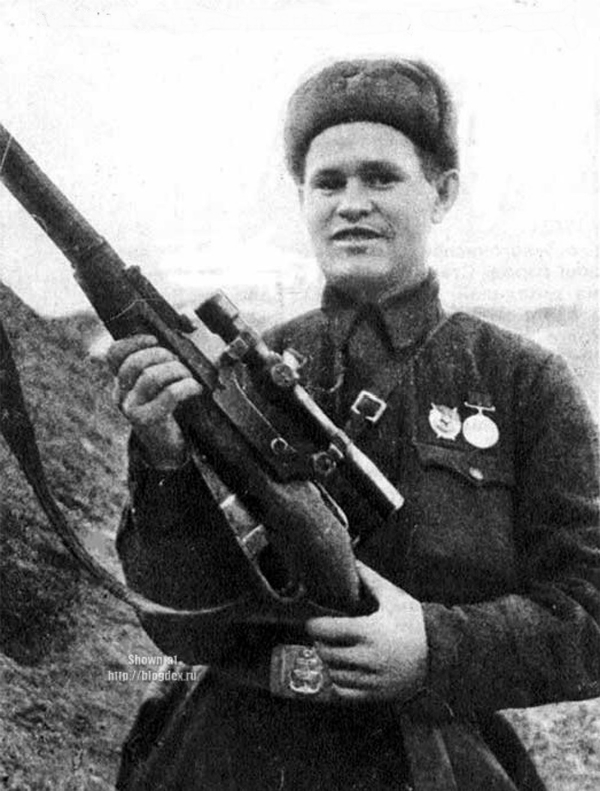
Sergeant Vasily Zaystev

Zaystev is one of the great snipers of history, especially during the last century. His most notable conflict was the Battle of Stalingrad. That episode of his life is now well-represented by the film Enemy At The Gates, in which Zaystev is played by Jude Law. We highly recommend watching it, if you haven’t already!
Zaystev’s story is remarkable in that it almost didn’t happen. He was serving as a clerk in the Red Army at the time of the Battle of Stalingrad, and probably wouldn’t have seen active duty had he not volunteered to join the front lines.
During the battle, he racked up 242 confirmed kills as a military sniper. A majority of his shots are thought to have been well over 1000 meters in the range. Most remarkably, he claims in his memoir to have personally conducted a vendetta against a rival German sniper, who he killed over the course of a 3-day, long-range duel. He kept the German’s scope as a memento. His feats in the service of the USSR earned him the Four Orders of Lenin Award among many other accolades.
Sergeant Chris Kyle United States Army Seal

It’s hard to think of any sniper in history with more name recognition than Chris Kyle, more commonly referred to as The American Sniper. Sgt. Kyle’s military record includes an impressive 160 confirmed kills. According to his autobiography, he believed he had probably killed more like 250 enemy fighters during his tours of duty.
By virtue of his prowess in the field, Kyle received five Bronze Star medals, and various Marine Corps Medals and Corps Commendation Medals as well. Most famously, he wrote a bestselling book entitled American Sniper. In it, he reflected on his tours of duty, as well as his struggles to return to civilian life once back in the States.
As you’ll no doubt know, a film adaptation of Kyle’s memoir was produced by Clint Eastwood and became one of the most poignant and popular films of the year.
Sadly, Sgt. Kyle’s story has a tragic end. Despite being relatively young when he returned from combat, Sgt. Kyle is no longer with us. He had made an effort to reach out to fellow vets during his time back in the States, and a fellow veteran who suffered from PTSD killed Kyle and his friend Chad at a shooting range in 2013.
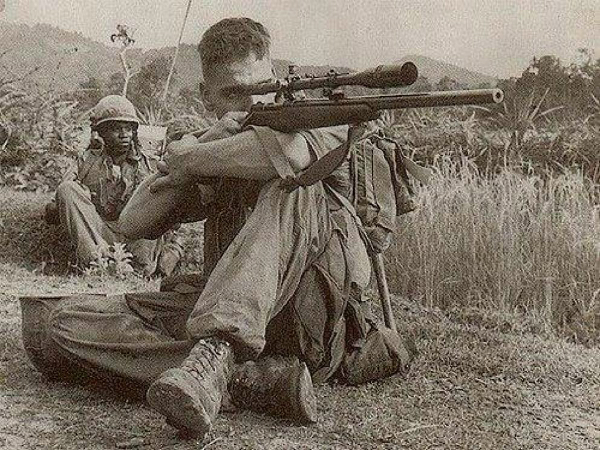
Sergeant Carlos Norman Hathcock- USA Military

Alongside Chris Kyle, Sergeant Carlos Norman is one of the most exceptional snipers that the USA has ever seen. Although his kill count is not as high as that of Kyle, he earned a place in the history books by inspiring fear and hatred among the North Vietnamese during the 1960’s. Over the course of the Vietnam War, Hathcock became one of the most sought-after targets of the North. In fact, they went so far as to place a $30,000 bounty on his head. That was extraordinarily high at the time for any enemy personnel, let alone a combatant.
Despite notching just under 100 kills, far less than Sgt. Kyle, Hathcock remains a hero and inspiration to snipers today. He’s actually mentioned in the American Sniper book. Until 2002, he was the record holder for the longest recorded kill distance: 2,500 yards. Most impressively, he hadn’t even been using a sniper rifle. He’d jimmy-rigged a sniper scope onto a Browning machine gun! His courage extended to far more than taking bold shots, though. He once pulled seven comrades off a burning track by himself, after they had been hit by an anti-tank explosion. Despite suffering serious injuries himself, he saw them all to safety.
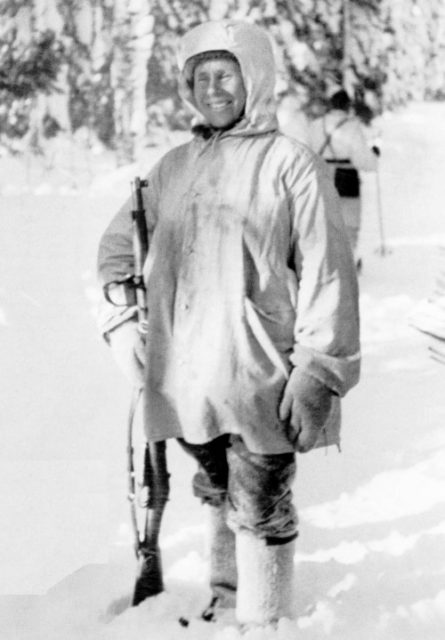
Corporal Hayha-Finland Army

Simo Hayha is commonly held to be the deadliest sniper in world history. He was a Finnish officer during World War II, and earned the nickname White Death from the Red Army. Hayha was so effective that he singlehandedly notched 542 confirmed kills, and kept his own unofficial tally which reached 705! Assuming that his meticulous notes are correct, that easily makes him the most effective sniper who’s ever taken to the field.
His story is a fascinating one: drafted after the Soviet invasion of Finland, the diminutive Hayha quickly earned a reputation as a crack shot. He was so effective against the Soviets that a Red Army sniper was personally dispatched to eliminate him. The sniper never returned to the USSR. Neither did any of the many other snipers sent to kill Hayha, who had become one of the top targets of the Red Army.
Famously, he believed that the fog of his breath would condense and give away his position, so he insisted on keeping a mouthful of snow until he was safely behind friendly lines.
Despite being shot in the face toward the end of WWII, he survived after 13 days of unconsciousness and became a figure of both national and international legend. He lived to the ripe old age of 96, finally dying in 2002.
Unnamed Royal Marine, UK

The current title for World’s Deadliest Sniper (still living) is thought to be an unnamed Corporal in the British Royal Marines. According to military officials, and reported in The Telegraph, he has notched 173 confirmed kills fighting the Taliban in Afghanistan. That bests the previous record, held by Sgt. Chris Kyle.
This sniper has remained unnamed, as the British military fears that he would become a Taliban target if his identity were revealed. He still inspires fierce loyalty among comrades and new recruits, especially since he is known to have taken down 90 enemy combatants in a single day of fighting.

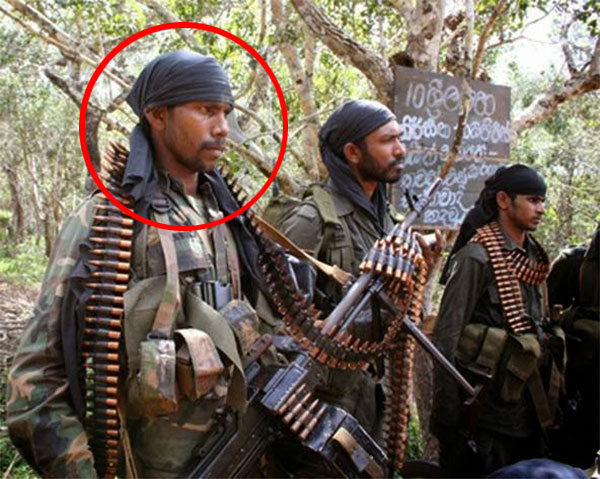
Ranjith Premasiri Madalana, 180 kills, Sri Lanka

Ranjith Premasiri Madalana
kithmal-photography
Not much is known about this Sri Lankan soldier, except that he had 180 confirmed kills against LTTE. He would later be killed by an enemy sniper in 2009.

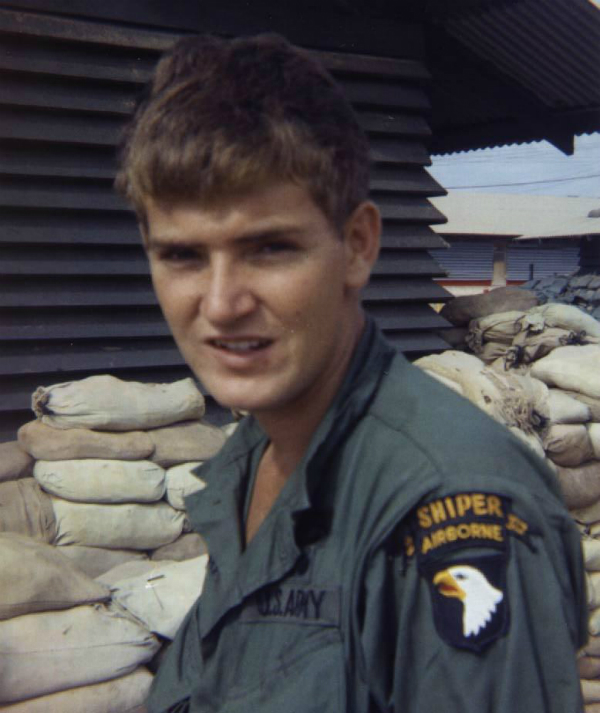
Adelbert Waldron, 109 kills, USA

Adelbert Waldron
Infantry.com
One of the most accurate shots, Waldron had the highest number of kills in the Vietnam War. It is said that once he and his fellow soldiers, while riding along the Mekong river, were attacked by an enemy sniper from the shore 900 metres away. While the rest of the soldiers looked hard to spot the sniper, Waldron picked up his rifle and killed the perpetrator sitting on top of a coconut tree with a single shot. That this was done from a moving platform is an incredible feat in itself. By the end of the war, he had amassed some 109 confirmed kills.

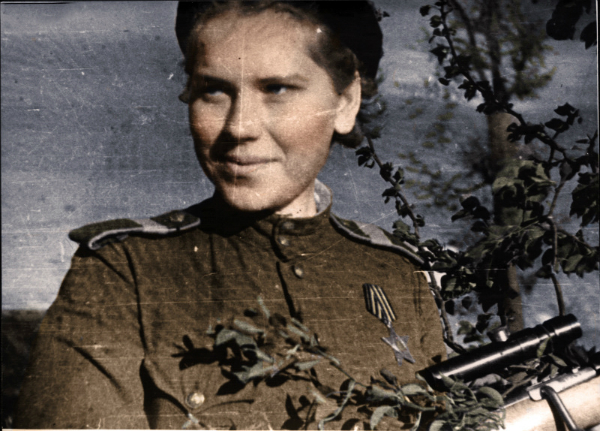
Roza Shanina, 59 kills, Soviet Union

Roza Shanina

She joined the army after her brother was killed in 1941, and in a short career, managed to kill 59 enemy soldiers. She soon rose through the ranks and was awarded Orders of Glory and Medal of Courage. And courageous she was. She was killed while shielding her commanding officer in an artillery attack at the age of 20.

 I hope you enjoy todays post thanks for reading.


Monday, 5 March 2018

The great Secret Service Organization - Britain's MI6


MI6 headquarters

“Bond. James Bond.” Though they may not refer to their agents as “00” anything, MI6, more officially known as the Secret Intelligence Service, is still a crack intelligence agency. MI6 actually stands for “Military Intelligence, Section 6” and is comparable to the C.I.A. in America. It’s sister organization, MI5 is the security service responsible for protection from domestic threats, much like the F.B.I. or Department of Homeland Security. Of course, any intelligence agency builds up its share of secrets and interesting facts over many years of service, and MI6 is no different.
MI6 was founded just before world war two, when the British government was worried about the rise of the German empire, and feared their spies. It was public opinion at the time that all German’s living in England were spies. They built their own network of spies to combat this problem, known as Military Intelligence Six. Originally there were two sections of what was known as the Secret Service Bureau, the army section, and the naval section. The army section concentrated on intelligence inside the country, and the naval section was concerned with foreign espionage.

Wrong Letter

Though the head of MI6 in the James Bond films always uses the letter “M”, in the real world, the head of the service is actually referred to as “C”. This originated with the first leader of the organization, Sir Mansfield Cumming, who signed everything “C”. All subsequent heads of MI6 are also referred to as this, regardless of what his or her real name is. “C” always writes and signs every document in green ink.

Different Branches

At one point, there were 19 different Military Intelligence branches. MI1 handled the management of information, MI11 was responsible for codebreaking, MI2 for Russian and Scandinavian Intelligence, MI4 for aerial reconnaissance, and so on. Eventually, many of these branches were absorbed into MI5 or MI6.

Headquarters

MI6 Headquarters is in Vauxhall Cross, first seen as the home of MI6 for the Bond films in “The World Is Not Enough”. It was completed in 1994 and the price tag was rumoured at £130 million. Much of the building is underground to protect more sensitive materials and the layout is protected by the Official Secrets Act.

Out of the Shadows, Into the Light

MI6 was born as the Secret Service Bureau in 1909 and its existence was not fully disclosed until 1994.

Undisclosed Age

The official retirement age for senior MI6 staff is a secret. Only the Intelligence and Security Committee know what the age is.

Smiley’s People

John le Carre, the author responsible for “Tinker, Tailor, Soldier, Spy” and “Smiley’s People” was himself a MI6 agent. “TTSS” is based on the infamous Cambridge Five: Guy Burgess, Donald Maclean, Anthony Blunt, John Cairncross, and Kim Philby, who were recruited as university students by the Soviets and became moles for the KGB. Le Carre changed his name from David John Moore Cornwell as agents aren’t allowed to publish under their own names. In addition to la Carre, author Graham Greene was also an MI6 agents. Ian Fleming was not with MI6 but with Naval Intelligence during the war which inspired his creation of James Bond.

Make Cupcakes, Not Bombs

MI6 agents hacked an Al-Qaeda online magazine and replaced instructions for bomb-making with cupcake recipes.

The Digital Age

Much like the CIA finally signing up with Twitter, MI6 has gone online with its own webpage. There visitors can learn about the history of the agency, search for jobs, and take a virtual tour of the organization.

Cool Gadgets

Super spy gadgets were a very real thing, though maybe not to the extent of having magnetic watches and grenade pens. Real spies used technology like cameras in matchboxes and brushes with secret compartments.

Notable Spies just like the legendary james bond.
 Roald_Dahl
Writer Roald Dahl was a spy for MI6. Dahl’s job was to gain as much information from US women as possible, mainly by sleeping with them. James Bond was based on a real person named Biffy Dunderdale. His full name is Commander Wilfred Dunderdale, he was nicknamed Biffy because he was a brilliant navy boxer. He was head of the secret service station in Paris, and “Had a penchant for pretty women, and fast cars”. He was also friends with Ian Fleming, the man who wrote James Bond. John Le Carre, who wrote Tinker, Tailor, Soldier, Spy was an MI6 agent who wrote under a pseudonym. Tinker, Tailor, Soldier, Spy was also based on the Cambridge Five, a group of double agents.

First World War
wikipedia.com
As soon as World War One started MI6 were able to arrest 21 German spies living in the UK. MI6 had trouble gaining information during the first world war as it couldn’t establish a spy network in Germany but only in the countries surrounding it. However they did still gain some valuable information. After 1917 MI6 became increasingly worried about the growth of Communism, and underestimated the threat of Nazism. The British had set up anti-bolshevik groups in Russia to execute sabotage and subversion. They even tried to assassinate Lenin at one point, but the plan failed.

MI6 Bribed Spain With $200 Million
dollar-941246_1920
Britain bribed Spain with $200 million in order to keep them neutral. Britain began to fear that Spain would join forces with Hitler and the Nazi’. They spent £14 million bribing Spanish officials in order to convince them to stay neutral, which is about $200 million in today’s money.

World War Two
Bundesarchiv_Bild_183-R69173,_Münchener_Abkommen,_Staatschefs

Just before the war, their attention switched from communists to Nazis. Although they recognised the Nazis as a threat during the thirties they had a cordial relationship with the Gestapo until 1937. The Gestapo would provide the British with information on communists. During world war two MI6 worked tirelessly to decipher secret German messages sent using the undecipherable Enigma machine. The Enigma machine would consistently change it code, and did it so frequently that it was impossible for any human to crack. In the end they only managed to crack the code, when mathematician Alan Turing created the Turing machine, which was the world’s first computer. Cracking this code was one of the main reasons we won the war against the Axis power. During World War Two, the SIS operated under the code name Interservice Liaison Department.

The Cambridge Five
Kim_Philby (1)
The Cambridge Five were a group of students recruited by the SIS at Cambridge. They betrayed their countries, acted as double agents for the Soviets, and became the most notorious spies in British history. Only four of their identities have been revealed, one member’s identity still remains elusive. One of the members, Philby, was actually appointed head of the Anti-Soviet division, even though he was a double agent. He had a good reputation, and likely would have climbed high up the ranks in MI6, if not for one disastrous incident. Philby’s reputation was damaged when it became clear he had warned two double agents, who were also members of the Cambridge Five. Philby escaped and defected to the SovietUnion.

MI6 In The Americas
globe-1290379_1920
A secret organisation known as the British Security Co-ordination was set up in the Americas in May 1940. It was headed by William Stephenson and it’s objective was to investigate enemy activities, prevent sabotage, and make the public think favourably of the British. They also set up Camp X in Canada. Camp X trained clandestine officers, and managed to establish a telecommunications relay station, named Hydra.

The Impossible Death
body-20569_1920
In 2010 a British spy was found dead, stark naked, inside of a duffel bag which had been locked from the outside. The Metropolitan police claimed that he accidentally locked himself in the bag, but who would believe that. The bag was padlocked from the outside, and the key as underneath his body. The police spent three years investigating this before concluding that he did it to himself by accident. The coroner believes that a third party was involved partly because the victim’s fingerprints were not found on the padlock. It seems obvious that he couldn’t possibly have done all this himself so why the police give such a strange explanation is a mystery.
Ronnie Biggs

Ronnie-Biggs-celebrates-70th-birthday-1999
Ronnie Biggs was a part of the Great Train Robbery in 1963, and arrested by the police. Two years later he escaped from prison. He spent 36 years living as a fugitive, during that time he became a punk rock icon, a news anchor, was kidnapped and released by MI6, and then finally turned himself in at the age of 69. Biggs spent most of his time as a fugitive living in Australia and Brazil. He became one of the most famous fugitives in the world while he was on the run. He was born during World War Two, and evacuated to the countryside. Eventually he joined the Royal Air Force but was dishonourably discharged.

Mansfield’s Leg
Sir_Mansfield_Cumming_1859-1923_First_Chief_of_the_Secret_Service_lived_and_worked_here_1911-1922

When Mansfield was interviewing potential spies he would often stab himself in his wooden leg in order to see how they reacted, and whether they could stay calm in such a strange situation. He would also stab his leg during an argument in order to emphasize a point. While getting around he would ride on a scooter to support his wooden leg. Mansfield lost his leg after getting into a car accident in France. He used to make up fantastical stories of how he lost his leg whenever people asked. While in meetings he would stab his leg without reason just to shock people. Mansfield also discovered that semen made incredible invisible ink, which led to the saying “Every man his own stylo”.

Whoops

Social media nearly lost the current “C”, Sir John Sawers, his job when his wife posted a great deal of his family’s personal information to her Facebook profile. The information included the couple’s home address and the locations of their three children. Fortunately for him, the data was later removed.

Wednesday, 21 February 2018

THE HEROIC DEEDS OF THE INDIA INTELLIGENCE ORGANISATION

From foiling evil terrorist plots to maintaining the secrecy of major nuclear programmes, Indian intelligence agencies have always proved their mettle. RAW or Research & Analysis Wing is India’s primary foreign intelligence agency, which was formed in 1968 with Rameshwar Nath Kao as its first chief. It is touted as one of the most fearsome agencies in the sub-continent.
Let’s have a look at some of the missions undertaken by RAW which rightfully prove that it is in fact, one of the best intelligence agencies around.

1971_Bangladesh-Surrender


RAW played an important role in supporting Bangladeshi guerilla organisation Mukti Bahini, and providing them with training, intelligence and ammunition. RAW also disrupted Pakistani army’s movement in East Pakistan. Its para-millitary wing, Special Frontier Force supported in Bangladesh Independence Movement operations. The end result was the successful creation of Bangladesh.

2. Operation Smiling Buddha- Succesfully kept India’s first nuclear test a secret

Smiling-Buddha

RAW played a key role in maintaining the secrecy of the first nuclear test by India in 1974. It was in fact, such a secret mission that even the intelligence agencies of countries like China and USA were unaware of any such activity by India.

3. Operation Kahuta – RAW’s most daring operation which was eventually botched due to a silly mistake

a978_kahuta_research_labs_2050081722-20148
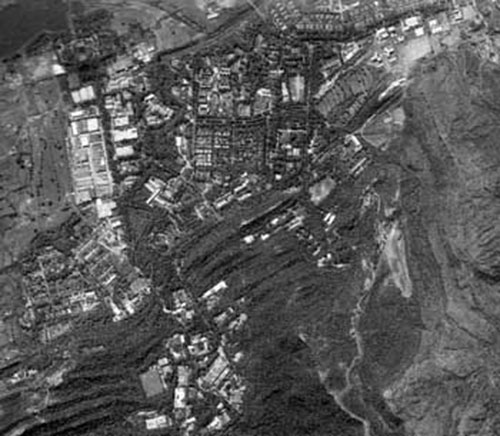
The site of Pakistan’s main nuclear weapons laboratory, Kahuta, is also the site to one of RAW’s most daring operations ever. Operation Kahuta was started with the purpose of infiltrating Pakistan’s nuclear energy installations. The operation was botched when the then prime minister Mr. Morarji Desai inadvertantly informed Pakistan’s then President Zia-Ul-Haq, that India knew about Pakistan’s nuclear program. As a result, Pakistan traced all the sources of RAW in Kahuta and many RAW agents were killed.

4. RAW was able to place a spy as a ‘Major’ in the Pakistan Army – ‘The Black Tiger’ Ravindra Kaushik

blacktiger
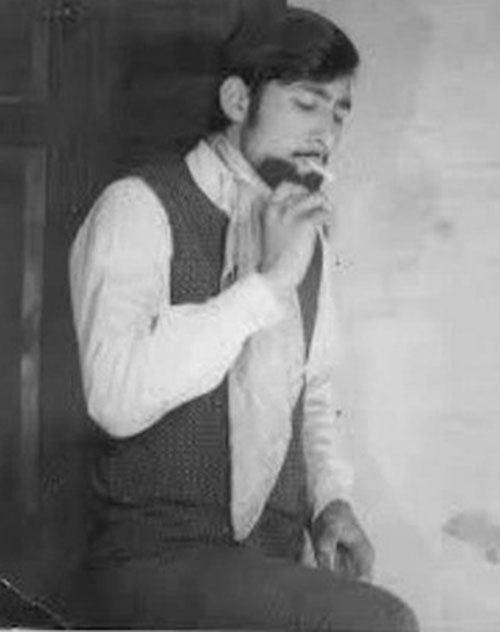
Ravindra Kaushik, was a famous theatre artist in his earlier days. He was spotted by RAW officials during one of his dramatic meet and was contacted and offered the job of an undercover agent. In 1975, he was sent to Pakistan where he managed to join Pakistani army and rose to the rank of ‘Major’. Kaushik was instrumental in saving thousands of Indian lives and gave invaluable information to the Indian intelligence agencies. He was conferred the title of ‘Black Tiger’ by RAW.

5. Operation Meghdoot – Precise intelligence and preemptive strike helped India gain control over Siachen

operation-meghdoot
In 1984, RAW intercepted vital information which showed that Pakistan was planning an incursion in the Siachen glacier. This information helped army in pre determining Pakistan’s actions and to launch Operation Meghdoot to take control of Siachen Glacier before Pakistan could launch any operation. It resulted in Indian domination of all major peaks in Siachen.

6. Operation Cactus – RAW helped restore order in Maldives within hours

Image source
In November 1988, Maldives was invaded by Tamil rebels. It prompted the president of Maldives, Maumoon Abdul Gayoom, to seek help from India. With orders from Indian Prime Minister Mr. Rajiv Gandhi, Indian Army sent 1600 troops by air to restore order in Maldives. RAW played a key role in this operation too by providing the army with necessary intelligence. The Indian paratroopers, after landing at Maldivian island Hulhule were able to restore the Government rule within hours.

7. Kargil war -Intercepted conversation which provided the proof of Pakistani involvement in the war

kargil

R&AW was successful in intercepting a telephonic conversation between Pervez Musharraf, the then Pakistan Army Chief and his chief of staff Lt. Gen. Mohammed Aziz, which gave the proof of Pakistani army’s involvement in Kargil. Before the interception of this conversation, Pakistan refused any links to the Kargil war. This tape was instrumental in proving Pakistani involvement in the Kargil incursion.

8. Operation Chanakya – To Infiltrate separatist groups and to restore peace in Kashmir

chanakya

RAW undertook Operation Chanakya to infiltrate various separatist groups inside Kashmir. Their major success was in neutralising the terrorist activities in the valley. It successfully collected evidence regarding ISI’s involvement with the separatist groups and other terrorist activities. They were also able to create a split in the terrorist organization, Hizb-ul-Mujahideen and create pro-Indian groups in Kashmir.

9. Anti Apartheid movement – Trained African intelligence officers and helped in anti- Apartheid struggle 

RAW was involved in the anti-apartheid struggles in South Africa and Namibia. They even trained the intelligence officers of many independent African countries and deputed retired RAW officers to work in training institutes of intelligence agencies of some African countries.

10. Mumbai attacks – Successfully  tapped conversations between terrorists and their handlers

mumbai
Did you know that RAW had intercepted several telephone calls which pointed at impending attacks on Mumbai Hotels by Pakistan-based terrorists about 2-6 months before the actual attacks? However no action was taken due to coordination failure. Also, it were the RAW technicians who were able to tap into the network, monitored the six phones used by the terrorists and recorded conversations between the terrorists and their handlers.
11. Snatch Operations – With help from IB, nabbed major criminal masterminds in different countries

Snatch-operations
Remember the climax in Akshay Kumar starrer ‘Baby’ in which they nab the chief of terrorists, bring him to India discretely, question him and then arrest him formally. Well, that is actually how snatch operations are performed. Snatch operations are covert operations in which a suspect is nabbed in a foreign country, brought to India, interrogated at unknown sites and then arrested formally at an airport or border post. RAW has been performing snatch operations in the neighbouring countries to bypass the lengthy extradition process. Some famous successful snatch operations include the arrest of Lashkar militant Tariq Mehmood and Abdul Karim Tunda, one of the handlers of Mumbai attacks, Sheikh Abdul Khwaja, Yasin Bhatkal, leader of terrorist organization Indian Mujahideen etc.
This is just some of the information which has been declassified and readily available, there so much about these secret warriors that we don’t even know. If you are an Indian just  feel safe & proud knowing that these silent guardians are protecting your country. Jai Hind!

Friday, 26 January 2018

Role of women in wars

Women in World War Two

As in World War One, women played a vital part in this country’s success in World War Two. But, as withWorld War One, women at the end of World War Two, found that the advances they had made were greatly reduced when the soldiers returned from fighting abroad.
At the end of World War Two, those women who had found alternate employment from the normal for women, lost their jobs. The returning soldiers had to be found jobs and many wanted society to return to normal. Therefore by 1939, many young girls found employment in domestic service – 2 million of them, just as had happened in 1914. Wages were still only 25p a week.
When women found employment in the Civil Service, in teaching and in medicine they had to leave when they got married.
However, between the wars, they had got full voting equality with men when in 1928 a law was passed which stated that any person over the age of 21 could vote – male and female.
The war once again gave women the opportunity to show what they could do.
Evacuation:
Young mothers with young children were evacuated from the cities considered to be in danger. In all, 3.5 million children were evacuated though many went with a teacher. As young children were normally taught by females, many of those who went with the children were women. The fact that women were seen to be the people who taught the youngest was something that had been going on for years.
The Women’s Land Army:
As in World War One, women were called on to help on the land and the Women’s Land Army (WLA) was re-formed in July 1939. Their work was vital as so many men were being called up into the military.
www.afomicworld.blogspot.com

In August 1940, only 7,000 women had joined but with the crisis caused by Hitler’s U-boats, a huge drive went on from this date on to get more women working on the land. Even Churchill feared that the chaos caused by the U-boats to our supplies from America would starve out Britain.
The government tried to make out that the work of the WLA was glamorous and adverts showed it as this. In fact, the work was hard and young women usually worked in isolated communities. Many lived in years old farm workers cottages without running water, electricity or gas. Winter, in particular, could be hard especially as the women had to break up the soil by hand ready for sowing. However, many of the women ate well as there was a plentiful supply of wild animals in the countryside – rabbit, hares, pheasant and partridges. They were paid 32 shillings a week – about £1.60.


In 1943, the shortage of women in the factories and on land lead to the government stopping women joining the armed forces. They were given a choice of either working on the land or in factories. Those who worked on land did a very valuable job for the British people.
Factory Work:
Many women decided that they would work in a factory. They worked in all manner of production ranging from making ammunition to uniforms to aeroplanes. The hours they worked were long and some women had to move to where the factories were. Those who moved away were paid more.
Skilled women could earn £2.15 a week. To them this must have seemed a lot. But men doing the same work were paid more. In fact, it was not unknown for unskilled men to get more money that skilled female workers. This clearly was not acceptable and in 1943, women at the Rolls Royce factory in Glasgow went on strike. This was seen as being highly unpatriotic in time of war and when the female strikers went on a street demonstration in Glasgow, they were pelted with eggs and tomatoes (presumably rotten and inedible as rationing was still in) but the protesters soon stopped when they found out how little the women were being paid .The women had a part-victory as they returned to work on the pay of a male semi-skilled worker – not the level of a male skilled worker but better than before the strike.
The Women’s Voluntary Service (WVS):
During the Blitz on London women in voluntary organisations did a very important job. The Women’s Voluntary Service provided fire fighters with tea and refreshments when the clear-up took place after a bombing raid. The WVS had one million members by 1943. Most were quite elderly as the younger women were in the factories or working on farms and were too exhausted to do extra work once they had finished their shift. The WVS also provided tea and refreshments for those who sheltered in the Underground in London. Basically, the WVS did whatever was needed. In Portsmouth, they collected enough scrap metal to fill four railway carriages……..in just one month. They also looked after people who had lost their homes from Germans bombing – the support they provided for these shocked people who had lost everything was incalculable. When the WVS were not on call, they knitted socks, balaclavas etc. for service men. Some WVS groups adopted a sailor to provide him with warm knitted clothing.


The Auxiliary Territorial Service:
In the military, all three services were open for women to join – the army, air force and navy. Women were also appointed as air raid wardens.
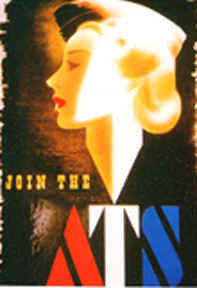
In the army, women joined the Auxiliary Territorial Service (ATS). Like soldiers, they wore a khaki uniform. The recruiting posters were glamorous – some were considered too glamorous by Winston Churchill – and many young ladies joined the ATS because they believed they would lead a life of glamour. They were to be disappointed. Members of the ATS did not get the glamour jobs – they acted as drivers, worked in mess halls where many had to peel potatoes, acted a cleaners and they worked on anti-aircraft guns. But an order by Winston Churchill forbade ATS ladies from actually firing an AA gun as he felt that they would not be able to cope with the knowledge that they might have shot down and killed young German men. His attitude was odd as ATS ladies were allowed to track a plane, fuse the shells and be there when the firing cord was pulled……By July 1942, the ATS had 217,000 women in it. As the war dragged on, women in the ATS were allowed to do more exciting jobs such as become welders (unheard of in ‘civvie’ street), carpenters, electricians etc.
women_3
The recruiting poster for the ATS banned by Churchill

The Women’s Auxiliary Air Force:
Women who joined the Royal Air Force were in the Women’s Auxiliary Air Force (WAAF). They did the same as the ATS (cooking, clerical work etc) but the opportunities were there for slightly more exciting work. Some got to work on Spitfires. Others were used in the new radar stations used to track incoming enemy bomber formations. These radar sites were usually the first target for Stuka dive-bombers so a post in one of these radar stations could be very dangerous. However, the women in this units were to be the early warning ears and eyes of the RAF during the Battle of Britain. For all of this, women were not allowed to train to be pilots of war planes. Some were members of the Air Transport Auxiliary (ATA) which flew RAF planes from a factory to a fighter squadron’s base. There were 120 women in this unit out of 820 pilots in total. The women had fewer crashes than male pilots but they were not welcome as the editor of the magazine “Aeroplane” made clear : they (women ATA) “do not have the intelligence to scrub the floor of a hospital properly.” He , C.G. Grey, claimed that they were a “menace” when flying.
Secret Agents:
Women were also used as secret agents. They were members of SOE (Special Operations Executive) and were usually parachuted into occupied France or landed in special Lysander planes. Their work was exceptionally dangerous as just one slip could lead to capture, torture and death. Their work was to find out all that they could to support the Allies for the planned landings in Normandy in June 1944. The most famous female SOE members were Violette Szabo and Odette Churchill. Both were awarded the George Cross for the work they did – the George Cross is the highest bravery award that a civilian can get. Both were captured and tortured. Violette Szabo was murdered by the Gestapo while Odette Churchill survived the war.
Entertainment:
Women were also extremely important in entertainment. The two most famous female entertainers during the war were Vera Lynn (now Dame Vera Lynn) and Gracie Fields. Vera Lynn’s singing (“There’ll be blue birds over the White Cliffs of Dover” and “We’ll meet again, don’t know where, don’t know when”) brought great happiness to many in Britain. She was known as the “Forces Sweetheart”. Gracie Fields was another favourite with the forces.
1945:
The war in Europe ended in May 1945. At this time there were 460,000 women in the military and over 6.5 million in civilian war work. Without their contribution, our war effort would have been severely weakened and it is probable that we would not have been able to fight to our greatest might without the input from women. Ironically, in Nazi Germany, Hitler had forbidden German women to work in German weapons factories as he felt that a woman’s place was at home. His most senior industry advisor, Albert Speer, pleaded with Hitler to let him use German female workers but right up to the end, Hitler refused. Hitler was happy for captured foreign women to work as slaves in his war factories but not German. Many of these slave workers, male and female, deliberately sabotaged the work that they did – so in their own way they helped the war effort of the Allies.

While in America
During World War II, some 350,000 women served in the U.S. Armed Forces, both at home and abroad. They included the Women’s Airforce Service Pilots, who on March 10, 2010, were awarded the prestigious Congressional Gold Medal. Meanwhile, widespread male enlistment left gaping holes in the industrial labor force. Between 1940 and 1945, the female percentage of the U.S. workforce increased from 27 percent to nearly 37 percent, and by 1945 nearly one out of every four married women worked outside the home.
In addition to factory work and other home front jobs, some 350,000 women joined the Armed Services, serving at home and abroad. At the urging of First Lady Eleanor Roosevelt and women’s groups, and impressed by the British use of women in service, General George Marshall supported the idea of introducing a women’s service branch into the Army. In May 1942, Congress instituted the Women’s Auxiliary Army Corps, later upgraded to the Women’s Army Corps, which had full military status. Its members, known as WACs, worked in more than 200 non-combatant jobs stateside and in every theater of the war. By 1945, there were more than 100,000 WACs and 6,000 female officers. In the Navy, members of Women Accepted for Volunteer Emergency Service (WAVES) held the same status as naval reservists and provided support stateside. The Coast Guard and Marine Corps soon followed suit, though in smaller numbers.
One of the lesser-known roles women played in the war effort was provided by the Women’s Airforce Service Pilots, or WASPs. These women, each of whom had already obtained their pilot’s license prior to service, became the first women to fly American military aircraft. They ferried planes from factories to bases, transporting cargo and participating in simulation strafing and target missions, accumulating more than 60 million miles in flight distances and freeing thousands of male U.S. pilots for active duty in World War II. More than 1,000 WASPs served, and 38 of them lost their lives during the war. Considered civil service employees and without official military status, these fallen WASPs were granted no military honors or benefits, and it wasn’t until 1977 that the WASPs received full military status. On March 10, 2010, at a ceremony in the Capitol, the WASPS received the Congressional Gold Medal, one of the highest civilian honors. More than 200 former pilots attended the event, many wearing their World War II-era uniforms.
While women worked in a variety of positions previously closed to them, the aviation industry saw the greatest increase in female workers. More than 310,000 women worked in the U.S. aircraft industry in 1943, representing 65 percent of the industry’s total workforce (compared to just 1 percent in the pre-war years). The munitions industry also heavily recruited women workers, as represented by the U.S. government’s “Rosie the Riveter” propaganda campaign. Based in small part on a real-life munitions worker, but primarily a fictitious character, the strong, bandanna-clad Rosie became one of the most successful recruitment tools in American history, and the most iconic image of working women during World War II.
In movies, newspapers, posters, photographs, articles and even a Norman Rockwell-painted Saturday Evening Post cover, the Rosie the Riveter campaign stressed the patriotic need for women to enter the work force—and they did, in huge numbers. Though women were crucial to the war effort, their pay continued to lag far behind their male counterparts: Female workers rarely earned more than 50 percent of male wages.
The Revolution
The Revolutionary War saw many women marching off to war alongside their husbands. One of those was Margaret Corbin. When her artilleryman husband was killed at the Battle of Fort Washington, Margaret took his place on the firing line. For the rest of the battle, she “manned” his cannon, firing continuously while being hit in the arm, chest, and face.
Image result for role of women in modern wars
The Civil War
Hundreds of women fought in this conflict, most of them disguised as men. One of them was Mary Galloway who, at sixteen years old, took a bullet in the neck at Antietam. She lay in a ditch for a day and half, refused treatment from male surgeons, and was finally saved by another pioneering woman, Clara Barton.
Cathay Williams, born a slave, was freed by the Union Army and pressed into service as a cook, traveling with the 8th Indiana through the Red River Campaign and the Battle of Pea Ridge. She would go on to wear the Army’s blue uniform after the war, when, disguised as a man, she enlisted and became the first female Buffalo Soldier (that we know of!).
World Wars I and II
The twentieth century saw us stepping onto the world stage, but we did so from behind the safety of two oceans. That safety allowed the luxury of sexism. We didn’t deploy women in direct combat roles because we didn’t have to. Other countries didn’t have a choice. The most notable example in those two global conflicts was Mother Russia, who called on her daughters to save her.
In World War I, when the Russian army was crumbling, women stepped forward to fill the growing void. One of the new all-female units was known as the “Battalion of Death,” the members of which not only stood their ground under fire, but shamed their male comrades by charging past them into battle.
By World War II, women filled every combat assignment in the Red Army. There were tankers, like Mariya Oktyabrskaya, who would jump out of her T-34 to repair it under fire. There were fighter aces like Lydia Litvyak, the “White Lily of Stalingrad” who shot down a dozen Nazi aircraft. And there were snipers like Lyudmila Pavlichenko who scored 309 confirmed kills, more than any American sniper in any war!
Vietnam
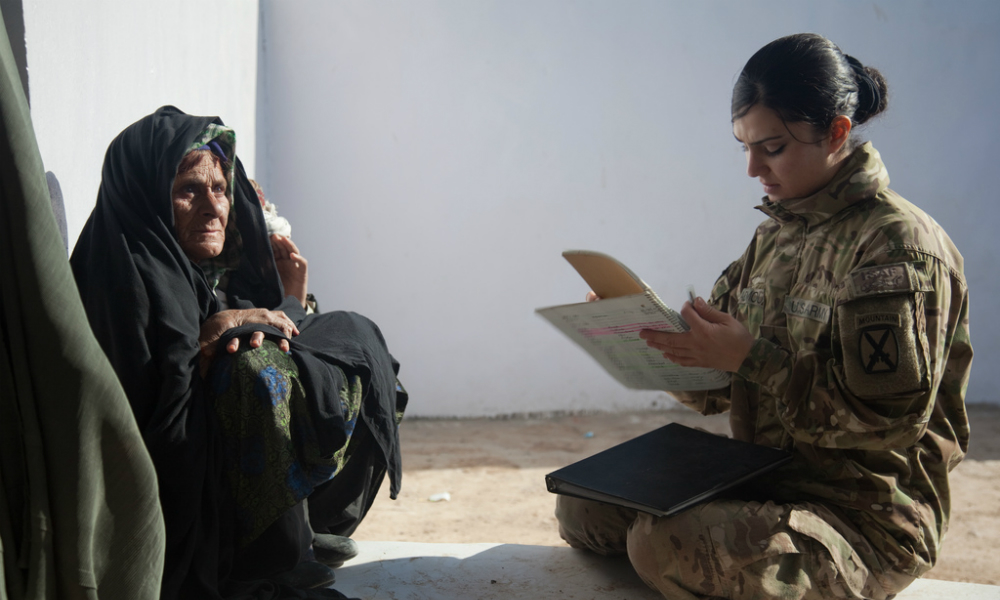
While women weren’t officially allowed in direct combat roles, anyone wearing a combat action badge will tell you that there is no safe zone in a guerilla war. More than 11,000 women served in Vietnam. Some made history, like the US Navy’s Cdr. Elizabeth Barrett, who became the first female line officer to hold a command position in a combat zone. Some paid the ultimate price, like 1st Lt. Sharon Ann Lane, who was killed when her hospital was attacked by the Vietcong.
Today
Right now, half a world away, thousands of women are fighting ISIS as members of the YPJ, the Kurdish Women’s Defense Units. They are serving in the kind of sustained land war Americans haven’t seen since Korea. Make no mistake, these are frontline combat units, and they know what will happen if they’re captured. And yet, as one of them told the BBC, “One of our Women is worth 100 of their men.”
The Kurdish fighters facing off against ISIS clearly recognize the valuable contributions women among their ranks have to make. It’s time to make sure the American cultural narrative about women in direct combat roles reflects these contributions, too—both current and historical. Seeing depictions of women in combat action is an important step toward encouraging more women to join newly opened combat arms branches. As Maj. Gen. Tammy Smith recently reminded her followers on Twitter, “If I can see it I can be it.” Hollywood isn’t the solution. But it can and should be part of it.

Image result for role of women in modern wars
So women out there in the Military.
You are not there by mistake . Go out there and make history.
Tell gender segregation to go to hell.
Have a nice day ,