Showing posts with label terrorism. Show all posts

Friday, 17 April 2020

What is ISIS doing during the COVID-19 pandemic?

Solsticewitch13's BOS: Quiz: Do You Know Your Terror Organizations?
Flag of different terrorist groups.

Terrorist groups all over the world are watching for an opening due to the pandemic. For instance Chad is wavering in support of anti-terror operations in the Sahel, withdrawing it troops from Nigeria border, Canada is pulling some troops from anti-ISIS training in Iraq; French troops in Iraq handed over a post and are leaving, Spanish troops also left as have UK and Czech troops. ISIS is taking advantage, launching more attacks north of Baghdad near Kirkuk, Military academy of most nations have suspended recruitment.


Saturday, 14 March 2020

ABUBAKAR SHEKAU LEADER OF BOKOHARM TAUNT TRUMP.


In reaction to the US Department of State earlier  announcement of   $7 million reward to anyone that can provide credible information that will lead to the arrest of Boko Haram leader, Abubakar Shekau. Abubakar appeared in a new video in a show of force shooting at the sky claiming he is not afraid of trump.


Media personality @Bassim_AMG who covers reports on Terrorism, shared a video of the sect leader reacting to the $7 million bounty placed on him. According to the media personality, Shekau in a 26 minutes video, reiterated his views on ”US, Israel and Nigeria being infidel states with US being the headquarters of corruption.” The sect leader also reportedly said the US is fighting Islam in every possible way and questioned the US for putting up only N2.5bn or $7m as reward for his arrest.

Shekau is also quoted as claiming that the US cannot find him. He however stated that he is also not scared for them to find him as long as he is not an “infidel”. He celebrated the bounty by sporadically shooting a few rifles and a machine gun.

Some Nigerians also tweet the video  below.


Friday, 10 January 2020

The hidden Agenda of Joining ISIS (why people Join).

Alberto Renteira is from Gilroy, California.
ISIS fighter

Have you ever wondered why people in their right or crazy mind join the most dangerous terrorist organization in the world?
I made a secondary research from online sources, visited the library and came to the following conclusion which is open for criticism from scholars and this blog readers.

Read On
1. Seduced: Many young youth from the western world were busy playing extremist games and watching extremist videos as fun or to find out what the group is all about, then later they become attached and feel they can try it out, they believed the lies and see JIHAD as a cause worth dyeing for. Many westerners that were living in their comfort secretly ran away from home to join the terror-group based on the lies they get from ISIS most powerful recruiting tool which is the propaganda videos. 

Image result for DO not JOin ISIS
Hoda Muthana a fmr American denied Of Citizenship after she joined ISIS and repent,today she carry the child of a slain ISIS fighter,She is regretting her actions now.

         The reverse is the Case in Africa, Now am using Northern Nigeria as a case study, where Poverty and illiteracy was the driving factors for naive northerners brainwashed by Extremist ideologies caused the voluntary enlistment into the West Africa version of ISIS called ISWAP or Boko-Haram.

Wednesday, 20 November 2019

NIGERIAN ARMY TROOPS SUBDUE BOKO HARAM CRIMINALS RESCUE AN OCTOGENARIAN AND OTHER INNOCENT CITIZENS

*PRESS RELEASE*


In their reinvigorated  drive to end the insurgency in the North East, Nigerian Army troops have continued to sustain the tempo of the ongoing Counter Terrorism and Counter Insurgency operations in the North East with a view to decimating and destroying the remnant Boko Haram/Islamic State West Africa (ISWAP) criminals across the Operation LAFIYA DOLE Theatre. In one of the numerous operations conducted across the Theatre today, 16 November 2019, troops of 26 Task Force Brigade embarked on a Clearance Patrol to Dalu Village within the Mandara Mountains in Gwoza Local Government Area of Borno State following credible intelligence report on the presence of some of the criminal insurgents in that area. Fortunately, the report was confirmed as the troops soon established contact with the marauding terrorists and effectively subdued them with their superior fire power during the ensuing fire fight. Subsequently, the troops proceeded to thorough clear the Village of the presence of the criminal  insurgents. The clearance operation yielded good dividends as the troops found and rescued an octogenarian, 3 women and 4 children hitherto held captives by the criminal insurgents. The rescued victims were promptly evacuated and children among them were equally administered with Polio Vaccination by a Nigerian  Army medical team. Interestingly, no causality was recorded by own troops during the commando operations. However, many of the Boko Haram criminal elements were observed to have fled in disarray towards the summit of Mandara Mountains with gunshot wounds.
The troops’ resilience and doggedness are unwavering as further exploitation to complete the annihilation of the insurgents is being sustained in the mountainous environment.   

The Chief of Army Staff (COAS), Lieutenant General Tukur Yusufu Buratai wishes to reassure the general public of the resolve of the Nigerian Army to continue to execute our constitutional mandate professionally and responsively for a better secured Nigeria. He also thanks all well-meaning Nigerians for their continued support, goodwill and understanding towards officers and men of the Nigerian Army as they sustain the conduct of various operations and routine exercises nationwide. 

Source: N.A Facebook handle.

Monday, 18 November 2019

Nigeria army rescue hostages again.

Eight hostages held by Boko Haram insurgents in Gwoza area of Borno state in the restive northeast Nigeria have been rescued, the army spokesman Aminu Iliyasu said Sunday.
In a statement reaching Xinhua in Lagos, Nigeria’s economic hub, Iliyasu said troops subdued Boko Haram terrorists in an encounter and rescued eight villagers including four children held captives by the insurgents.
A poster supporting the N.A

The coordinating army spokesperson said the rescued victims were evacuated while the children among them were equally administered with Polio vaccination by a Nigerian army medical team.
He added that no causality was recorded by the army troops during the commando operations.
According to him, many of the Boko Haram criminal elements fled in disarray toward the summit of Mandara Mountains with gunshot wounds.
“The troops’ resilience and doggedness are unwavering as further exploitation to complete the annihilation of the insurgents is being sustained in the mountainous environment,” he said.
Iliyasu said the army continued to sustain the tempo of the counter-insurgency operations in the northeast with a view to decimating and destroying the remnant of “Boko Haram/Islamic State West Africa (ISWAP) criminals”.
Source: Nigeria Army

Friday, 8 November 2019

FORBES 2019 Richest Terror Organizations in the World

Here is a list of some of the world’s wealthiest – and most dangerous – terrorist organizations and how they make their money. The list was created based on interviews with security experts and counter-terror specialists, as well as reports and analysis from international NGOs, academic and government organizations, and think-tanks. It brings to light estimated numbers behind the top ten wealthiest terrorist organizations from the State Department list of Designated Foreign Terrorist organizations.

#1 Hizballah
Total annual Income – $1.1 billion
Other than the Iranian Government, there is no doubt who is the primary beneficiary of the nuclear agreement. Within a few years, Hizballah’s budget jumped significantly with the government expenditure out of Tehran, and if in the past they received about $200 million per year, today the Iranian funding of the Lebanese terror group, according to estimates by the security establishment, is evaluated at more than $800 million dollars annually.
But despite the large sums of money flowing from Tehran, the extremist Shiite organization did not always enjoy such wide financial support and there were times in the not-too-distant past in which, as a result of urgent liquidity problems, they made do with just hundreds of millions. Because of this, Hizballah made sure to vary its sources of capital; from raising money and support collected by organizations camouflaged as charities and scattered all over the world, down to real estate dealings and “used car” dealerships run by private business people.
The crowning glory of Hizballah’s business portfolio is its hold on the global drug industry. The organization’s worldwide crime operation extends from South America, through Africa, Europe, the Far East, Australia and the Middle East. Among their various activities, there are active Hizballah cells engaged in constant money laundering, forgery, weapons trade, smuggling, and of course producing and trading drugs, primarily heroin and cocaine.
Despite sweeping denial by the leaders of the religious extremist organization, officials from the American Drug Enforcement Administration (DEA) have in the past presented conclusive evidence linking the drug organizations active at the Triple Frontier (Argentina-Brazil-Paraguay) with extremist Muslim organizations and Hizballah in particular. Its involvement in the drug industry of South America began in the early 1980s and has gained significant momentum over the last decade; through use of the large Shiite-Lebanese diaspora and close collaboration with South American cartels and drug organizations as well as crime and terror organizations in North Africa, a global-narcotic network has been created, netting billions of dollars a year. Among those enjoying the spoils is Hizballah. Today the total income generated by the organization’s global-narcotic operations comes to hundreds of millions of dollars yearly.

#2 – The Taliban
Total annual income: $800 million
Unfortunately, the Taliban’s success in recent years can also be measured financially. The Taliban runs a financial mechanism similar to that of ISIS (until recently) – the broader the territory they seize and the greater the population under their control, the more resources and potential revenue streams they have to convert into huge sums of money. The Taliban’s primary source of income today, as much as hundreds of millions of dollars each year, comes from the production and trade of drugs (mainly growing opium and manufacturing heroin). After that (in order of decreasing importance) the organization makes hundreds of millions from the pirate mining of natural resources within the regions under its control, collecting ransom for hostages and, finally, from donations.
As mentioned, the foremost source of capital for the Jihadist organization relies on the extensive narcotic network built and refined over the years. This made Afghanistan into the biggest heroin production and growing operation in the world and the reason why more areas in Afghanistan are used for growing opium than there are areas in Latin America for growing coca. This network is responsible for one of the most essential arteries of the global drug industry, yielding hundreds of millions of dollars a year. According to the '2017 World Drug Report' of the United Nations Office on Drugs and Crime (UNODC), Afghanistan is the largest producer and exporter of opium in the world and is responsible for the production of approximately 90% of the world’s heroin. In total, more than 400 tons of heroin are produced in Afghanistan each year and the net value of opium exports alone constitutes around 12% of the country’s GDP. A report presented to the UN’s Security Council states that roughly 3 million Afghani people today are directly or indirectly employed by the drug industry. This is mind-boggling, as the country’s entire workforce is approximately 8 million people, according to the CIA.
As much as this sounds like a huge sum, this is only half of the total income produced by the Taliban. An important additional piece in their rich and varied financial system is their pirate mining of minerals, namely copper and iron. A further significant source of income for the organization comes from donations, mostly from wealthy Saudi sheikhs and philanthropists. According to a study conducted by the New York Times, the Kingdom of Saudi Arabia is among the group's heavy funders of the group. Although the government in Riyadh officially supports the Afghani government and the American task force in the country, Saudi authorities in practice turn a blind eye to the increasing sums of money flowing from the private accounts of the wealthy.


#3 – Hamas
Total annual income: $700 million
Last June marked tenth anniversary of the Hamas movement’s control over the people of Gaza. Looking back, it seems there is no cause to celebrate. A special report recently published by the UN allowed a glimpse into the intolerable life in Gaza under the mismanagement of Hamas and points to a dizzyingly escalating humanitarian crisis. According to a summary in the UN report, the Gaza Strip will be unlivable by 2020 if the current situation persists.
The security intensification that came with Hamas' seizure of rule over Gaza brought with it immediate economic mayhem. A stream of more than 100,000 workers that entered Israel daily, and provided livelihood for hundreds of thousands of people in the Gaza strip, has almost entirely stopped. According to the World Bank, the current rate of unemployment in Gaza is the highest in the world and stands at over 40%. Among youth, the rate rises above 60%. The average income in Gaza is $1,800 per capita, among the lowest in the world. Electrical infrastructure and the factories that were destroyed in fighting, as well as the gross lack of raw materials (those that are not redirected by the heads of the organization to rebuilding tunnels), has paralyzed industry, which currently amounts to furniture production, cultivation of tomatoes and fishing.
But despite the catastrophic situation of Gaza, Hamas is managing to generate numerous funding sources from the impoverished population there, bringing in tens of millions of dollars each month. The sophisticated and elaborate tax network redirects significant capital flowing into Gaza as aid. This, for instance, is how Hamas collects taxes on the money-changing companies that convert the foreign currency to shekels, pocketing tens of millions on the way. In addition, Hamas runs hundreds of businesses monopolizing a variety of fields from real estate to security, banking, and even hotels and tourism.
Along with taxes, hundreds of millions of dollars flow in to the organization’s account each year as private donations from business owners or various societies from all over the world. The biggest current funder of Hamas is, not surprisingly, Iran which, along with Qatar has committed to contributing large sums of money to the tune of hundreds of millions of dollars a year. In order to ensure that not all the money goes to the rehabilitation of Gaza and improving its residents’ welfare, the regime in Tehran has specifically allocated a significant sum from its contribution to support Hamas and its military arm’s activities. According to security sources, this allowance is 70 million dollars a year, and is responsible for nearly half of the military wing’s estimated budget of 150 million dollars.
#4 – Al-Qaeda
Total annual income: $300 million
Under the organization’s fundamentalist umbrella are some of the deadliest organizations operating today. According to the US State Department Country Reports on Terrorism a number of the primary branches include: Al-Qaeda in the Islamic Maghreb (Libya, Algeria, Ivory Coast, Mali, Nigeria, Tunisia and Burkina Faso), Al-Qaeda in the Arabian Peninsula (Yemn and Saudi Arabia), Al-Qaeda in the Indian Peninsula (India, Pakistan and Bangladesh), al-Shabaab (Somaia) and Tahrir al-Sham (Syria).
Al-Qaeda of the Islamic Maghreb is mainly active in Central and Western Africa and exploits the region’s instability and the penetrable borders of the countries in which its operations are based. It currently deals in the illegal trade of drugs, weapons, automobiles and people – and recently in the increasingly profitable branch of illegal trade in cigarettes and tobacco. A special report by the KPMG firm estimated that the illegal cigarette market in the countries of the Maghreb in 2016 constituted tax losses of about 565 million dollars. The scope of the illegal tobacco trade in North Africa currently stands at more than a billion dollars annually, and according to the UN comes out to about 60 billion black market cigarettes annually, of which a significant portion flows directly to the criminal and terrorist organizations controlling the region. Kidnapping for ransom payments also constitute a large source of income for the group, bringing in additional millions of dollars annually.
Like its brother in the West, Al-Qaeda of the Arab Peninsula takes great advantage of the local instability and local support, particularly in Yemen, to occupy territories, consolidate its hold in the region and so produce sizable income streams. Two years ago, for instance, the organization succeeded in taking over Mukalla, an important central port city in Yemen. Their control of the city, held until April 2016, generated about 2 million dollars a day for the organization from collecting protection fees and taxes, as well as pocketing an additional 20 million dollars from plundering local banks – according to a special report of the UN Security Council. In addition, Al-Qaeda of the Arab Peninsula continues to create ongoing revenue streams from kidnapping and ransom payments, as well as donations from charities of wealthy notables, primarily from the Gulf States
Jabhat al-Nusra, Tahrir al-Sham in its current incarnation, is Al-Qaeda’s proxy in Syria. The extremist Sunni organization’s income comes primarily from ransom payments and generous donations from the wealthy Sunni Gulf states. This year the organization wrangled a hefty sum of money for the provocative transaction in which it released Qatari royalty in exchange for the unprecedented sum of an estimated $130 million, according to the Financial Times.
A relatively new organization in Al-Qaeda’s portfolio, but a veteran of Africa’s bloody terror arena, is al-Shabaab, the Somalian terror group.. Like the rest of Al-Qaeda’s destructive affiliates, al-Shabaab also obtains its own funding. According to a UN report, the organization raises funds mostly through taxing the inhabitants of the territories under its control. Additional funding comes from pirate mining and illegal coal trade as well as kidnapping and ransom payments – all of which make tens of millions of dollars per year for the terror organization.


#5 – ISIS
Total annual income: $200 million
As of now with the fall of the town Rawa, the organization has lost its last urban stronghold in Iraq and those who controlled a third of the country have been almost entirely eliminated. Getting rid of any remnants of their control is just a matter of time and considering the great power they held until not long ago, this is a remarkable collapse. At its peak towards the end of 2014, the Islamic State extended over 100,000 square kilometers – larger than South Korea – and subjected 10 million people to its oppressive rule at the height of its power.
The vast lands that the organization captured during its rapid conquests throughout 2014 and the millions of people subjugated to its cruel rule made up the source of its wealth in its heyday. ISIS controlled oil and gas fields, rich mineral deposits, fertile agricultural lands, factories, weapons and of course millions of people underpinning the organization’s finances, primarily through paying the organization taxes and ‘protection’ fees. Three years ago, precisely at the height of ISIS’ military and political power, its annual income stood at around 3 billion dollars. In an unprecedented, comprehensive study published by Forbes Israel, ranking the 10 richest terror organizations in the world, ISIS was rated as the richest terror organization in the world; indeed, the richest in the history of terror.
The basis for its speedy money-making (as with many similar examples in the Middle East) came, unsurprisingly, from one major factor – oil. But this source of quick income soon became ISIS point of weakness. The intensification of the fighting against them and the grueling daily battles on the ground eventually led to the loss of extensive territory, including loss of control over fields of oil, gas, and precious mineral deposits. The organization suffered massive air raids by the coalition forces (attacks deliberately focused on the oil reserves) which added further strain and ultimately brought about the dwindling of profits from the organization’s primary source of income. Soon afterwards, what's more, the price of oil collapsed, plunging from 110$ per barrel at the beginning of 2014, to less than 30$ per barrel in 2016, further slashing the organization’s profits.
Income from oil and gas, which constituted the main source of ISIS’ wealth, was not the sole source of capital in its financial system. Taxes, ransom, protection fees and robberies of banks and antiquities became important components of wealth accumulation. As the only governmental authority in villages and towns under its rule, ISIS collected taxes and protection fees from the occupied population. But loss of control of the population it controlled until recently naturally brought about a drop in this source of income.
Apart from the large energy reserves that they controlled and the coercive mechanism for collecting protection, ransom and taxes for their own profit – ISIS also conquered vast agricultural lands, factories, power stations, dams, and other strategic facilities – which added greatly to their power and economic strength. In addition, the organization held vast territory in the 5 most fertile agricultural districts in Iraq that control about 40% of the wheat crop and various types of grain grown in the country, which in total, according to estimates by agricultural experts, amounted to 30% of the local agricultural market under ISIS’ control. All of this was lost when the organization withdrew from the large areas that it held.
According to estimates, the deadly terror organization lost over 90% of its income in the last three years alone, from about 2-3 billion dollars in 2014 to only 200 million dollars in 2017. In the coming year, ISIS will return to its original financial standing, and will be supported again primarily by ransom payments, donations, and external aid to finance its guerrilla activities in Syria and Iraq.


#6 – PKK – Kurdistan Workers’ Party
Total annual income: $180 million
According to the US State Department’s annual terrorism report, the PKK has many and varied sources of capital and relies heavily on the widespread Kurdish diaspora across Europe for funding its operations. According to estimates, the money flowing into the organization ranges between $50 to $100 million annually.
The primary source of PKK’s income stems, unsurprisingly and similarly to other terror groups, from the drug trade – namely heroin and cannabis. The United Nations Office on Drugs and Crime (UNODC), has estimated that the organization makes about $75 million annually from heroin. In the past, British intelligence estimated that the PKK is responsible for 40% of the heroin smuggled into the European Union, with the US Treasury also noting its significance in the global drug industry.
Another important dimension of the PKK’s illegal business transactions is human trafficking, as well as pirating of tobacco and cigarettes, according to a special report by a NATO intelligence branch. From the illegal migration from Asian and African countries and smuggling people and illegal substances into European countries, the organization is making millions of dollars each year.
Apart from its criminal money-making activities, the PKK also runs a legitimate and legal network for raising funds and aid money from its many supporters. The PKK’s European arm runs hundreds of aid organizations for increasing propaganda and collecting donations and solidarity tax from among the Kurdish community, particularly in Germany. A special report published by Germany’s domestic intelligence service (the BfV), has estimated that funds flowing into the organization from donations come to about 30 million dollars annually, about half of which is collected from the Kurdish community in Germany.
#7 – Kata’ib Hizballah
Total annual income: $150 million
Practically since its inception, the organization has been heavily funded by its Iranian patron, which makes sure to devote money and resources for the organization’s activities. More can be learned from a lawsuit filed against European banks by American veterans and the families of soldiers killed in Iraq. According to the statement submitted against the banking powers, HSBC, Credit Suisse, Barclays, Standard Chartered and the Royal Bank of Scotland channeled money from Tehran to the terror organization in Iraq. These funds allegedly were transferred directly from Iran to Kata’ib Hizballah in order to finance shootings and roadside bombings in which dozens of American soldiers were killed or wounded. The claim explicitly implicates Kata’ib Hizballah as one of the main recipients of those funds which, according to the pleadings, came to over 100 million dollars.
An additional source of income comes from abductions and ransom payments, which in the last year brought huge sums into the Shiite terror organization’s account. Kata’ib Hizballah was the organization that headed the plan and execution of the abductions of 26 members of the Qatari royal family while they were on a falcon hunting expedition in December 2015. The dubious release transaction saw the royal family transfer the astronomical sum of a billion dollars to Iran and other terror organizations (which triggered the big boycott against Qatar by Saudi Arabia, United Arab Emirates, Egypt and Bahrain), and the Shiite organization is estimated to have received an especially hefty cut of the spoils. According to the Financial Times which exposed the details of the transaction, suitcases loaded with cash amounting to about 700 million dollars were transferred to Iran and its ‘partners’ in exchange for the hostages’ release.
#8 – Palestinian Islamic Jihad
Total annual income: $100 million
Up to 2 years ago, the Islamic Jihad was facing a severe economic crisis, as one of their senior officials expressed it “the most severe economic crisis in the history of the organization,” which was founded in 1979 as a branch of the Egyptian Islamic Brotherhood movement. The Jihadi organization’s sources of funding had dried up and its pockets emptied. In a political crisis with their Iranian patron, close ally and nearly exclusive sponsor, the latter threatened to cut the oxygen flow to the Jihadist organization - brought the Islamic Jihad to the brink of bankruptcy and to its lowest point in its many years of activity.
At that time the coalition forces of the region’s Sunni states (led by Saudi Arabia, Iran’s Sunni rival), began a large-scale military operation against the Houthis in Yemen. While the heads of the Islamic Jihad were determined to remain neutral, the Iranians demanded explicit support for the Shiite Houthis. When expression of support was not forthcoming, Tehran decided on a drastic cut in funding for the organization, which went into a violent tailspin.
Eventually, the Islamic Jihad leaders gave in and surrendered to the dictates of Tehran, including a public “declaration of loyalty”. A delegation of senior officials headed by Ramadan Shalah, secretary general of the organization, was dispatched to end the tensions and to consult the Revolutionary Guard. During the meeting, Shalah thanked Qasem Soleimani, commander of the Quds force (the elite unit of the Revolutionary Guard), for the ‘exclusive’ support of the Palestinian intifada. In what was described as a sweeping declaration of loyalty by the Islamic Jihad to Iran and unconditional acceptance of its demands, the organization’s secretary general criticized the ‘other Arab states’ that did not support the Palestinian uprising and declared that “Iran is the only country that supports the intifada and the families of the martyrs.”
Unsurprisingly, the reward soon followed. Soon after the meeting, the heads of the organization received an offer of reconciliation in the form of tens of millions of dollars. It is estimated that Islamic Jihad receives support from Iran of about $70 million a year and that Iran alone is responsible for supplying nearly 75% of the Palestinian terror organization’s entire budget.
#9 – Lashkar-e-Taiba
Total annual income: $75 million
According to the US State Department, the Lashkar-e-Taiba organization relies heavily on the Pakistani diaspora (with most capital flowing in from communities based in the Gulf States and Britain), and aid funding from business people, Kashmiri tycoons and Indian mafia. Additionally, many millions are funneled into funds and charities that operate under the organization’s aid arm, which they use to garner support and sympathy from among the local population.
Lashkar-e-Taiba maintains training camps for its fighters, along with schools, daycare centers, welfare institutions and clinics all over Pakistan and is active in Afghanistan as well. Most of the fundraising to the charity and welfare funds (in which, as usual, nobody knows where the line lies between funding charity and terror) is done publicly, through extensive publicity campaigns in the Pakistani media. In addition, according to some estimates, the Pakistani terror organization continues to receive generous financial support from Pakistani officials.
#10 – The Real IRA
Total annual income: $50 million
Despite the efforts of customs authorities and security forces, the organization’s leaders have refined their fundraising abilities and manage to pocket tens of millions of dollars per year, mostly through a sophisticated global network that smuggles and sells cigarettes and tobacco. The tobacco smuggling industry in Britain has been thriving in recent years, bringing in huge sums of money.
A special report produced by the international accounting firm KPMG suggests that the illegal cigarette trade on the black market in Britain is among the largest in Europe. In 2016, approximately 5.55 billion cigarettes were sold illegally – with a black-market value of around $1.1 billion annually. In a special investigation done by the Sun, senior government officials declared that IRA members (including the Provisional IRA) are responsible for about 40% of the illegal tobacco market in Britain, and with the profits generated by this industry annually, tens of millions of dollars in royalties go directly to the RIRA.
The crime and terror organization recently got an unexpected boost from parliament – thanks to the same law that forbids the branding of packets of cigarettes and rolling tobacco. According to experts, the passing of the law significantly simplified the forgery work required of those profiting from black market tobacco and is expected to channel tens of millions of dollars more their way with a hefty portion expected to go to the RIRA.
Apart from illegal trade in tobacco, the radical Irish organization also enjoys significant royalties from its pirate network of falsified alcohol and fuel products as well as protection fees that it collects – especially in those areas under its influence, in which police enforcement is low.
An additional source of capital for the Real IRA, according to the US State Department Report on Global Terror, comes from supporters in the large Irish community in the USA. The underground Irish organization knows well how to exploit this wealthy target audience, and raises funds based on the support of Irish-American activists who oppose the peace agreement.


source: FORBES......

Sunday, 27 October 2019

Breakimg news: Abu Bakr Baghdadi IS leader blew up himself to evade capture


Image result for baghdadi"
Baghdadi


Abu Bakr al-Baghdadi, leader of the Islamic State (IS) group, has killed himself during a raid by US commandos in north-west Syria, President Donald Trump has said.
Baghdadi came to prominence in 2014, when he announced the creation of a "caliphate" in areas of Iraq and Syria.
His death is a major victory for Mr Trump as he faces heavy criticism for his decision to pull US troops out of northern Syria.

According to media reports 4 years before, al-Baghdadi was rumored or confirmed to be  wounded on 18 March 2015 during a coalition airstrike on the al-Baaj District, in the Nineveh Governorate, near the Syrian border. His wounds were apparently so serious that the top ISIL leaders had a meeting to discuss who would replace him if he died.
  
      However he met his doom Oct 2019, where US special forces raid his compound and a battle ensued in which he evade capture by running into a tunnel and detonated a bomb vest he attached to himself killing him and three of his children.The US began to receive intelligence on the whereabouts of Abu Bakr al-Baghdadi about a month before the 26 October raid, according to Donald Trump. Intelligence officials were able to scope out his exact location – near the village of Barisha (id lib province) in north-west Syria .However his death may have look like a blow to the terrorist group, the group is still much in action and only decapitated.


Friday, 15 March 2019

SHOCKING: Terrorist Attack in New Zealand

At least 49 people were killed and 20 seriously injured in mass shootings at two mosques in the New Zealand city of Christchurch Friday, in a carefully planned and unprecedented atrocity that shocked the usually peaceful nation.
The attack was unleashed at lunchtime local time Friday, when mosques were full of worshippers. Footage of the massacre was streamed live online, and a rambling manifesto laced with white supremacist references was published just before the shootings unfolded.
Prime Minister Jacinda Ardern described the horror as a terrorist attack, saying it was perpetrated by suspects with "extremist views" that had no place in her country or the wider world. It was one of the New Zealand's "darkest days," she said in a press conference Friday.
Authorities said that every law enforcement resource in the country was mobilized after the attack.
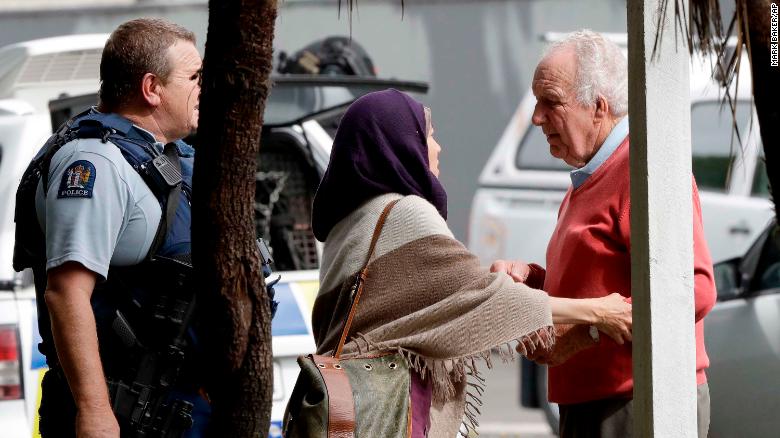
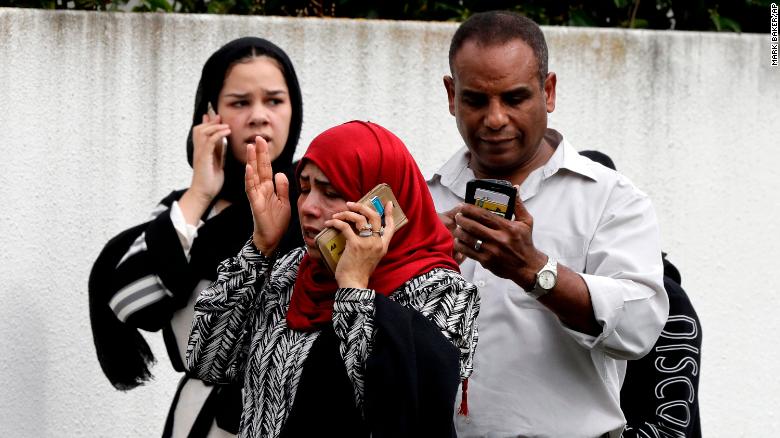
Police escort people away from outside a mosque in central Christchurch after the shootings.
Three people were arrested in connection with the shootings. A 28-year-old man was charged with murder and will appear in court Saturday morning local time. Two others were arrested on suspicion of possession of firearms. Police were investigating their ties to the incident, New Zealand Police Commissioner Mike Bush said.
Australian Prime Minister Scott Morrison said that at least one of those arrested is Australian. The atrocity was the work of an "extremist right-wing, violent terrorist," he said.
Police were not searching for any other suspects in connection with the attack but stressed the investigation remained fluid. None of those arrested in connection with the attacks had been on any security watch lists prior to the attack.
A total of 48 people, including young children with gunshot wounds, were taken to hospital.

Attack apparently broadcast live on social media

Authorities declined to discuss the potential motives behind the attack. But in a social media post just before the shooting began, an account believed to be linked to the gunman posted a link to an 87-page manifesto that was filled with anti-immigrant, anti-Muslim ideas and explanations for an attack. The manifesto was not signed.
Police said they were aware of a video shared online and broadcast live during the attack, which apparently shows a gunman walking into a mosque and opening fire. "We would strongly urge that the (video) link not be shared. We are working to have any footage removed," New Zealand police said.
The brazen nature of of the broadcast, and the tech companies' failure to prevent its proliferation online, raised profound questions about the nature of internet radicalization. In New Zealand, commentators expressed concern that the horror would sow deep divisions in a society that has largely avoided the polarizations that have spread elsewhere.
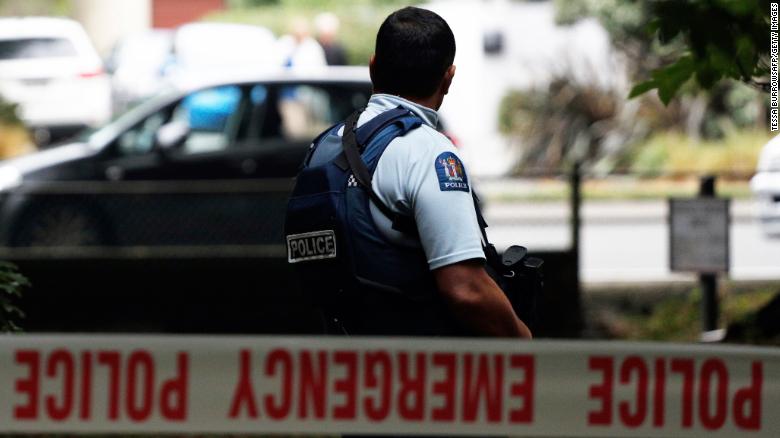
A police officer secures the area in front of the Masjid al Noor mosque.
In a statement, a spokesperson for Facebook New Zealand, Mia Garlick, said the footage was quickly taken down. "New Zealand Police alerted us to a video on Facebook shortly after the livestream commenced and we removed both the shooter's Facebook account and the video. We're also removing any praise or support for the crime and the shooter or shooters as soon as we're aware," she said.
CNN has not been able to independently confirm any information about any of the attackers or the the alleged video at this stage.
A spokesperson for Google and YouTube called the shooting a "terrible tragedy." A statement said: "Shocking, violent and graphic content has no place on our platforms, and is removed as soon as we become aware of it. As with any major tragedy, we will work cooperatively with the authorities."
Twitter removed an account it believed was linked to the main suspect and was working to keep the video of the incident off its platform, a spokesperson said. "We are deeply saddened by the shootings in Christchurch today," Twitter said in a statement. "Twitter has rigorous processes and a dedicated team in place for managing exigent and emergency situations such as this. We also cooperate with law enforcement to facilitate their investigations as required."

IEDs found in vehicle

Armed police were deployed after first receiving reports of the shootings at 1:40 p.m. local time, when mosques were packed for Friday prayers. Police said 41 people were killed at the al Noor mosque on Deans Avenue. Seven died at the Linwood mosque on Linwood Avenue, and one died in the hospital from injuries.
Mass shootings at mosques in Christchurch, New Zealand
Two improvised explosive devices were found in a vehicle linked to the attack. A number of weapons were also recovered at both locations.
The area was placed on lockdown, and police urged Christchurch residents to stay indoors and monitor the police website and social media. Worshipers were told to stay away from all mosques in New Zealand.
Later in the day, authorities evacuated properties close to a "location of interest" in the southern city of Dunedin, some 225 miles from Christchurch.

Gunman opened fire 'for 10 to 15 minutes'

One worshiper, Mohan Ibn Ibrahim, said he was inside one of the mosques when the shooting began and that he heard the gunman "continuously shooting for 10 to 15 minutes."
"It's a big mosque and there were more than 200 people inside. The gunmen came from the back side. Gunshots went on for a long time. We had to jump the wall to escape. I saw lots of broken glass and bricks on the backside of the mosque," he said.
People wait outside a mosque in central Christchurch, New Zealand, Friday, March 15, 2019.
"I came to the street I saw one person got shot on his chest," he said, adding that the ambulance and police then arrived on the scene. He said that he had a friend in another mosque in the area who told him a gunman had opened fire there as well and five people were dead.
"I could not contact two of my friends who are in the mosque as well," he said.
Another witness, who did not wish to be named, said he was driving by the scene and saw a man with a "with his 3- or 4-year-old daughter" who had been shot in the back. "He was screaming like get her to the hospital and the ambulance couldn't come in until it was secured so I just got my truck and loaded up him, and his daughter, and this other guy had been shot in the leg, and took them to the hospital," he said.
One man outside the mosque said that he prayed that the gunman would "run out of bullets."
"I was thinking that he must run out bullets you know, so what I did was basically waiting and praying to God, oh God please let this guy run out of bullets," he said. He said a man told him to remain still and then the gunman shot the man "straight in the chest."
 
 
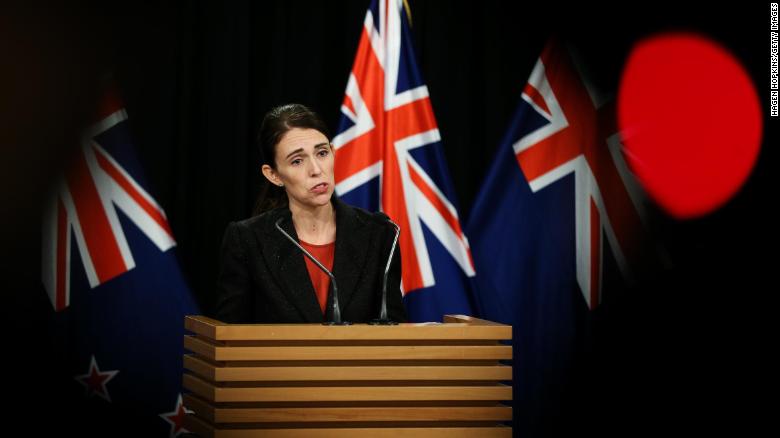
Prime Minister Jacinda Ardern speaks in Wellington, New Zealand.
In a press conference, Prime Minister Ardern described the attack as "one of New Zealand's darkest days."
"What has happened here is an extraordinary and unprecedented act of violence," she said, adding that the attackers have "no place in New Zealand."
"For now my thoughts and I'm sure the thoughts of all New Zealanders are with those who are being affected and with the families," she said.

World leaders react

Australian Prime Minister Morrison said he has asked for flags to be flown at half-staff out of respect for those killed in the attack. "Australians stand with all New Zealanders today during this dark time where hate and violence has stolen their peace and innocence. Kia kaha (stay strong)," Morrison tweeted earlier.
US President Donald Trump said in a tweet: "My warmest sympathy and best wishes goes out to the people of New Zealand after the horrible massacre in the Mosques. 49 innocent people have so senselessly died, with so many more seriously injured. The U.S. stands by New Zealand for anything we can."
In a statement, the White House said: "The United States strongly condemns the attack in Christchurch. Our thoughts and prayers are with the victims and their families. We stand in solidarity with the people of New Zealand and their government against this vicious act of hate."
Yousef bin Ahmad Al-Othaimeen, the Secretary General of the Organization of Islamic Cooperation (OIC), condemned the attacks. The OIC represents 57 nations with large or majority-Muslim populations.
"The brutal crime had shocked and hurt the feelings of all Muslims around the world, and served as a further warning on the obvious dangers of hate, intolerance, and Islamophobia," he said. Othaimeen urged the New Zealand authorities to investigate the attack thoroughly.
Sadiq Khan, the mayor of London, tweeted his condolences to the victims of the attack, and confirmed that there will be "highly visible" and armed police around mosques in the UK capital on Friday.
"I want to reassure the Muslim communities in London. I have been in touch with the Met Police. There will be highly visible policing around mosques today, as well as armed response officers, as Londoners go to pray," he said.
UK Prime Minister Theresa May sent her "deepest condolences" in a tweet. "My thoughts are with all of those affected by this sickening act of violence," she wrote.
 
 
source : BBC news
 
ALLFORMILITARY  BLOG CONCLUSION :
 
 Investigations still ongoing ,therefore it is advisable for people not to conclude on blaming other religion for the terrorist act, let us wait till findings are finished.
Thanks for reading.


Monday, 25 February 2019

THE ORIGIN OF THE TALIBANS

 talibans FLAG
The Taliban—from the Arabic word for "student,"  Talib—are fundamentalist Sunni Muslims, mostly from Afghanistan’s Pashtun tribes. The Taliban dominates large swaths of Afghanistan and a large part of Pakistan’s Federally Administered Tribal Areas, semi-autonomous tribal lands along the Afghan-Pakistan border that serve as training grounds for terrorists.
The Taliban seek to establish a puritanical caliphate that neither recognizes nor tolerates forms of Islam divergent from their own. They scorn democracy or any secular or pluralistic political process as an offense against Islam. The Taliban’s Islam, however, a close kin of Saudi Arabian Wahhabism, is far more perversion than interpretation. The Taliban’s version of Sharia, or Islamic law, is historically inaccurate, contradictory, self-serving and fundamentally deviant from prevailing interpretations of Islamic law and practice.

Origins

There was no such thing as the Taliban until Afghanistan’s civil war in the wake of the Soviet Union's troop withdrawal in 1989 after a decade-long occupation. But by the time their last troops withdrew in February of that year, they’d left a nation in social and economic shards, 1.5 million dead, millions of refugees and orphans in Iran and Pakistan, and a gaping political vacuum that warlords attempted to fill. Afghan mujahideen warlords replaced their war with the Soviets with a civil war.
Thousands of Afghan orphans grew up never knowing Afghanistan or their parents, especially their mothers. They were schooled in Pakistan’s madrassas, religious schools that, in this case, were encouraged and financed by Pakistani and Saudi authorities to develop militantly inclined Islamists. Pakistan nurtured that corps of militants as proxy fighters in Pakistan’s ongoing conflict over Muslim-dominated (and disputed) Kashmir. But Pakistan consciously intended to use the madrassas’ militants as leverage in its attempt to control Afghanistan as well.
As Jeri Laber of Human Rights Watch wrote in the New York Review of Books of the origins of the Taliban in refugee camps (recalling an article he’d written in 1986):
Hundreds of thousands of youths, who knew nothing of life but the bombings that destroyed their homes and drove them to seek refuge over the border, were being raised to hate and to fight, “in the spirit of Jihad,” a “holy war” that would restore Afghanistan to its people. “New kinds of Afghans are being born in the struggle,” I reported. “Caught in the midst of a grownups’ war, the young Afghans are under intense political pressure from one side or another, almost from birth." [...] The children that I interviewed and wrote about in 1986 are now young adults. Many are now with the Taliban.

Mullah Omar and the Taliban's Rise in Afghanistan

As civil war was ravaging Afghanistan, Afghans were desperate for a stabilizing counterforce that would put an end to the violence.
The Taliban’s most original aims were, as Ahmed Rashid, the Pakistani journalist and author of "Taliban" (2000), wrote, to “restore peace, disarm the population, enforce Sharia law and defend the integrity and Islamic character of Afghanistan."
As most of them were part-time or full-time students at madrassas, the name they chose for themselves was natural. A Talib is one who seeks knowledge, compared to the mullah who is one who gives knowledge. By choosing such a name, the Taliban (plural of Talib) distanced themselves from the party politics of the mujahideen and signaled that they were a movement for cleansing society rather than a party trying to grab power.​
For their leader in Afghanistan, the Taliban turned to Mullah Mohammed Omar, an itinerant preacher likely born in 1959 in Nodeh village near Kandahar, in southeastern Afghanistan. He had neither tribe nor religious pedigree. He had fought the Soviets and been wounded four times, including once in the eye. His reputation was that of a pious ascetic.
Omar's reputation grew when he ordered a group of Taliban militants to arrest a warlord who had captured two teenage girls and raped them. The 30 Talibs, with just 16 rifles between them—or so goes the story, one of many near-mythical accounts that have grown around Omar’s history—attacked the commander’s base, freed the girls and hanged the commander by their favorite means: from the barrel of a tank, in full view, as an example of Taliban justice.
The Taliban’s reputation grew through similar feats.
 talibans FLAG

Benazir Bhutto, Pakistan's Intelligence Services and the Taliban

Religious indoctrination in Pakistan’s madrassas and Omar’s campaigns against rapists alone were not the light that lit the Taliban fuse. The Pakistani intelligence services, known as the Inter-Services Intelligence Directorate (ISI); the Pakistani military; and Benazir Bhutto, who was prime minister of Pakistan during the Taliban’s most politically and militarily formative years (1993-96), all saw in the Taliban a proxy army they could manipulate to Pakistan’s ends.
In 1994, Bhutto’s government appointed the Taliban as protector of Pakistani convoys through Afghanistan. Controlling trade routes and the lucrative windfalls those routes provide in Afghanistan is a major source of lucre and power. The Taliban proved uniquely effective, swiftly defeating other warlords and conquering major Afghan cities.
Beginning in 1994, the Taliban rose to power and established their brutal, totalitarian rule over 90 percent of the country, in part by leading a genocidal campaign against Afghanistan’s Shiite, or Hazara.

The Taliban and the Clinton Administration

Following Pakistan’s lead, then-President Bill Clinton's administration initially supported the Taliban’s rise. Clinton’s judgment was clouded by the question that has often led American policy astray in the region: Who can best check Iran’s influence? In the 1980s, then-President Ronald Reagan's administration armed and financed Iraqi dictator Saddam Hussein under the assumption that a totalitarian Iraq was more acceptable than an unbridled, Islamic Iran. The policy backfired in the form of two wars.
In the 1980s, the Reagan administration also funded the mujahideen in Afghanistan as well as their Islamist supporters in Pakistan. That blowback took the form of al-Qaeda. As the Soviets withdrew and the cold war ended, American support for Afghan mujahideen stopped abruptly, but military and diplomatic support for Afghanistan did not. Under the influence of Benazir Bhutto, the Clinton administration voiced itself willing to open a dialogue with the Taliban in the mid-1990s, especially as the Taliban was the only force in Afghanistan capable of guaranteeing another American interest in the region—potential oil pipelines.
On Sept. 27, 1996, Glyn Davies, a US State Department spokesman, expressed hope that the Taliban “will move quickly to restore order and security and to form a representative interim government that can begin the process of reconciliation nationwide.” Davies called the Taliban’s execution of former Afghan President Mohammad Najibullah merely “regrettable,” and said the United States would send diplomats to Afghanistan to meet with the Taliban, potentially to re-establishing full diplomatic ties. The Clinton administration’s flirtation with the Taliban did not last, however, as Madeleine Albright, incensed by the Taliban’s treatment of women, among other regressive measures, halted it when she became the US secretary of state in January 1997.

The Taliban's Repressions and Regressions: A War on Women

The Taliban's long lists of edicts and decrees took an especially misogynistic view of women. Schools for girls were closed. Women were forbidden to work or leave their homes without verifiable permission. Wearing non-Islamic dress was forbidden. Wearing makeup and sporting Western products like purses or shoes was forbidden. Music, dancing, cinemas, and all nonreligious broadcasting and entertainment were banned. Lawbreakers were beaten, flogged, shot or beheaded.
In 1994, Osama bin Laden moved to Kandahar as a guest of Mullah Omar. On Aug. 23, 1996, bin Laden declared war on the United States and exerted increasing influence on Omar, helping to fund the Taliban’s offensives against other warlords in the north of the country. That lavish financial support made it impossible for Mullah Omar not to protect bin Laden when Saudi Arabia, then the United States, pressured the Taliban to extradite bin Laden. The fates and ideology of al-Qaeda and the Taliban became intertwined.
At the height of their power, in March 2001, the Taliban demolished two enormous, centuries-old Buddha statues in Bamiyan, an act that showed to the world in ways that the Taliban’s wanton massacres and oppression should have much earlier the ruthless, distorted Puritanism of the Taliban’s interpretation of Islam.

The Taliban's 2001 Downfall

The Taliban was overthrown in the 2001 American-backed invasion of Afghanistan, shortly after bin Laden and al-Qaeda claimed responsibility for the 9-11 terrorist attacks on the United States. The Taliban were never completely defeated, however. They retreated and regrouped, especially in Pakistan, and today hold much of southern and western Afghanistan. Bin Laden was killed in 2011 in a raid by US Navy Seals in his hideout in Pakistan after a nearly decade-long manhunt. The Afghan government claimed that Mullah Omar died in a hospital in Karachi in 2013. 
Today, the Taliban claim senior religious cleric Mawlawi Haibatullah Akhundzada as their new leader. They released a letter in January 2017 to newly elected US President Donald Trump to withdraw all remaining US forces from Afghanistan.
The Pakistani Taliban (known as the TTP, the same group that almost succeeded in blowing up an SUV full of explosives in Times Square in 2010) is just as powerful. They are virtually immune from Pakistani law and authority; they continue to strategize against the NATO-American presence in Afghanistan and against Pakistan’s secular rulers; and they are tactically directing attacks elsewhere in the world. ​

source:thoughtco