Monday, 27 November 2017

AFRICAN DICTATORS OF ALL TIME

POSTED:Afolabi micheal
Africa have experienced so many military rules and they will never be forgotten .Some still exist and some are already out of power but yet anything can still happen.Though Zimbabwe is experiencing one now but there is no clue that says the military really wants the seats but nevertheless lets go straight to our stories

TOP 20 DICTATORS IN AFRICA

Regardless of how they came to power, these people are regarded as the worst dictators in Africa.
The regime of most of these African dictators was marked by horror, terror, chaos, and bloodshed. Some of these dictators were notorious leaders, and some have led their country towards economic prosperity while others started on the right path and lost their way.

20. PAUL KAGAME (RWANDA: 1994-PRESENT)

worst dictators
Paul Kagame became the President of Rwanda in the year 2000. He rose to power through his guerrilla movement that ended the 1994 Rwandan Genocide.
Years in power: 23 years +
Highs: Kagame has led Rwanda towards the path of economic prosperity, his government has been described by the UN and several international leaders as the model of good governance in Africa.
Lows: Kagame’s regime been marked by accusations of human right abuse, oppression of political opponents and the press.

19. ZINE EL ABIDINE BEN ALI (TUNISIA: 1987–2011)

dictators in africa
Zine El Abidine Ben Ali was the President of Tunisia from 1987 to 2011. Ben Ali, he assumed the Presidency in a bloodless coup, a month after he was appointed the prime minister. He led Tunisia for 23 years before stepping down in January 2011due to a massive protests demanding his exit.
Years in power: 24 years
Highs: Tunisia witnessed stability and economic prosperity under Ben Ali
Lows: In 2012, in abstention,  he was sentenced to a life imprisonment for his role in the murders of protesters in the 2011 revolution that led to his exit from power. Embezzlement, misuse of public funds, suppressing political opponents are some of the sins of one of Africa’s longest-serving dictators.

18. GNASSINGBÉ EYADÉMA (TOGO: 1967–2005)

dictator
Gnassingbé Eyadema remains one of Africa’s longest-serving dictator. Eyadema became the president of Togo in 1967 after he led a military coup against the incumbent President, a man he helped bring to power in a bloody military coup. He died of a heart attack in 2005, and his son Faure was named the President of Togo in controversial circumstances.
Years in power: 38 years
Lows: Eyadema is the pioneer of Africa’s first military coup d’etat, an act that soon became the political trend in Africa. He organized a presidential election in 1998 and canceled “in the interests of national security” when he was losing. He was accused of several cases of human right abuses.

17. HASTINGS KAMUZU BANDA (MALAWI: 1963–1994)

Dr_HK_Banda
Banda, one of Africa’s greatest dictator, he led Malawi from 1961 till 1994. Banda lost effective control of Malawi during his absence from Malawi in 1993 when he was flown to South Africa for an emergency brain surgery. Bakili Muluzi, his former political protégé, became president in 1994, after the general elections Banda had earlier postponed was conducted in 1994.
Years in power: 31 years
Highs: He was fought against colonialism and led of Nyasaland (now Malawi) to independence as Malawi in 1964.
Lows: His reign left Malawi as one of the World’s poorest country. One in three children under five died of starvation, he regularly tortured and murdered political opponents. Human rights groups estimate that at least 6,000 people were killed, tortured and jailed without trial under Banda.

16. GAAFAR NIMEIRY (SUDAN: 1969–1985)
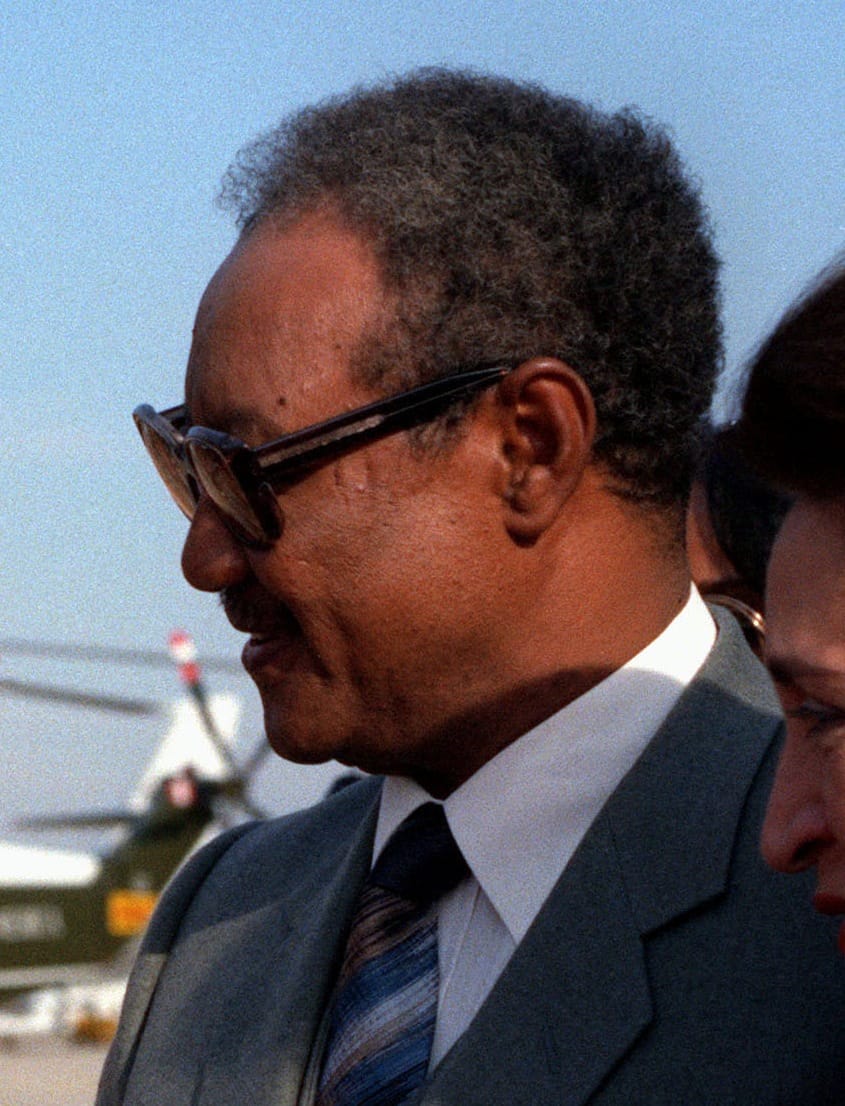
Gaafar Nimeiry
Gaafar Nimeiry came to power in a 1969 coup that put an end to five years of corrupt civilian rule. He was ousted from power in 1985 and went into exile in Egypt until he was allowed to return in 1999. He contested in the 2000 Sudanese elections; he got just 7% of the votes. He died in may, 2009 at the age 79.
Years in power: 16 years
Highs: He signed the Addis Ababa Agreement, which ended the First Sudanese Civil War and brought a decade of peace and stability to the region.
Lows: His indiscriminate borrowing left the Sudanese economy in ruins, the Sudanese currency lost almost 90% of its value against the major international currencies. He imposed Islamic sharia law in 1983; this led to a two-decade-long war religious war between the Muslim north and the mainly Christian south.

15. SIAD BARRE (SOMALIA: 1969-1991)

siad barre quotes
Siad Barre took power in a Coup d’état in 1969, and he ruled Somalia for over 20 years before he was overthrown in 1991. He passed away in January 1995, in exile in Lagos Nigeria. General Siad Barre’s exit left Somalia without a central authority, and this resulted in a civil war that left the country without a leader for over two decades.

Years in power: 22 years
Highs: Siyad Barre served as chairperson of the Organization of African Unity (African Union). During his early years, he successfully created model agricultural factories that boosted the country’s economy.
Lows: General Siad Barre’s regime, like many dictators in Africa, was marked by human right abuses, The UN Development program asserts “the regime of Siad Barre had one of the worst human rights records in Africa.”

14. CHARLES TAYLOR (LIBERIA: 1997-2003)

brutal african dictator
Charles Taylor once described as the “tyrant of death” was the President of Liberia from August 1997 until 2003 when international pressure forced him to resign and go into exile in Nigeria. He remains one of the most brutal dictators in Africa till date.
Years in power: 6 years
Lows: Charles Taylor is currently serving a 50-year sentence for his involvement in what the judge described as “some of the most heinous and brutal crimes recorded in human history.” He was found guilty of the following charges: Acts of terrorism, Unlawful killings, Murder, Violence to life, health and physical or mental well-being of persons,

13. YAHYA JAMMEH (GAMBIA: 1994-2017)

notorious dictators
Yahya Jammeh took power in a bloodless military coup in 1994. Jammeh got re-elected as the 2016 general elections to Adama Barrow, and surprisingly, he conceded defeat. Only to reject the results few weeks after, he finally left Gambia in exile to Equatorial Guinea after sustained pressure by the African Union, Ecowas, and UN.
Years in power: 23 years
Lows: Strong human rights abuses have marked Yahya Jammeh’s regime, he also claims to have a cure for HIV Aids and his hate for homosexuality is well documented, recently, he threatened to slit the throats of any homosexual in Gambia.

12. IDRISS DEBY (CHAD: 1990-PRESENT)

oldest african dictators
In December 1990, Idriss Deby and his Patriotic Salvation Movement, an insurgent group, backed by Libya and Sudan sacked the incumbent government, and Déby became the President of Chad.
Years in power: 27 years +
Highs: Sacked the barbaric Chadian dictator Hissene Habre from power.
Lows: Deby has used oil proceeds and funds that could have been used to develop Chad to purchase weapons and strengthen his Army. Forbes named Chad the world’s most corrupt nations in 2006. It described Deby’s decision to buy weapons with the funds supposedly intended to counter famine as “what may turn out to be the single most piggish use of philanthropic funds.”

11. OBIANG MBASOGO (EQUATORIAL GUINEA: 1979-PRESENT)

oldest african dictators
Teodoro Obiang Nguema Mbasogo has been President of Equatorial Guinea since 1979 when he ousted his uncle, Francisco Macías Nguema, in a bloody military coup and sentenced him to death by firing squad. President Obiang is one of the oldest and longest-serving dictators in Africa.
Years in power: 38 years +
Highs: Equatorial Guinea’s has emerged as a significant oil producer under Obiang. He also served as the Chairperson of the African Union from 31 January 2011 to 29 January 2012.
Lows: State-operated radio declared President Obiang “the country’s god” with “all power over men and things,” and thereby he “can decide to kill without anyone calling him to account and without going to hell.” Unlawful killings, government-sanctioned kidnappings; torture of prisoners by security forces, and even accusations of cannibalism has trailed President Obiang’s regime. Forbes estimates his wealth to be around $600 million; he has used an oil boom to enrich his family at the expense of the citizens of Equatorial Guinea.

10. PAUL BIYA (CAMEROON: 1982-PRESENT)

oldest african dictators
Paul Biya has been the President of Cameroon since 6 November 1982. He consolidated power in a 1983–1984 power struggle with his predecessor and he remains a powerhouse in Africa and the president of Cameroon till date.
Years in power: 35 years +
Highs: Cameroon has enjoyed peace and stability for the past 30 years. Paul Biya’s regime has also overseen one of the strongest diplomatic relations in Africa.
Lows: Paul Biya has kept himself in power by organizing sham elections and paying international observers to certify them free of irregularities, the top African leader, and dictator who has been accused of constant human right abuse, was ranked 19th in Parade Magazine’s Top 20 list of “The World’s Worst Dictators.”

9. JOSE EDUARDO DOS SANTOS (ANGOLA: 1979-PRESENT)

oldest presidents in africa
Jose Eduardo Dos Santos, the father of Africa’s richest woman Isabel Dos Santos, is Africa’s second longest-serving head of state, behind Equatorial Guinea’s Teodoro Obiang Nguema Mbasogo. He has been in power since 1979, and in 2017, he announced that he would finally step down and end his dictatorship over Angola.
Years in power: 38 years +
Highs: The Angolan economy has grown to become the third-largest economy in sub-Saharan Africa, after South Africa and Nigeria.
Lows: Strong allegations of corruption, misuse, and diversion of public funds for personal gain, human rights abuses, and political oppression. 70% of the population of Angola, lives on less than $2 a day and yet the Dos Santos family have amassed a massive sum of personal wealth with Angola’s oil proceeds.

8. ROBERT MUGABE (ZIMBABWE: 1987-NOVEMBER 21, 2017)

oldest presidents in africa
Robert Gabriel Mugabe, Ex-President of Zimbabwe, and one of the oldest dictators in Africa was in power from 1980, when he was prime minister of Zimbabwe. He consolidated his power to become president on 31st December 1987. After thirty years in power, following what seemed like a coup, smelled like a coup but was officially “not-a-coup,” he resigned from office.
Years in power: 30 years
Highs: Zimbabwe boasts of one of the most impressive education systems in Africa.
Lows: The United Nations estimates Unemployment in Zimbabwe to be as high as 80%,  the economy of Zimbabwe is in ruins, and life expectancy for both male and females is a little above 50 years. Massive hyperinflation has made the local currency of Zimbabwe worthless, the exchange rate of Zimbabwe dollar is 35 quadrillion to US$1. The local currency has been retired and replaced with the US dollar and South African rand, and this has led to the near collapse of the manufacturing industry in Zimbabwe.

7. FRANCISCO MACÍAS NGUEMA (EQUATORIAL GUINEA: 1968-1979)
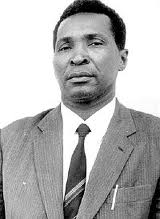
worst dictators
Francisco Nguema was the first President of Equatorial Guinea; he ruled Equatorial Guinea before his nephew in 1979 overthrew him and sentenced to death by Firing squad for genocide and other crimes he committed. He was brutal and apparently deranged, and he is one of the worst dictators in modern African history.
Years in power: 11 years
Lows: During his regime, he granted himself “all direct powers of Government and Institutions.” He ordered the death of entire families and villages; he executed members of his family, One-third of the population fled the country, he ordered every boat in the nation sold or destroyed and banned all citizens from the shoreline to prevent more people from escaping his terror.

6. HISSENE HABRE (CHAD: 1982-1990)

worst African leaders
Hissene Habre seized power in 1982 from Goukouni Oueddei, who had just been elected President, he lost power to his former military commander officer Idriss Deby in December 1990. Habre fled to Senegal when Deby’s Libya backed insurgents marched into the capital, N’Djaména. In May 2016, he was convicted of crimes against humanity.
Years in power: 8 years
Lows: Hissene Habre’s government carried out a frightening 40,000 politically motivated murders, and there are documented cases of at least 200,000 tortures in Habre’s brutal eight-year rule of Niger.

5. OMAR AL-BASHIR (SUDAN: 1989-PRESENT)

wanted African leaders
Sudanese President, Omar al-Bashir has been the leader of Sudan since 1989 when he took power in a military coup. Al-Bashir is one of the most brutal dictators in Africa and despite ICC’s warrant against him; he remains the president of Sudan.
Years in power: 28 years +
Lows: The International Criminal Court wants Omar al-Bashir for genocide, war crimes, murder, rape, torture, and other crimes against humanity for his crimes in Darfur.

4. SEKOU TOURE (GUINEA: 1958-1984)

notorious dictators
Ahmed Sékou Touré was elected as the first President of Guinea in 1958, a position he held until to his death in 1984. Toure like many other dictators in Africa, survived several assignation attempts and coups while he was in power, he died of heart failure in 1984.
Years in power: 26 years
Lows: Toure banned all opposition parties and declared his party the only legal party in the country. Toure ruled Guinea as a ruthless dictator with no tolerance for opposition. He was accused of several cases of human right abuse and extrajudicial killings.

3. GENERAL SANI ABACHA (NIGERIA: 1993-1998)

worst African dictators
Sani Abacha became the head of state of Nigeria in 1993 after he sacked the interim president appointed after the annulment of the 1993 elections. The exact details of the dictator’s death in the presidential palace in 1998 remains unclear, but it was met by wide celebration and soon after Nigeria returned to a democratic path.
Years in power: 5 years
Highs: Abacha’s regime was a massive economic success for Nigeria. Foreign exchange reserves rose from $494 million in 1993 to $9.6 billion by the middle of 1997. External debt was reduced from $36 billion in 1993 to $27 billion by 1997; inflation rate went down from the 54% he inherited to 8.5% between 1993 and 1998, and global oil price was priced at an average of $15 per barrel.’
Lows: General Sani Abacha’s regime was characterized by massive looting and human right abuses such as the public hanging of political activist Ken Saro-Wiwa and jailing several political opponents.

2. COLONEL MUAMMAR GADDAFI (LIBYA: 1969-2011)

worst dictators in africa
Gaddafi seized power in a bloodless military coup in 1969. The charismatic leader of Libya and one of the greatest dictators in African history met his end during the Libyan revolution in 2011 after rebels in Sirte, his city of birth, killed him.
Years in power: 42 years
Highs: Under Gaddafi, Libya became the first developing country to own a majority share of the revenues from its oil production. Gaddafi provided access to free healthcare, safe houses, food and clean drinking water, free education to university level which led to the dramatic rise in literacy rates
Lows: He led oil-rich Libya as an absolute dictator, for close to 42 years, he quashed anyone that opposed him, and was responsible for the death of thousands of his people.

1. IDI AMIN DADA (UGANDA: 1971-1979)

worst dictator in africa
Idi Amin seized power in the military coup in January 1971, sacking Milton Obote. Idi Amin fled Uganda in the heat of the Uganda-Tanzania war and went into exile in Libya and then Saudi Arabia where he lived until his death on 16 August 2003.
Years in power: 8 years
Lows: Amin’s rule was characterized by rumors of cannibalism, frightening human rights abuses, political repression, several extrajudicial killings, corruption, and gross economic mismanagement. International observers and human rights groups estimate the death toll of his regime to be around 500,000.
STAY TUNED NEXT WEEK FOR NEW POST  
FOLLOW US ON FACEBOOK AT A.M WORLD                               
TWITTER A.M 
WE LOVE COMMENTS

Saturday, 18 November 2017

9 MILITARY GUYS THAT PROVE THAT "BIG GUNS MAKE BIG CASH" ( BUSINESS TYCOONS THAT HAVE ONCE SERVED IN THE MILITARY)

It should be no surprise that skills learned in the military such as decision-making under pressure, organization, and leadership translate well to the corporate boardroom. And those skills tend to make a big difference, with companies led by former military officers tending to show better performance.
People like Fred Smith or Sam Walton have become household names for their business success. Lesser known is their service prior to the companies they founded.
After World War II, nearly 50% of veterans went the entrepreneurship route, though that number has substantially declined today. Still, there are currently around 3 million veteran-owned businesses.
Here are 9 companies started by military veterans.

   . RE/MAX, cofounded by Air Force veteran Dave Liniger

1. RE/MAX, cofounded by Air Force veteran Dave Liniger
RE/MAX
Prior to founding "Real Estate Maximums" — better known as RE/MAX— Dave Liniger served in the Air Force during the Vietnam War.
From 1965 to 1971, he served as an enlisted airman in Texas, Arizona, Vietnam, and Thailand, according to his LinkedIn.
"The military really gave me the chance to grow up. It was fun. I thought it was a fabulous place," he told Airport Journals. "It also taught me self-discipline and a sense of responsibility."
After he got out of the military, he started flipping houses for profit, and eventually got his real estate license. He cofounded RE/MAX with his wife Gail in 1973.

2. Sperry Shoes, founded by Navy veteran Paul A. Sperry

2. Sperry Shoes, founded by Navy veteran Paul A. Sperry
Sperry
You can thank a former sailor in the US Naval Reserve for inventing the world's first boat shoe.
In 1917, Sperry joined the Navy Reserve, though he didn't stay in for very long. He was released from duty at the end of the year at the rank of Seaman First Class.
Still, his experience there and further adventures sailing led to the founding of his company, which eventually created the first non-slip boating shoe. He founded Sperry in 1935.
During World War II, his Sperry Top-Sider shoes were purchased by the boatload by the Navy. Now nearly a century later, they are still a favorite of sailors everywhere.

3. FedEx, founded by Marine Corps veteran Fred Smith

3. FedEx, founded by Marine Corps veteran Fred Smith
F. Carter Smith/Bloomberg via Getty Images
Back before FedEx was the behemoth logistics company it is today, founder Fred Smith was observing how the military was getting things from point A to point B.
After graduating from Yale University, he was commissioned as a Marine Corps officer and served two tours in Vietnam. He earned a Bronze Star, Silver Star, and two Purple Hearts, according to US News.
Only two years after he left the Corps, he started Federal Express.
"Much of our success reflects what I learned as a Marine," he wrote for Military.com. "The basic principles of leading people are the bedrock of the Corps. I can still recite them from memory, and they are firmly embedded in the FedEx culture."

4. Walmart, cofounded by Army veteran Sam Walton

4. Walmart, cofounded by Army veteran Sam Walton
Amazon
WalMart is the largest company in the world.
It was founded by a former Army intelligence officer named Sam Walton. From 1942 to 1945, Walton was in the Army and eventually rose to the rank of captain. His brother (and cofounder) Bud served as a bomber pilot for the Navy in the Pacific.
According to the company's history, Sam Walton's first WalMart store, called Walton's Five and Dime, was started with $5,000 he saved from his time serving in the Army and a $25,000 loan from his father-in-law.

5. GoDaddy, founded by Marine Corps veteran Bob Parsons

5. GoDaddy, founded by Marine Corps veteran Bob Parsons
John Sciulli/Getty Images for Fight Night
The company responsible for registering a large portion of the world's web domains, GoDaddy, is the brainchild of Marine veteran Bob Parsons.
Parsons enlisted in the Corps in 1968 and later served in Vietnam, where he earned a Combat Action Ribbbon, the Vietnamese Cross of Gallantry, and the Purple Heart for wounds he received in combat.
"I absolutely would not be where I am today without the experiences I had in the Marine Corps," he writes on his website.
In 1997, he started GoDaddy. In 2014, it filed for a $100 million IPO. He left the company around that time to focus on his philanthropic efforts.

6. WeWork, founded by Israeli Navy veteran Adam Neumann

6. WeWork, founded by Israeli Navy veteran Adam Neumann
Adam NeumannAdam Neumann
Hot coworking startup WeWork is the 9th most valuable startup in the world, and it was started by a veteran of the Israeli navy.
Adam Neumann started a coworking office space for entrepreneurs in New York City back in 2011. Today, WeWork has 128 offices in 39 cities around the world.
Born in Tel Aviv, Israel, Neumann served as a navy officer there for five years before moving to the US in 2001.

7. Taboola, founded by Israeli Army veteran Adam Singolda

7. Taboola, founded by Israeli Army veteran Adam Singolda
Taboola Founder and CEO Adam Singolda. Taboola
Another veteran of the Israel Defense Forces is Adam Singolda, the founder of content recommendation engine Taboola.
Like many other successful Israeli entrepreneurs who served in the IDF (military service is mandatory in Israel), Singolda developed many of the skills that would help his company later on in the military intelligence field.
He ended up serving for seven years as an officer with the elite Unit 8200, the Israeli military's version of the NSA.
He started Taboola back in 2007, and you have surely seen his work under the many millions of articles who feature "Content You May Like" that the company generates at the bottom. Taboola raised a round of financing in 2015 that put its value at close to $1 billion.

8. Kinder Morgan, cofounded by Army veteran Richard Kinder

8. Kinder Morgan, cofounded by Army veteran Richard Kinder
REUTERS/Richard Carson
The fourth largest energy company in North America was cofounded by Vietnam veteran Richard Kinder. Along with his business partner William Morgan, he started the company in 1997.
He earned his law degree at the University of Missouri before serving in Vietnam as a US Army captain. He was in uniform for four years as a Judge Advocate General officer (aka a military lawyer).

9. USAA, founded by a group of Army officers

9. USAA, founded by a group of Army officers
Flickr/Fort Rucker
It may not be a huge surprise that USAA — a company that exclusively caters to military veterans and their families — was started by veterans.
Interestingly though, it doesn't have just one founder. It has 25.
Back in the 1920s, it was pretty hard for military service members to get (or keep) auto insurance, since it was either way too expensive or likely to get cancelled since they moved around so much.
So Maj. William Henry Garrison and 24 of his fellow Army officers got together in 1922 and formed their own mutual company to insure themselves, according to Encyclopedia.com. Today, the United Services Automobile Association provides insurance, banking, and investment services to nearly 12 million members.

SO IT SEEMS WHATEVER YOU LEARN IN THE MILITARY YOU SHOULD APPLY IT TO YOUR REAL LIFE SITUATIONS.

How many did you enjoy killing in the war, grandad?

A controversial new book claims that, far from hating war, soldiers thrive on the thrill of dispatching the enemy. 
Since the end of conscription, the British army has tried a variety of tricks to lure young men and women to take the queen's fivepence. See the world, get yourself a trade, drive vehicles with big wheels, do exciting outdoor stuff with ropes . . . Lately, army advertising campaigns have developed along more humanitarian lines. On guard duty in a convoy, the truck full of refugees in front of you hits a landmine. How will you get over to them to help? Or your squad is stuck in a snowstorm for the night, and you only have one blanket. Who will you give it to? What the recruitment ads don't emphasise is that, however much the role of the military may have changed, armies go to war and soldiers kill people. And whereas a fast-jet pilot or sailor can have long-range contact with the enemy, the soldier must be ready to fight hand to hand, eyeball to eyeball.
Combat is terrible work, certainly. Horrific, dehumanising, one would think, and that is perhaps why the recruitment ads avoid it. But an extraordinary new book, collating the correspondence of hundreds of ordinary soldiers from the 20th-century's greatest wars, purports to have proved the opposite. An Intimate History of Killing: Face-to-Face Killing in Twentieth Century Warfare rips the subject open. The unspoken truth about this legalised, state-sanctioned taking of lives, the book says, is that many soldiers have found it thrilling and highly pleasurable.
As its author, Dr Joanna Bourke, expected, the book has already attracted fierce criticism from some reviewers, notably Anthony Beevor, author of Stalingrad. And although she is getting support from individual old soldiers, veterans' associations have reacted with outrage.
Bourke is an apparently unlikely stirrer of the stuffy world of military history. In her cramped office at Birkbeck College, she wears a chic trouser suit and platform heels. Despite the lever arch box file next to her foot labelled "bayonets, snipers, atrocities", she is not a military historian, she says, but a cultural historian of the military: one of her earlier books was an economic history of housework in Ireland.
She began digging into military matters with her last book, Dismembering the Male: Men's Bodies, Britain and the Great War, which examines the different compensation rates paid to men who lost bodily bits in world war one: so much for an arm, so much for a leg, so much for the genitalia. While searching the voluminous collections of letters and diaries held by the Imperial War Museum, she was surprised to read recurrent accounts by soldiers of their intense enjoyment of killing.
Time and again, in the hundreds of letters written to loved ones back home by frontline troops in both world wars and in Vietnam, Bourke read an unequivocal message. For sheer excitement, the writers confessed, there is little to beat ramming your bayonet into another man's body.
"One day I secured a direct hit on an enemy encampment, saw bodies or parts of bodies go up in the air, and heard the desperate yelling of the wounded or the runaways," wrote an officer commanding a trench mortar in world war one. "I had to confess to myself that it was one of the happiest moments of my life."
Another soldier admitted that the first time he stuck a German with a bayonet was "gorgeously satisfying". From Vietnam, a soldier wrote of the "sense of power, of looking down the barrel of a rifle at somebody and saying, 'Wow, I can drill this guy'."
The willingness to confess to this ecstasy of killing in letters to mothers, wives and girlfriends invariably vanished by the time soldiers returned home, says Bourke. "How many did you kill in the war, dad?" rarely got a ready answer, the earlier confessional eagerness having been replaced in some cases by shame.
Many of the histories of modern warfare have focused on the terror, squalor, deprivation and hardship, despite overwhelming evidence (Bourke says it is "as good as it gets" in her subject) that men derived pleasure from it.
Few sources are richer for historians than military archives. Bourke has picked diaries and letters by 300 men from each war, a "fabulous sample", she enthuses. "It's really difficult to get letters and diaries from the past from outside the upper middle classes. The only time working class people wrote letters was in war."
If the thrill factor is so obvious, why hasn't it been publicised before, let alone been written about by academics? There are many reasons, she says. "Clearly we don't want to encourage war. It's actually disturbing for us to acknowledge that ordinary people have this ability to get pleasure from acts of extreme violence against fellow human beings.
"There's also this notion that somehow it does discredit to the combatants that they get pleasure. It puts a question mark over our motives for war and killing."
Bourke knows she is raking a hornets' nest. Members of veterans' associations have stood up to denounce her thesis at pre-publication lectures and talks. She spent Easter at the Australian Defence Force Academy in Canberra, talking about her work. "I got the clear message that they'd rather I wasn't saying these things." But from the handful of letters she has so far received from individual ex-servicemen who have got to hear about her work comes confirmation and support for what she is saying. One of her postcards, from a former army captain who fought in the Korean war, said her research had got it just right: he recalled how "super" it was to wipe out the enemy, and added: "Big masturbations afterwards!"
An Intimate History of Killing has already won one award - the Fraenkel Prize in contemporary history - but the verdicts of several military historians have been less glowing. Anthony Beevor suggests Bourke's thesis was shaped to fit "a pretty extreme feminist agenda". Her analysis is ultimately inadequate, he argues, because it fails to take into account the effect of the most powerful of wartime instincts - fear. "Most wars have shown that it is self-preservation and the suppression of fear that create the biggest explosions of violence. [Bourke's] book is a polemic, not an objective work of history."
So why stir up such dark forces? What benefits can come from sending up flares to light up issues that people have instinctively avoided during peace time normality?
"It is a taboo," says Bourke. "It's not pleasant to think about and it was surprising for me when I came across it.
"But I do think there is a value in bringing it out into the open. Firstly, being a historian, I think there's a value in trying to understand what happened in the past and how people responded to major events."
She also wanted to redress some of the attitudes fostered in conflict. "I find it frankly disturbing that we do talk about how they killed us, the nasty Huns, and this notion that we were there to be killed, not to kill."
She believes that civilians on the home front often showed more bloodthirsty feelings about the enemy than did the men in the frontline, who tended to be quite sympathetic to soldiers in a similar predicament to themselves. Her chapter on women at war shows they could be equally eager to kill the enemy, particularly in anti-aircraft gunnery.
Even darker is the evidence of British and American atrocities. "We committed lots and lots of atrocities in both world wars," says Bourke, "particularly in the killing of prisoners." And rape, too, though this is harder to document. In letters and diaries from both world wars men talk of comrades committing rape, always in terms of disapproval. In Vietnam, some GIs admitted committing rape themselves. Everyone else was doing it and they risked being ostracised if they didn't follow.
The Vietnam accounts were again invariably disapproving of rape. Some men blamed the enemy for brutalising them. They described the act in violent terms, never orgasmic, unlike killing.
In trying to describe the intense thrill of killing, men in world war two and Vietnam often resorted to sexual metaphor. "It was like the best sex ever", or "I had a hard on" were common variations on a theme.
Bourke is wary of reading too much into the comparisons between sex and killing. "So many men say it that it must be the case that they got a sexual thrill, but we must be cautious," she says. "These are people trying to convey a very powerful experience and there are inadequate terms for doing it. One way of describing it to a wife or a girlfriend is to sexualise it."
"I went into this much more judgemental than I've come out," says Bourke. "I went in thinking I was dealing with an aberrant group of people somehow different from me and my friends and that's patently not the case.
"To see war and see ourselves in war as we really are - pretty nasty creatures - is a good thing."
The day I killed an enemy soldier, by Falklands veteran Ken Lukowiak
Naive, I know, but when I joined the army in 1979, I didn't believe for one minute that I'd actually end up in a war, never mind find myself in a situation where I had to kill someone.
It was June 14 1982, a gloriously crisp blue-skied morning, and we were on Wireless Ridge. For the first time we held high ground above Stanley, the capital of the Falklands, and in the distance we could see Argentines retreating. Over the radio a ceasefire came through and the order was given to make safe our weapons and only to use them again in self-defence. It was over.
Shortly after this good news a comrade and I walked through a now-defeated Argentine defensive position. Despite the various twisted and mutilated corpses that littered the ground we were happy. It was over and we were still walking and talking.
We came upon a trench which was covered at the bottom with a dirty green blanket. It moved and we both jumped back and re-cocked our weapons. From under the blanket appeared an Argentine sergeant, who, judging by his yawn and the fact he hadn't noticed us yet, had just woken. When he did see us he put his hands up and we gestured for him to climb from the trench. Once out, he was searched and then led away to a prisoner holding area by my friend. Having nothing better to do, I carried on searching the rest of the position. I approached another trench from the side. Crouched in it was a figure dressed in grey, shouldering a rifle. I saw him. He saw me. And without a thought I moved the first finger on my right hand. Bullets left the end of my machine gun. They impacted into his chest and threw him back against the side of his trench. He slid to the ground. His soul left him.
Before I could even begin to think about what had just occurred, I sensed movement to my right. Across the plateau, scurrying between the rocks and heading my way were three fellow paras. In a fraction of a second I became concerned for my own safety and quickly shouted: "It's all right, it's all right. I'm 2 Para, one of them was still alive, he had a gun."
When I came down off the plateau and rejoined the rest of my comrades I, and I don't know why, told no one of the life I had just taken on Wireless Ridge. Eight years passed before I talked about it.
Since those days I have dreamed of the war many times and even been pulled from my sleep sweating and breathless and in a panic. Yet I have never once given myself a bad time over the man I killed on Wireless Ridge. If I had not killed him he may have killed me.

Wednesday, 15 November 2017

4 Things You Didn’t Think Of Before Joining The Army


Flag http://tcat.tc/1557yr5
<a href='http://traffup.net/free/?rf=416199878&A=I'><img src='http://traffup.net/banners/in728x90.png' border='0' alt=''/></a>


So you decided to join the  Army because:

a. You are super patriotic. hero!
b. Your high school sweetheart broke up with you.
c.You had nothing better to do and going to war sounds cool.
You walk into the recruiter office and eyeball those posters of soldiers with stern faces of quiet dignity and confidence, you lack both. Words like Loyalty, Duty, Respect, Selfless Service, Honor, Integrity, and Personal Courage engulf you. Your recruiter, Staff Sergeant Snuffy, a former Ranger, tells you about the Army life, benefits, and brotherhood. Then with a wink and smirk, tells your scrawny, most likely pimply faced self, that chicks love men in uniform. You want that Army groupie loving; you sign up. You come home, tell your parents you’re joining; mom cries, dad sees your wasted potential. You just got your acceptance letter from the Devry Institute! They don’t understand, “I’m going to be all I can be, an Army of one, and Army Strong! Hooah!” you protest. Later, you’ll learn saying “Hooah!” makes you a total tool.

You do the research and know that it’s going to be physically tough and you may be blown up by an IED in Afghanistan — but, that’s part of the job you smugly tell yourself. You’re going to be part of the brotherhood of arms! You go off to Basic Combat Training where you will get destroyed by your Drill Sergeant; little did you know there are other things you didn’t think about…

1. Army Bases Are in Crappy Places of the Country
Have you ever dreamed of being trapped in a small, crappy, town in the middle of nowhere with your only options to leave are: Going to Afghanistan, Iraq, or Fort Leavenworth because you went AWOL? Great! Since you’re three times as likely to end up in world famous towns like Killeen, Texas, Fayetteville, North Carolina, Columbus, Georgia, Barstow, California, and Leesville, Louisiana as opposed to a place you may have actually heard of before one second ago. These towns are so horrifying in their lack of any social life outside of the military, that those poor souls who wasted their precious youth assigned to these wastelands are shaking their heads at this very moment, tears pending, thinking about all the drunken college girls they could have banged at their local State University.

The Army has a disproportionate amount of bases in the midwest and dirty south. Why? Army bases require a lot of land to operate and accommodate its soldiers, equipment, buildings, and training areas.

Land costs money.

Uncle Sam doesn’t believe in paying premium for land in places where soldiers actually want to live and have some semblance of happiness. Being happy and content is not what the Army values in its soldiers, it values getting the most out of them at the cheapest possible price.

Most of these local communities economy are highly dependent on the their respective military base.

The city of Killeen has 58,187 people (including soldiers) employed by Fort Hood, which is 68% of its total employed population. Killeen School District coming in at a pathetic second with 6,000 people. Fayetteville, a.k.a. Fayettenam, about 60,000 employed by Fort Bragg. You have to also consider all the money those soldiers are pumping into the economy with their purchases of the only things that numbs the pain, alcohol. With so much of the local economy depending on the Army base, it creates military culture and mentality that leaves little space for tree hugging, burning manning it up, and drum circles.

Sure, the Army has what have been dubbed “Dream Stations” like Germany, Italy, and Hawaii. But, like most of your dreams, they’ll never come true.
<a href='http://traffup.net/free/?rf=416199878&A=Y'><img src='http://traffup.net/banners/yt728x90.png' border='0' alt=''/></a>

2. Everyone You Meet for the Rest of Your Life Will Ask You if You Ever Killed Someone
When you picture being the Army, what do you think? You think about all those World War 2 and Vietnam War movies you saw growing up. The protagonists losing his innocence in the horrors of war and in the end we all learn that war is a senseless act and that a whole generation of men are forever destroyed. Now when you see a war veteran, what is the number one question you want to ask him? If he was that young man who barely made it out of the shit? You want to know if he has ever killed anyone or been shot at. Maybe the veteran has, maybe he hasn’t; either way, its none of your business. If he wants to tell you, that’s on him to tell, not on you to ask.

Nick Palmisciano, CEO of RangerUp, has by far the best rebuttal I’ve heard: “Really? You went there, does your wife like anal sex? Because that’s about how appropriate that question was.”

He points out that there are only three possible responses that you’ll get, which I’m paraphrasing:

No, they haven’t and you’ll probably thinking less of them for never having done so, because they don’t fit your idea of what a real veteran is supposed to be.
Yes, they have, they’re dealing with it in their own way, and don’t need to talk to you about it.
Yes, they have, and they’re just regretful they didn’t get that one knife kill.
3. You’ll Do Every Sort of Menial Labor Known to Man
I’m sure when you picture a normal day in the Army you envision: Going to the range, shooting off hundreds of rounds, practicing your closed quarter combat techniques, jumping out of airplanes, driving a Humvee around, and just being a coolest son of bitch around. That’s your life, everyday! Your gullibility is precious. You have to clean the barracks. Remember that high school job you had being a janitor at the abortion clinic? Well, cleaning up the barracks is just like that; but instead of cleaning up dead fetus blood and slutty teenage girl tears, you’re cleaning up young soldier blood, sweat, and tears caused by many a lengthy smoke session. The other shitty part, you don’t get the number of that slutty, teenage girl you know is down to fuck.

You know all rounds you shot at the range? There is brass leftover! You, as the cherry private have to police up those thousands of rounds your buddies and yourself shot. You also had to set up the range, unload the boxes of heavy ass ammo, and then break down the range again. You know that M4 you shot? Your ass better make sure that is spotless.

Jumping out of airplanes? Awesome… for the 15 seconds it lasts. Beforehand you had to wait, fully harnessed, for 2+ hours and afterwards there is Parachute Shake Out detail. Thats where all the privates and a few unlucky NCOs get to spend the night untangling and taking out all the weeds and brush that have been caught in the parachute while it dragged a soldier across the earth.

Basically, as a cherry private, you’re the detail bitch and it will stay that way until you become an NCO. You tough it out and suck it up because every single job does have its downsides. The downside to this job is doing all the shit details required to make the cool training possible.
<a href='http://traffup.net/free/?rf=416199878&A=R'><img src='http://traffup.net/banners/rt728x90_1.png' border='0' alt='Free Retweets'/></a>

4. You’re Not Special
You become a soldier because of all the pride, honor, adventure, and to a lesser extent, because chicks dig men in uniform. The thing is, everyone you’re around, 10,000 to 50,000 people depending on which major base you’re assigned to, is also a soldier. You are not special at all. Unless you turn out to be one of those douchebags who wear their uniform with camelbak to the mall and have an Army Strong bumper sticker, you’re going to try to hide the fact that you’re a soldier. You will avoid saying what you do and sometimes you may flat out lie in a hopeless effort to disguise yourself. It won’t work because your hair cut and demeanor will you give away.

Why would you attempt this? Because around any Army base, soldiers are a commodity. Odds are, that voluptuous Latina you’re trying to pick up in the little black dress, is the daughter of a retired Sergeant Major or Colonel. You see that blonde over there with the amazing fake breasts? Her ex-husband is a Sergeant First Class and she now hates all Army guys because he cheated on her. That innocent looking petite Asian girl? She got a train ran on her by the Mortar Platoon last night. Or that slightly chubby chick who has a decent face and can become fuckable three or four drinks from now, her boyfriend is deployed and she is down to cheat.

These are facts of life around any sort of military base. You’re are not special by any means and simply being an Army guy will not net you any quality strange. Its great you’re serving your country and many women find it sexy. But so are the other thousands of soldiers around you. You have to develop other characteristics and qualities that distinguish you from your peers. Whether it be you can play the guitar, ride motorcycles, are funny as hell, mad beer bong skills, or you can write like a motherfucker. You must have a deeper personality than just being a man in uniform.
RECOILED FROM RAUL FELIX.

FUNNY BOMB SCENARIO


The Bomb Squad Scenario
The player is a bomb squad expert, typing over IM channel to a citizen (an NPC) who has found a bomb
that will go off very shortly if not defused. Once the bomb is exposed to view (it is not visible to the citizen,
a tip was received about it), there are five visible wires: red, green, blue, white, and black.
Constraints:
• A (Player):
– Must communicate that the correct sequence of wires to cut is green, red, then blue.
– Must keep the citizen focused on doing the right thing.
• B (NPC):
– Must project fear/tension.
– Make the player care about whether they live or die.
– Throw enough roadblocks in their way that it takes about 10 conversational turns to defuse the
bomb.
Pair B1
Expert: Don’t be nervous, but there is a bomb next to you & I need your help defusing it.
Citizen: What?! Are you serious?
Expert: Yes. Just relax. I can tell you step-by-step how to defuse it.
Citizen: Oh my God. How long do I have? Where is it? Who are you?
Expert: It’s right next to you. It’s about knee high. I am Sgt. Smith with CPD. We have plenty of time to
defuse it. The first thing you have to do is simply lift the black cover off.
Citizen: Lift it off with what? What if it blows up?
Expert: We have established that there is no trigger mechanism attached to the lid. The lid is simply resting on
the box. You can lift the lid with your bare hands.
Citizen: Ok, I lifted off the top. What next?
Expert: You will see a bunch of colored wires in the box. Find a pair of scissors. That should not be hard
because you’re in an office building.
Citizen: I’ll look for some…where’s the S.W.A.T. team?
Expert: I am the SWAT team. You are too far for us to defuse the bomb for you. You have plenty of time to
defuse the bomb yourself. Just find the scissors.
Citizen: I found some, but I can’t do this, I’m just a janitor for Christ’s sake.
Expert: Habloespañol, señor. Primero, corta la wiraverde.
Citizen: ¡Gracias! Ok, estacortado. ¿Queahora?
Expert: Proximo, corta la azul.
Citizen: Hay dos mirasazules…unaeslenga y la otraescorta.
Expert: Corta la lenga.
Citizen: Ok.
Pair B2
Expert: Do you see the bomb?
Citizen: OH MY GOD: There’s a Bomb!?! Where?
Expert: Stay calm. I think it’s under your desk. Do you see it?
Citizen: OH, the Big Box with the blinking lights. I was wondering what that was. What do I do?
Expert: Use a screwdriver to remove the cover. Don’t worry, it can’t go off until you start cutting wires.
Citizen: OH No! I don’t have a screw driver.
Expert: You can use a coin. Do you have a coin?
Citizen: Yes. It’s a good thing I didn’t buy that Twix bar. Ok. The cover’s removed. It’s beeping at me.
Expert: Don’t worry. Beeping is normal. Now you should cut the GREEN wire only.
Citizen: All I have is a letter opener. I’ll just try to…AHH! I cut the red one too!
Expert: That’s okay. I lied. You were supposed to cut the red one also. Now cut only BLUE. No mistakes.
This is the last wire you need to cut.
Citizen: Ok Ok. It’s dark. I can’t tell if this wire is blue or black.
Expert: Use the glow from your cell phone.
Citizen: OK. Good Idea! I’ll put the phone down.
Pair B3
Expert: Ok, I need you to stay calm.
Citizen: How can I stay calm in this situation? I am about to die!
Expert: I’ve done this a hundred times. It’s easy. You’ll be fine.
Citizen: But I am only a simple farming man with no bomb diffusing experience.
Expert: That’s why I’m going to tell you exactly what to do. Now, open the ice box.
Citizen: OK. You’re the expert; I’ve opened the ice box.
Expert: Ok, do you see all those wires?
Citizen: The wires under the swiss cheese?
Expert: Right. Now, do you have something to cut them with? You’re a farmer, so you should have a hoe or
something.
Citizen: Of course I have a hoe. But isn’t time running out?!
Expert: You’re doing just fine. Now, I need you to cut the green wire. Make sure not to touch any of the other
ones.
Citizen: Alright. My fine farming skills have come in handy as I cut the green, bean-like wire.
Expert: I’m sure you’re a very good farmer. Now, the red wire.
Citizen: Ok, I have cut the red.
Expert: Finally, just carefully cut the blue wire.
Citizen: And I have cut the blue. Time to celebrate with a barn-rising in your honor.
Pair B4
Citizen: OH GOD, oh GOD I don’t want to die!!
Expert: It’s OK. Just be calm & tell me what you see.
Citizen: I see a bunch of something plastic with the letters “C 4” on it. A screen which is blank and 5 wires. Oh
Jesus my daughter is turning 4 today.
Expert: It’s ok. You’ll be fine. What color are the wires?
Citizen: Blue, black, white , red and green. Oh god it just started beeping…Oh God I don’t want to die!
Expert: OK. I know exactly what we are dealing with. I am going to need you to cut some of the wires, ok?
Citizen: Ok but we better hurry! The beeping stopped and the screen lit up. It’s counting down. 59, 58…
Expert: OK. Cut the green wire.
Citizen: With what!?
Expert: Anything that you can find. A knife, scissors, a rock, anything.
Citizen: Ok, I’ve got a rock. Cutting the green wire! OH GOD! Great, it’s cut 41…40…
Expert: OK now cut the red one.
Citizen: OK…Done! OH MY GOD the countdown sped up! 22…21…
Expert: OK the blue one now. Quickly!
Citizen: OH God don’t let me die!! IT STOPPED. YOU Did it! It stopped! You saved my Life!!!
Expert: I told you it would be ok. Everything should be fine now. We’ll send someone to pick up the bomb.
Pair B5
Expert: Hello, citizen, I am Bruce Willis of the NYPD. I need your help!
Citizen: Can I outrun this thing? Are you saying I do this or I die?!?
Expert: You are not in danger. But the bomb is planted under the display case full of baby kittens towards the
back of the store. If you don’t help, they’ll all blow up sky high!
Citizen: Back there…I see a suitcase! Oh my god oh my god that’s it!
Expert: Please remain calm. Now open the suitcase very slowly.
Citizen: Okay…whoaaa. Do you GUARANTEE you know exactly how to do this?
Expert: Just remember—you’re doing this for the kittens. Quickly—cut the green wire!
Citizen: Green green, found it—you’re really sure?
Expert: Yes. Gently cut the wire.
Citizen: Okay. I have two kittens at home, you know…Done.
Expert: Good job. I would like to meet your kittens one day. Now cut the red wire followed by the blue wire.
Citizen: Red…the timer’s still going. Wait, did you say blue or black?
Expert: It’s ok. Cut the blue wire to save the kittens. Then you can cuddle with the kittens.
Citizen: Okay, uh…here goes. Done. Done! That’s it!
Expert: Good job, citizen!

GUESS THE COUNTRIES WITH THE MOST STRONGEST MILITARIES


Despite budget cuts and a reduction in size, the US has maintained its position as the world's strongest military, according to a report on globalization from Credit Suisse.

While the US is still far and away the world's top military superpower, Russia and China are its closest rivals. Canada, however, is the weakest of the twenty countries on the list.

Credit Suisse acknowledged the difficulties of determining comparative military strength in its report. To provide a benchmark, the report assigns weighted values for six variables before tabulating a final score.

The factors under consideration for military strength and their total weights are: number of active personnel (5% of total score), tanks (10%), attack helicopters (15%), aircraft (20%), aircraft carriers (25%), and submarines (25%).

The ranking defines military might in purely quantitative terms and does not account for the actual quality of the arms and training that the militaries may have. As such, the placement of some countries on the list may come as a surprise.

The world's 20 strongest militaries are below.


View As: One Page Slides


20) Canada
20) Canada

Active frontline personnel: 92,000
Tanks: 181
Total aircraft: 420
Submarines: 4

Canada ended up at the bottom of the list due to the country's small number of active personnel, its lack of aircraft carriers and attack helicopters, and its small number of tanks and submarines. However, Canada has still taken part in US operations in Afghanistan and Iraq and it is a member of the NATO military alliance.

Canada is also a partner in the US F-35 program, although it may decline the purchase of F-35s depending upon the outcome of elections in October.

19) Indonesia
19) Indonesia
SBudget: $6.9 billion
Active frontline personnel: 476,000
Tanks: 468
Total aircraft: 405
Submarines: 2

The Indonesian military placed above Canada due its high numbers of active personnel and its relatively large number of tanks. The military, however, suffers from a lack of carriers and aircraft, as well as a minute number of submarines.


18) Germany
18) Germany

Budget: $40.2 billion
Active frontline personnel: 179,046
Tanks: 408
Total aircraft: 663
Submarines: 4

The German military ended up low on the list due to their lack of power projection platforms. Germany does not have an aircraft carrier and has relatively few submarines which, according to the Credit Suisse methodology, drops its ranking.

But Germany does have a fair number of attack helicopters. Recently, the country has started considering offering military support to eastern European NATO members.


17) Poland
17) Poland
Budget: $9.4 billion
Active frontline personnel: 120,000
Tanks: 1,009
Total aircraft: 467
Submarines: 5

Poland edges out Germany in the list due to its larger number of tanks and a more fleshed out submarine fleet. Poland has also drastically increased its military spending in reaction to Russia's seizure of Crimea and the ongoing Ukraine crisis.


16) Thailand
16) Thailand
Budget: $5.39 billion
Active frontline personnel: 306,000
Tanks: 722
Total aircraft: 573
Submarines: 0

Thailand's military is currently in control of the country following a coup in May 2014. The military is a major player in maintaining Thai unity, and Thailand receives strong scores from Credit Suisse for its number of active personnel, its number of tanks, and its possession of an aircraft carrier.

Thailand also scores well as it has an aircraft carrier, although it does not have an aircraft fleet to complement the vessel.

15) Australia
15) Australia

Budget: $26.1 billion
Active frontline personnel: 58,000
Tanks: 59
Total aircraft: 408
Submarines: 6

Australia's military is comparatively small — it receives bottom scores on the report for the number of active personnel and the number of tanks. It also receives near bottom scores for the number of aircraft it has in its fleet.

Credit Suisse boosts Australia's ranking due to its attack helicopters and submarines though.

14) Israel
14) Israel
Israeli soldiers secure the Israel-Lebanon border, Wednesday, Jan. 28, 2015. The Lebanese Hezbollah group is claiming responsibility for today’s attack on an Israeli military convoy. Ariel Schalit/AP
Budget: $17 billion
Active frontline personnel: 160,000
Tanks: 4,170
Total aircraft: 684
Submarines: 5

In absolute terms, Israel has a small military. But with mandatory military service a large percentage of the Israeli population is militarily ready. With a past history of being surrounded by aggressive neighbors, Israel also has a large tank, aircraft, and attack helicopter fleet.

Israel also has qualitative military advantages. It has space assets, advanced fighter jets, high-tech armed drones, and nuclear weapons.

13) Taiwan
13) Taiwan

Budget: $10.7 billion
Active frontline personnel: 290,000
Tanks: 2,005
Total aircraft: 804
Submarines: 4

Threatened by China, which continues to have plans for how to invade and retake the country, Tawain has focused its military development on defensive plans. As such, the island has the fifth highest number of attack helicopters in the list. It also has a fairly large fleet of aircraft and a number of tanks.

12) Egypt
12) Egypt
Budget: $4.4 billion
Active frontline personnel: 468,500
Tanks: 4,624
Total aircraft: 1,107
Submarines: 4

The Egyptian military is one of the oldest and largest armed forces in the Middle East. It receives substantial financial aid from the US and has the fifth largest tank fleet in the world. It has over 1,000 M1A1 Abrams tanks, many of which sit in storage and have never been used.

Egypt also has a relatively large aircraft force.

11) Pakistan
11) Pakistan
Budget: $7 billion
Active frontline personnel: 617,000
Tanks: 2,924
Total aircraft: 914
Submarines: 8

The Pakistani military is one of the largest forces in the world, in terms of active personnel. Credit Suisse also credits the country with having large tank, aircraft, and attack helicopter fleets.

In addition, Pakistan is thought to be building nuclear weapons at a fast enough rate that it could have the world's third largest nuclear arsenal within the following decade.

10) Turkey
10) Turkey

Budget: $18.2 billion
Active frontline personnel: 410,500
Tanks: 3,778
Total aircraft: 1,020
Submarines: 13

Turkey's armed forces are one of the largest in the eastern Mediterranean. Although lacking an aircraft carrier, only five countries on Credit Suisse's list have more submarines than Turkey.

In addition, the country can lay claim to an impressively large tank fleet as well as numerous aircraft and attack helicopters.

Turkey is also a committed member of the F-35 program.

9) United Kingdom
9) United Kingdom
Budget: $60.5 billion
Active frontline personnel: 146,980
Tanks: 407
Total aircraft: 936
Submarines: 10

Although the UK is planning to reduce the size of its armed forces by 20% between 2010 and 2018, it can count on being able to project its power around the world.

The Royal Navy is planning to put the HMS Queen Elizabeth, an aircraft carrier that has a flight deck measuring at 4.5 acres, into service in 2020, carrying 40 F-35B joint strike fighters across the globe.

8) Italy
8) Italy
Budget: $34 billion
Active frontline personnel: 320,000
Tanks: 586
Total aircraft: 760
Submarines: 6

The Italian military placed highly on Credit Suisse's report due to the country's possession of two active aircraft carriers. These carriers, in addition to the country's relatively large submarine and attack helicopter fleets, drastically boosted Italy's ranking.

7) South Korea
7) South Korea

Budget: $62.3 billion
Active frontline personnel: 624,465
Tanks: 2,381
Total aircraft: 1,412
Submarines: 13

South Korea has been left with little choice but to have a large and capable military in the face of potential North Korean aggression. With those realities in mind, South Korea has a number of submarines, attack helicopters, and active personnel.

The country also has numerous tanks and the sixth largest air force in the world.

6) France
6) France
Algerian border.Stringer ./REUTERS
Budget: $62.3 billion
Active frontline personnel: 202,761
Tanks: 423
Total aircraft: 1,264
Submarines: 10

The French military is relatively small but highly trained, professional, and capable of force projection.

The country has the nearly new aircraft carrier the Charles de Gaulle, and France routinely engages in military deployments throughout Africa to help stabilize governments and fight against extremism.

5) India
5) India

Budget: $50 billion
Active frontline personnel: 1,325,000
Tanks: 6,464
Total aircraft: 1,905
Submarines: 15

India is one of the largest military powers on the planet. It has the most active manpower of any country aside from China and the US, in addition to the most tanks and aircraft of any country besides the US, China, or Russia.

India also has access to nuclear weapons. It's expected to become the fourth highest military spender on earth by 2020.

4) Japan
4) Japan

Budget: $41.6 billion
Active frontline personnel: 247,173
Tanks: 678
Total aircraft: 1,613
Submarines: 16

In absolute terms, the Japanese military is relatively small. Nonetheless, the country is extremely well equipped.

According to Credit Suisse, it has the fourth largest submarine fleet in the list. Japan also has four aircraft carriers, although these vessels are only equipped with helicopter fleets.

Japan also has the fourth largest attack helicopter fleet behind China, Russia, and the US.

3) China
3) China
Budget: $216 billion
Active frontline personnel: 2,333,000
Tanks: 9,150
Total aircraft: 2,860
Submarines: 67

The Chinese military has grown rapidly in terms of both size and capability in the past few decades. In terms of raw manpower, it's the largest military in the world. It also has the second largest tank fleet behind Russia and the second largest submarine fleet behind the US.

China has also made rapid strides in its military modernization program, now developing a range of potentially game-changing military technologies including ballistic missiles and fifth-generation aircraft.

2) Russia
2)
Budget: $84.5 billion
Active frontline personnel: 766,055
Tanks: 15,398
Total aircraft: 3,429
Submarines: 55

The Russian armed forces are the unquestioned second strongest military power in the world. Russia has the world's largest tank fleet, the second largest aircraft fleet behind the US, and the third largest submarine fleet behind the US and China.

The Kremlin's military spending has increased by almost a third since 2008 and is expected to grow 44% more in the next three years. Russia has also demonstrated its ability to project force abroad with its deployment of soldiers to Syria.

1) United States
1) United States

Budget: $601 billion
Active frontline personnel: 1,400,000
Tanks: 8,848
Total aircraft: 13,892
Submarines: 72

Despite sequestration and other spending cuts, the United States spends more money — $601 billion — on defense than the next nine countries on Credit Suisse's index combined.

America's biggest conventional military advantage is its fleet of 10 aircraft carriers. In comparison India, which is constructing its third carrier, has the second-most carriers in the world.

The US also has by far the most aircraft of any country, cutting-edge technology like the Navy's new rail gun, a large and well-trained human force — and that's not even counting the world's largest nuclear arsenal.

Will You Support The Military To Stops Admission Of Combatant Female Cadets ?


Will You Support The Military To Stops
Admission Of Combatant Female Cadets ?
In a major policy reversal, the Nigerian
military is set to end the admission of female
cadets into the combatant course of the
Nigerian Defence Academy, we just learnt.
A set of 20 females, nicknamed Jonathan
Queens, were first admitted into the course in
Nigeria’s premier military officer training
institution during the former President
Goodluck Jonathan’s administration in 2011.
It was learnt that the recommendation to end
the programme was made by the Armed
Forces Council which was inaugurated by
President Muhammadu Buhari last week.
Buhari had also last week ratified the National
Defence Policy 2017 (Revised); Harmonised
Terms and Conditions of Service Officers 2017.
Recommendation 19 of the Harmonised Terms
and Conditions of the Armed Forces of Nigeria
was sighted by one of our correspondents on
Sunday.
It read, “Phase out the training of female
regular combatant cadets.”
A serving general in the Nigerian Army told our
correspondent that the military took the
decision due to complaints from some
unnamed northern leaders.
The general, who pleaded anonymity because
he was not authorised to speak on the issue,
explained that there were various types of
commissions in the Armed Forces namely:
Regular Combatant Commission, Short Service
Combatant Commission, Direct Regular
Commission, Direct Short Service and Executive
Commission.
He said, “It is only the Regular Combatant
Commission that can give an officer the
opportunity to aspire to head any of the
services or rise to become the Chief of
Defence Staff, while the others have limited
career path. If the military is able to scrap this
programme, women will never be able to head
any of the arms of the Nigerian military.
The general said those pushing for the
scrapping of the programme had convinced
federal government that women were not
doing well in the programme.
He said, “When we started the training of
female cadets in 2011, we never thought it
would be successful. When the first set of
women cadets graduated from the academy
last year, women won three awards, including
the best award in the navy category.
“A female cadet, C. Lord-Mallam, won the Navy
Gold award which is the highest in the navy
category. The Army Silver award, which is the
second highest in the army, went to a female
cadet, K. O Dayo-Karim. The Air Force Silver
award was also won by a female cadet, O. S
Ijelu.
The general said, “I was informed that the
women were trained just like the men were
trained. They were not given any preferential
treatment. Two of these female cadets beat
their male counterparts to win placement at
the United States Military Academy in West
Point and they are doing well.
In 2010, the then President, Goodluck
Jonathan, had ordered the military to allow
females interested in becoming combatant
officers of the Nigerian armed forces to be
admitted into the NDA for the first time ever.
He had said, “Presently, we have female
armoured tank drivers, female Para-troopers,
jumpers, and so on. We want to have strong,
virile armed forces devoid of discrimination.”
What is your opinion on this ?

Friday, 3 November 2017

INDISCILINE WITH THE DICIPLINE.


INDISCILINE WITH THE DICIPLINE.
Years back, the genius in the class, is so brilliant according to other student belief that his father is a military man. The neatest, smartest, most punctual and most decent class seems to be the son or daughter of military personnel.
All military personnel seems to be like some Iroko tree that never smile or laugh but just belief in the strict theory. They bring up their offspring in no nonsense style and make sure their offspring of gooddemenour. It is very rare for you to see wayward children of military men. Any of their kids that want the wayward part of life will be shown half of Exit from the world. Their kid will experience life from hell.
African countries and the North American can testify to this. Especially in Nigeria during it military regime, let me narrate a Nigerian boy experience with military children.
“There was a boy in my class, so neat and brilliant kid but he was a reservist and almost a sadist, he do not want to associate with anybody at all and only come to school to learn and top the exam board then leave a way play with the other student he brand as losers, I tried to make friend with him , but his action tells me am not his type. I was surprise when a bully picked on him in school, but he didn’t react but something happen the neaxt day when his father a military man stormed the school and you may finish the story” – KEN-NIGERIA
Another person experience.
“While I was in school, there was a cute guy everybody want to be with , but it happens to be a person from a all round military home his father a retired Naval officer, his mum an air force soldier, while his elder siblings are all serving the Army. This cute guy ignored all direct and indirect passes from different girls. This guy was hell handsome, so intelligent that he won inter-state educational awards for over school , he is the cynosure of all Female eyes and the envy of his male schoolmate, he have no friends and borely spend time working around after school because a military vehicle will come to pick him up, his only conversation to other student is during peer mentoring but after that the rest is history. Any student that step on his exceeding white socks will be shown the definition
to be continued

MADDEST WARRIORS YOU HAVE EVER SEEN; SALUTE TO THEM


Article written by Afolabi Micheal.
Hi guys.let me take you on a journey to maddest warrior highland.
Enjoy my Humor packed
IN Africa I have heard about scary stories of guys who were brutally fired stone at, chopped at and fired at yet they still survived and continue to fight but guess what?
They are empowered with their. traditional juju charm. They must have source this from their cult groups or parents or spiritual lords. However some dismiss this stories as superstitions and pure fiction. They sure have not experience some moment with them .However let leave the spiritual alone and let us talk about those that defied natural boundaries and went against their limits.

¤Funny enough the guys in my list are mainly whites in majority¤
.
THEY REFUSE TO BE INTIMIDATED OR SET ABACK BY BRUTAL OR FATAL CALAMITIES THAT THEY DISMISS AS NOT ENOUGH TO STOP THEM.


1- Sir James H.Howard
History had it that In January 1944, an Air force pilot-James H. Howard and
his squadron of P-51 Mustangs were
Carrying out orders by guiding a formation of American
bombers back from a mission to destroy
out some aircraft factories near Berlin.
While still flying over Germany, Nazi fighter
planes attacked the American
formation, and Howard, along with the
other escorts, swooped in to defend the
bombers. After a short battle, all of the
German fighters were either driven off
or shot down, but Howard found
himself alone, separated from the rest
of his squadron.
He returned to the bomber formation
by himself, only to find the sky
Jingling with between 30 and 40
German fighters.
But you can't believe it he didn't flinch
Rather than wait for the rest of his
squadron, or even hesitate for a
moment, Howard flew directly into
the heart of the German fighter
formation. For the next 30 minutes,
Howard ferociously attacked the German
planes with the astonished bomber
crews looking at the show . He shot down
or damaged at least six enemy aircraft but he paid a price with only a single
bullet through the wing.

His plane was only giving sign of crashing him down.Running dangerously low on fuel
( Sure fuel scarcity is serious in Germany then) and with half of his guns
jammed, Howard continued to unleash his fury on the enemy planes and force them
away from the bombers before the
German aircraft eventually gave up their objective.
After the air fight Howard returned to his base in
the U.K., he didn't tell anyone what had
happened. Only after an inquiry by the
bomber crews was Howard's identity
as the legendary Mustang pilot
revealed.
In a press conference a few weeks
later, a reporter asked Howard why he
didn't wait for the rest of his squadron,
and he just grinned and said "He who rides a
tiger cannot dismount."


2 *JIMMIE EARL HOWARD (July 27, 1929 –
November 12, 1993) was a Marine Corps
Staff Sergeant when he led an eighteen-man
reconnaissance patrol in a fierce battle
against a battalion of Viet Cong in June 1966.
As a result of his heroic actions, Howard
became the sixth U.S. Marine to be awarded
the Nation’s highest honor for heroism in
combat in Vietnam. The Medal of Honor was
presented by President Lyndon B. Johnson in
White House ceremonies on August 21,
1967
Well ever wonder what happened here is it.- Battle of Hill 488
On the evening of June 13, 1966, SSgt
Howard along with his platoon of 15 Marines
and 2 Navy corps men were dropped behind
enemy lines atop Hill 488. The mission of
this recon unit was to observe enemy troop
movements in the valley and call in air and
artillery strikes. Within days, the enemy
descended on them in force; on the night of
June 15, 1966, a full battalion of Viet Cong
(over 300 men) were engaging the squad of
18. After receiving severe wounds from an
enemy grenade, Howard distributed
ammunition to his men and directed air
strikes on the enemy. By dawn, his
beleaguered platoon still held their position.
During the 12 hours of attack, 200 enemy
troops were killed with the loss of 6
American lives
This was said of him during his award giving ceremony
UNITED STATES MARINE CORPS
for service as set forth in the following
CITATION:
For conspicuous gallantry and intrepid
at the risk of his life above and beyond
the call of duty as a Platoon Leader,
Company "C", First Reconnaissance
Battalion, First Marine Division
(Reinforced), Fleet Marine Force, Pacific,
in action against communist insurgent
forces in Quang Tin Province, Republic of
Vietnam, on 16 June 1966. During the
night Gunnery Sergeant (then Staff
Sergeant) Howard's platoon of eighteen
men was assaulted by a numerically
superior force consisting of a well-trained
North Vietnamese Battalion employing
heavy small arms fire, automatic weapons
and accurate weapon fire. Without
hesitation he immediately organized his
platoon to personally supervise the
precarious defense of Hill 488. Utterly
oblivious to the unrelenting fury of hostile
enemy weapons fire and hand grenades
he repeatedly exposed himself to enemy
fire while directing the operation of his
small force. As the enemy attack
progressed and the enemy fire increased
in volume and accuracy and despite his
mounting casualties, Gunnery Sergeant
Howard continued to set an example of
calmness and courage. Moving from
position to position, he inspired his men
with dynamic leadership and courageous
fighting spirit until he was struck and
painfully wounded by fragments from an
enemy hand grenade. Unable to move his
legs and realizing that the position was
becoming untenable, he distributed his
ammunition to the remaining members of
his platoon and skillfully directed friendly
aircraft and artillery strikes with uncanny
accuracy upon the enemy. Dawn found the
beleaguered force diminished by five
killed and all but one wounded. When
rescue helicopters proceeded to Gunnery
Sergeant Howard's position, he directed
them away from his badly mauled force
and called additional air strikes and
directed devastating small arms fire on
the enemy thus making the landing zone
secure as possible. His valiant leadership
and courageous fighting spirit served to
inspire the men of his platoon to heroic
endeavor in the face of overwhelming
odds, and reflected the highest credit
upon Gunnery Sergeant Howard, the
Marine Corps and the United States Naval
Service.
/S/ LYNDON B. JOHNSON

3-Major Robert Cain was a British army infantry man during the
WWII well known for his hilarious mustaches in military history. Battle of
Arnhem, Major Robert Cain in action.Fighting a battle with a bleak victory.
On a street being designed by war two German tanks came
in his direction. Cain found a spot near
a house to lie in wait, while his friend
went upstairs so he could tell the Major
where to fire. The incoming tanks fired at the house, killing the
friend instantly and debris of the collapsed building on cain. He refuse to give up.He took a PIAT fired on the tank with a PIAT and eventually
destroyed it, but only after being
wounded by machine gun fire. His
attempts to take out the second tank
Was halted as he was blinded by a shrapnel or whatever,he waited for just some minutes for his sight to come back but he could only have a blurred vision. Well he was like "You must pay for my optic balls did you know how mad I am now. Now You must pay"
Racing through the night with rage Cain roamed the
field, taking on any German tanks he
found one by one had fired the
PIAT so many times that his eardrums
Begin to complain and instead finding treatment he decided to do it the 700 BC warriors way. Cain
stuffed them with bandages and
continued Tank Bombing anything that look like a tank. Thus telling us that
"TANK CAN'T BUY EYES". (Just kidding)
After the BOOM!!!BANG!!! end at least six German tanks have paid for his eyes.Well if you are into Metal spare part business you can travel back in time and go to pick some hell of condemned tanks but remember you must be a very bad smuggler.

4-,
Marcus SergiusA Roman general from 218-201 BC.
his second year of military service,
Marcus Sergius had his right hand
Sent to hell ( Chopped off) in battle.Guess what ? no painkillers in 218-201 BC or can your history teacher challenge me. Marcus Sergius decided to replace it with an iron hand after he survived the battle.********(May be Tony stark went back to the past to show him his movie but I wonder where he watch IRON MAN 2 probably in their Amphitheater unh!!),
He resume battle and get more injuries but you know the Century of then don't allow you to slip out of War after a fatal injury and shout the botanical name of a MEDIC!! You just find some hell of dirt to rub on your injury and then shift your ass right into the battle field. His fashioned lump of iron turned into
a fist capable of holding a shield and splitting out Medulla Oblongotas
History had it that he went on to take 12 enemy camps
in Gallia, broke a siege at Cremona and
saved Placentia, maybe he showed his stunned enemies IRON MAN 2.

History also tell us that he was captured by Hannibals army and being kept in
chains for good twenty
months. He escaped mysteriously and let me tell you what Tony stark told me (ssssssssssh! Don't tell anybody he just show the prison guard IRON MAN 3 and the pounce on their curious skull)

5-MAJOR SOLOMON KABIRU UMARU was a brave and gallant Nigerian soldier,so selfless in nature and a strong patriotic one.he participated in the Nigerian war of terror and during a ferocious battle with the Bokoharam sect that claim so manylives of his comrade before Major solomon very eyes. He refuse to give up and he show the attackers hell on earth until he was finally killed on Wednesday, 17th December,
2014 during a battle with Boko Haram in
Adamawa. He had recently been posted to the
battlefront and he announced to his friends
that he was ready for whatever outcome.wow he fear no shit.