Wednesday, 1 August 2018

Military jokes


MILITARY   HUMOUR
Four children of vets were discussing about the act of valour of their parents. Their conversation goes thus:
(American) First kid – My late dad was among seal team 6 that hunted Osama Bin Laden.
(ISRAELI) 2nd Kid- My late Dad killed 35 Lebanon soldiers single handedly without a weapon but with a knife.
(KENYAN) Both of you Dad did nothing greater than my late dad, he flew 4000 air combat mission but was only shot down once, he volunteered for the special force before killed by a sniper bullet.
(RUSSIAN) 4TH – ( Mute)
3 kids in Unison faced the 4th kid and challenged him to speak of his dad worth. So he submitted to their request.
(RUSSIAN) 4TH Kid- My dad was a sniper serving under the KGB a sniper , after  being discharged  he became a mercenary , so he was paid to snipe some  bad nuts …… that happen to be you guys…… respective ……father. My dad killed your dads.

A Nigerian soldier was being interviewed by his curious kid.
KID: Dad why did Nigeria Name it operation in the south operation Python dance.
DAD: Because we have many python dancer in the south.
KID: How about Operation Crocodile
DAD:Because Crocodile smile
KID: How about operation Lafiya dole
DAD: Because we don’t want non-hausas to understand
KID:How about operation crocodile smile part 2
DAD:  Because it was marketed by Alaba film international.

A war vet son was asked  during a school agricultural exam.  WHAT KIND OF AGRICULTURAL BASED MACHINE  CAN MOW DOWN AN IROKO TREE? The vet son answered.-  MY DAD WWII TANK.

Thanks for reading have a nice day.

POSITIVE AND NEGATIVE CHARACTER PEOPLE GET AFTER LEAVING THE MILITARY.


Today, let’s look at positive and negative attitude people bring back after serving in the military or after deployment. Though it may differ in some people.
* 
Lets read on boys.
  
Punctuality: That’s a normal lifestyle of military personnel, till today many people that have retired into their peaceful civilian life still wake up early as if they have an appointment which is not. Their body system have been used to waking up early to start their duties, while some were so used to the system that they stay awoke unnecessary in the night.
*    Tidiness: vets usually have this sense of high neatness; they always want things done in order as they have been trained in orderly manner. Vets house are always clean from the library to kitchen and toilet.
*    Discipline:  Maybe discipline should be the word I can use to sum up all the traits vet inherit from the military. This discipline is what they use in handling clients in business, raising their kids, living their whole life and it really pays for them.
*    Security consciousness: military veterans are very careful in their life when it comes to security, most of them have houses with legal sophisticated security gadgets to prevent break in, and some are even armed with martial arts that comes in handy during violent encounter. Equipped with knowledge about weapons, retired special force agent are very dangerous to danger and you may count yourself safe living with them.
*    Very current about sensitive news
*    Loving and caring: I have opportunities to associate with many war vets, especially my dad; they exhibit high level of love and care. They all want the best for their loved ones that is co-operative. Military wives can testify to this.
*    Respectful and Loyal.
*    When it comes to relationship, they are romantic
*    Experienced: During deployment or service, they have face many unfavorable scenario in which they have to make difficult choices. During deployment to foreign places, they have learnt new language during deployment, ate different kind of meals, meet with different people and mix with different people. Those in combat positions have experienced many things that can cripple a mere man life, all these experienced combine together make life much easier for them in the civilian world. Talk about a medic that now own a hospital, talk about a former tank engineer that doesn’t need a mechanic to fix his car, talk about a former Bomb disposal soldier now a instructor even after retirement, talk  about a former cyber security personnel now making his money from selling commercial drones. Experience was the secret.


Now let’s take a look at negative characters military personnel exhibit after deployment, discharge or retirement.

Smoking and alcohol drinking: Majority of military dudes got hooked on smoking during deployment due to the nature of their job. Many never smoke before until a fellow comrade enticed them that smoking cigarettes or marijuana makes one rugged and tough to circumstances. The myth that once you are high you can go through rigorous training without pains have lured many into taking cannabis. Though Smoking and alcohol is not officially allowed by many countries military during deployment but many still manage to smuggle to get them at black markets or other means.
Excessive Pornography:  retired Soldiers at combat deployed to combat unit h for a long time have confessed that they resort to pornography when they are horny even if it isn’t allowed. Pornography is a popular trend among western countries military personnel deployed to troubled areas and peaceful areas. It is seen as a normal stuff as fellow comrades share weird pornographic material with each other on phone and other medium telling their friends: Hey check this out. By so doing many that didn’t have a knack for porn begin to develop it and things get very nasty because the porn they divulge into are weird, forceful and only possible in a fantasy. Pornography has continued to be the major cause of sexual assault in the military till date. This ugly character still stays with them evil from transition to civilian hood. There is a saying that whatever happens in deployment stays in deployment, but pornography follow a person home once it is developed at deployment.
Over-judgmental and Over- strictness: although not all have this one. Many retired Military personnel carry on with civilian life with a military style and sometimes it is overdone to the extent that they have nostalgia for civilian indiscipline attitude.
Abusive words: Many slang and words they use in the military to jokingly spar with comrades or mock each other. They bring these words to the civilian world to teach any motherfucker that thinks he can lash them with words.

Anyway, these characters here are just likely! one people get after serving the military and not a conclusion that it is so because people varies, country varies and armed forces varies. All the same, the world cherishes the positive character people who served inherit from their father, the military!


Thanks for reading. Do use the share button and also comment box is open.


Letter to all active Military personnel. (A must read)

All For Military Blog,
Blogspot Avenue Google Highway,
Internet
1st August,2018
The Soldier Man
All Country Military
Every Unit avenue,
Active
1st August,2018.
THE PREPARATIONS FOR AFTER MILITARY LIFE.

            Hi hero, I am glad you are serving. It takes a lot of balls to sign up that paper before you become a military man. Maybe you have been deployed abroad or within the state of your country, here is what you should know. Sooner or later the civilian life that you are trained to hate, you will later come back to it. Honorable, General discharge, Bad conduct discharge, officer discharge, entry level separation or whatever means, one day you will get out of the military. You will then face the civilian world if your blood is lucky not to have been sacrificed on the altar of war.
            You are serving right now and obviously pay is coming in, though you are taught in the military to focus on your job while the government takes care of your life. It’s a good thing but the reality there is you are the one to take care of your life no matter who seems to be taking care of it now. They can’t be with you forever. You have to start saving money or investing now for unforeseen circumstances. Majority of the vets are not living a desirable life they were expecting. Many heartbreaking stories of countries owing retired military men pension and benefits especially in African countries. Many retired military men are living in poverty, struggling to make ends meet at old age. Their insurance is null, many that carried out intelligence service during their youth are now living under the fear of former nemesis they once helped their country to bust under cover, no security for them. Many in horrible living conditions even though there is pay. But keep calm there are also many vets that are living good live and some even made it to the world richest list. However that doesn’t mean that in the quest for more money in service we should become involved in some shady business where uniform can make one escape. Involvement in Politics or having a criminal gang to finance weapon isn’t a good idea.

Here is what you should do to secure a good military life after leaving it.
1.     Apply for university degree while in service: Depending on the constitution of your country, recruits may be allowed to study part time courses in normal universities after serving for certain years. Who knows if you might land in white collar job after military life, moreover it can boost your chance of promotion from NCO (Non Commissioned officer) to CO Commissioned officer.
2.     Acquire vocational skills: If you are in a period of relative and you are not deployed to combat units, make use of skills acquisition centre or program provided by your armed forces board, although it varies country by country. You can learn a skill; computer skills, fashion design, basket weaving, catering craft, photography, welding, bricklaying and the list goes on like that! You can also use it to make quick cash while serving or establish yourself after service.
3.     Save and invest and insure: yes! That should be a normal thing, even in the civilian world, saving is crucial. Invest in business and put somebody trustworthy to handle it; you may buy a farm land to give a family member to cultivate, you may open a restaurant or business and put somebody trustworthy to take care of it. The founder of Netflix, Reed Hastings was once marine officer, One of Africa (Nigeria) richest men Gen TY. Danjuma retired made his money from oil. Insurance in preparation for retirement and sudden death should also be a priority.
4.     Improve Personal Skills or talent:  Personal skills you’ve developed before or after joining the military can also help. If you are a martial art expert before there is possibility for you that you might be a martial arts instructor if the military asses your skills well, this was what helped the current director of combatives at the west point academy USA: Matt Larsen. Did you once live in a place close to the forest and you are expert in hunting, mix the hunting skills with military tactics and you may open a survival training camp after military life.
5.     Participate in Military sports you are good at: Sports can lead you to stardom especially when you are good at it. Boxing, swimming, football, shooting, rugby and other sports organized by the military you are into can make you rich and popular that commercial sport may choose to hook you up.
6.     Invest in your kids and family affairs: Send your kids to good school, ensure you want the best for them, support them financially and even if you might not be living with them, make preparations to make sure they have a bright future, maybe helping them utilize their talents well or whatever you can do! After retirement, your grown up children that have made use of the investment you did on them will begin to take care of you. You will be so much glad if your children are stars or rich.
7.     Help people: a saying goes this way “one good turn deserve another”. Help people during your military service, I have heard so many stories of vets that claimed during their deployment to combat zones they help people maybe through rescuing, financing ,mentoring, protecting, supporting. Those same people they once helped later hook up with them and helped in return.
8.     Do what you are to do well: are you an air-force pilot? Do it well because you might be opening your own flying school after retirement. Are you in the special force? Do it you might be running a security firm after retirement. Are you in the medical unit? You might be running your hospital after retirement. Are you in the accounting unit? Do it well you might get a job in a bank after being discharged. Whatever position you hold in the military can also help prepare you for a similar career in the civilian world.

9.     Pursue excellence and distinction: for those in a military academy, you should know that competition sharpen ones personality, work hard to top the board in all your courses. If you are deployed into troubled areas and you think you have the balls to rise against all odds at battle, show some act of valor in combat, this will earn you awards.

10.                       Do part-time business or job: If approved by your CO (commanding officer) you may be involved in part time business, maybe have a shop that sell provisions, act in movie, open a blog, teach, part time guard or whatever that is legally permitted.


Pls don’t get involved in anything illegal because of financial security,
Thank you very much for reading; I remain your All for military site blogger Afolabi Micheal!
Much respect all!


Yours faithfully
Afolabi Micheal


Thursday, 26 July 2018

Military jokes episode 5


Hi guys, military jokes again to relax your ribs.

laugh or you die.
1. When army personnel on a parade ground bang his foot in response to an attention. The bang is so loud with a resounding echo but when naval personnel bang their foot in response to attention. Their bang is not as firm as the army. Why? They don’t want their ship to sink.
2.Betty: why do gun manufacturers don’t inscribe the snipe bird mascot on the sniper gun.
Akanni: you know the snipe bird is difficult to catch so the mascot was difficult to print on the sniper rifle.
3.A Sergeant tries to set an example for the recruits on lesson about endurance and ruggedness. He unzips his trousers in the front of them and brought out his hood. Then he whistles to his dog and the dog came placed his teeth on the hood so hard but the Sergeant was just smiling. The recruits were scared to be the next to be called to do the new exercise. The Sergeant then poke the dog in the eye and it walked away. So who can try it out more than I did? The sergeant asked. Nobody answered. But a skinny recruit that said: Sir! I can do better Sir! As long as you will not poke me in the eye the way you did to the dog.
4.A sniper doesn’t kill, it’s just that the enemy have an appointment so it’s the sniper job to fix it or the enemy will do the same.
5.Instead of buying fire crackers for your kids during Christmas celebrations, why don’t you take them on an excursion to war-torn areas where they will hear live fire! Artillery strikes, mortar bombs, machine gun fire and air strikes. The sound of this stuff can make your kids yell! Dad pls enough of the show can we go home to celebrate Christmas.

 6.Did you know that a seriously jealous wife does more research than intelligence unit! If am lying argue with your keyboard.

7.When I was a kid, I do up beat anyone that curse my name or joke with my surname until I join the, military where verbal abuse became a norm I must accept.
8.Those guys that build bunkers in their homes during the cold war era, pls what is the bunker used for now? A toilet? Or a place to smoke weed peacefully?
9.You have always been a stubborn boy as a kid and strongly exchange words with your parents and elder siblings now you have joined the military and you are receiving orders from someone who is not up to age. You are obeying without saying a damn! Word. Congrats bro God bless you.
10.In African countries military forces. The placement of female soldier in hot combat zone is of little  concern because of inappropriate sexual activity but in western countries, whether a lady is placed there or not. Chemistry will still occur. #samesex#in action#
 11. Male Soldiers in combat zone, you have to be careful of two enemies. The normal enemies and the enemy in your pant.
12.Are you an adult female and you think your country is too discriminating when it comes to recruiting ladies into military positions Here is an advice, Go to God for a rebirth into Israel. If your prayer is answered I can assume you will be a soldier in the next world.
 13.          (war zone)
Sergeant: private! I am going to take down  that technician, so cover me while I run towards his vehicle.
Private: Yes Sir!!!
Sergeant: (Runs out) now!
Private: Throws a blanket on his sergeant.
)=
14.Rocket Propelled grenade. Turning men to toast since 1949.

15.Betty: what will world war three look like?
Akanni: Well. World war three is a war where everything that has breath regardless of its educational background, sex, colour is fit to defend his or her country or become prosecuted.


16.I just wonder why Kenyan special forces still use charcoal on their face during camouflage exercise. I think they are black enough not to be seen at night without charcoal.
17.Do you want to die young? Go bang a Nigerian soldier’s wife. Devil help you when you are caught red-handed by her husband.
18. Akanni was busy drinking liquor in a shop close to Nigeria defence Academy campus , until the beer was too much.
Akanni: All Nda boys are cowards, jerks, and toothless dogs!
Just then two Cadets pass by
Akanni: Very annoying bunch of People. Nda goats passing…. (He sights them coming towards him)
Akanni: I mean those Niger delta avengers. They are absolute cowards!
19.I just do wonder why special force unit called during emergency never go through full inspection.
In Nigeria a scenario goes this way. A clean innocent guy sees military men in streets he feel safe, but when he Sees SARS (Special Anti-robbery Squad) operatives in street. He runs for his life even if he is not an armed robber.

Thanks for reading.
Please share this joke with a vet or active service men to chill their ribs.
  

Thursday, 19 July 2018

Nigeria defence academy finally speaks on scammers impersonating the school officials to dupe people.

Here is what the academy said on their own official website.
 
*DISCLAIMER*
1. The attention of the Nigerian Defence Academy has been drawn to the activities of some scammers and  admission racketeers on Face book and other social media sites impersonating the Commandant Nigerian Defence Academy and thereby defrauding potential cadets and their parents of their hard earned money.

2. The fake Facebook accounts and social media sites / syndicate calls for people who are interested in admission  into 70 Regular Course and 77 RRI to call a certain phone number or pay money into some account numbers. 

3. We wish to state unequivocally that such Face book posts and social media sites are all the handiwork of fraudsters and DOES NOT HAVE ANYTHING TO DO WITH THE NIGERIAN DEFENCE ACADEMY. It is the concorted work of fraudters and we therefore warn all law abiding Nigerians not to have any dealings with this syndicate as doing so will be at their own peril.

4. For the avoidance of doubt, Major General Adeniyi Oyebade is a seasoned senior officer of the Nigerian Armed Forces who has had a long, meritorious and illustrious service to the Armed Forces of Nigeria.

5. Entry into the Nigerian Defence Academy is only possible through a transparent and rigorous process which starts from acquiring the NDA forms online, writing JAMB, writing NDA admission examination, from which successful candidates will be invited to a 2 week intensive physical, mental and intellectual interview process which is structured to ensure an unbiased and level ground for all candidates. Only those who emerge successful from this process will be invited for training at the Academy. Information on the NDA can also be checked on www.nda.edu.ng

6. Again, we call on all law abiding Nigerians to resist the temptations of having any dealings with these fraudsters and authors of these fake Facebook accounts and social media sites or any social media accounts or person/ persons that offer easy admission into the Nigerian Defence Academy. Doing so will be at your own peril and loss.

7. You are please requested to disseminate  this information to the general public through your reputable medium

Signed 
Musa Yahaya 
Major
Academy PRO
 
 
Have you read all. So disregard any info about impersonating dudes claiming to give you admission.we have also noticed that some scammers also drop comments advertising their obnoxious self to give you admission. Beware because they are scammers.

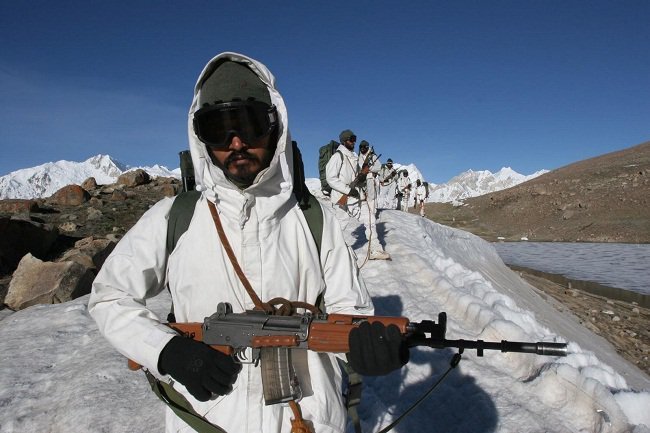
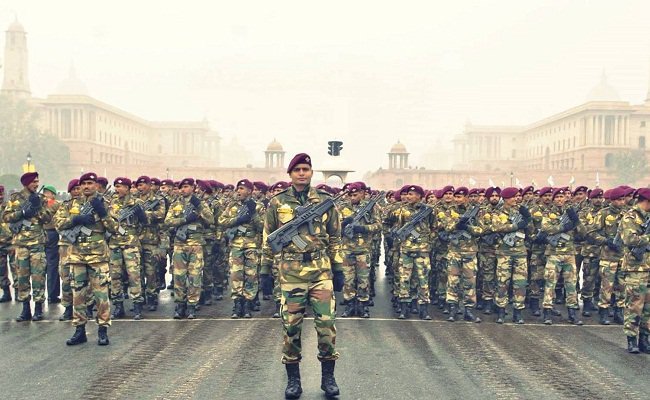
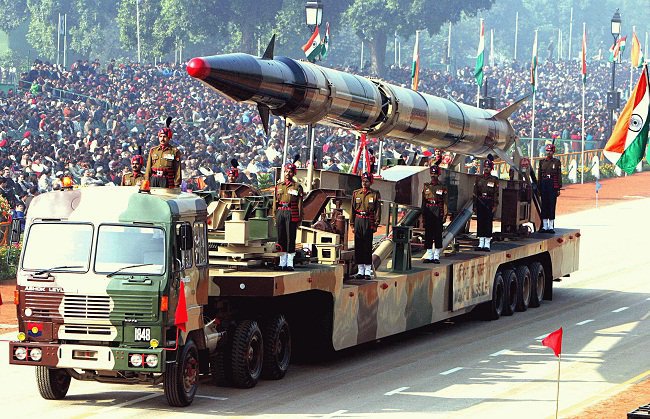
Top facts that will make you respect the Indian Military.

The Indian Armed Forces, consisting of the Indian Army, the Indian Air Force, the Indian Navy and the Indian Coast Guard are India’s shield and sword, which keep their enemies at bay and the people of India secure and free. They are respected and adored for their valor and sense of duty by the entire country. Many of us would know about their triumphs and stellar contributions to civilian life. But here are a few facts which will increase your respect for the Indian military ten-fold.

1. India controls the highest battlefield in the world, the Siachen glacier, at 5000 metres above Mean Sea Level (MSL).

2. India has the biggest "voluntary" army in the world.

All serving and reserve personnel have actually “opted” for service. There is a provision for conscription (forced recruitment) in the constitution, but it has never been used.

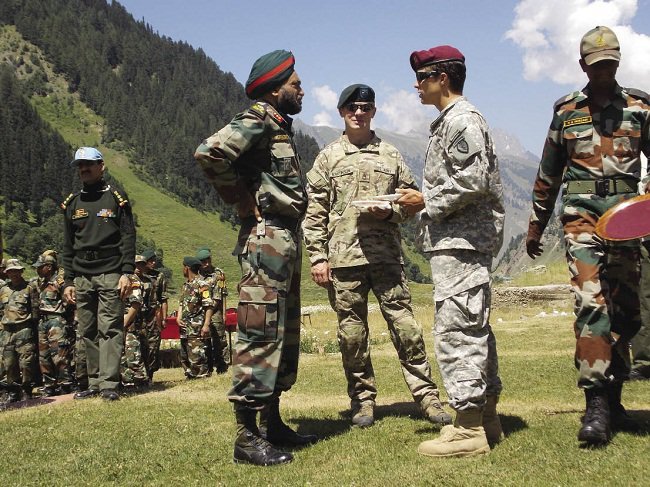
3. Indian soldiers are considered among the very best in high altitude and mountain warfare.

The Indian army’s High Altitude Warfare School (HAWS) is one of the most elite military training centers in the world and is frequented by Special Ops teams from the U.S, U.K & Russia. U.S Special Forces trained at HAWS before their deployment during the invasion of Afghanistan.

4. India covertly tested its nuclear arsenal in the early 1970s and late 1990s without the CIA even knowing what was happening.

Till date, it is considered to be one of the CIA’s biggest failures in espionage and detection.

5. Unlike other government organisations and institutions in India, there are no provisions for reservations based on caste or religion.

Soldiers are recruited based on their overall merit and fitness based on stringent tests and trials. And once a citizen of India joins the forces, he/she becomes a soldier. Nothing else. Nothing more.

6. In the Battle of Longewala, on which the famous Bollywood movie “Border” is based, there were only two casualties on the Indian side.

Advertisement

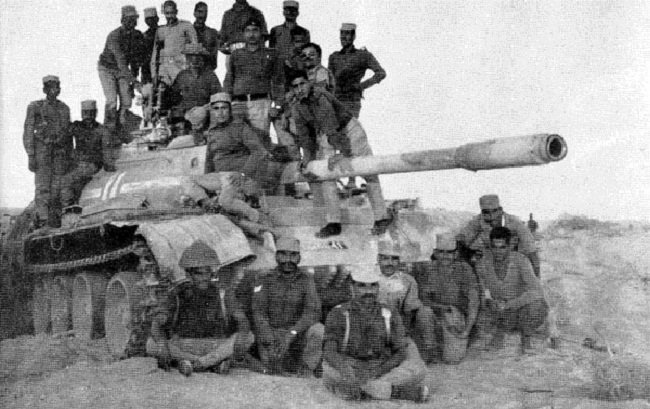
The Battle of Longewala was fought in December 1971 between India and Pakistan, in which just 120 Indian Soldiers with 1 jeep mounted M40 recoilless rifle held the fort against 2000 Pakistani soldiers backed by 45 tanks and 1 mobile infantry brigade. Despite being heavily out-numbered, the Indian soldiers held their ground throughout the night and with the help of the Air Force, were able to completely rout the aggressors.

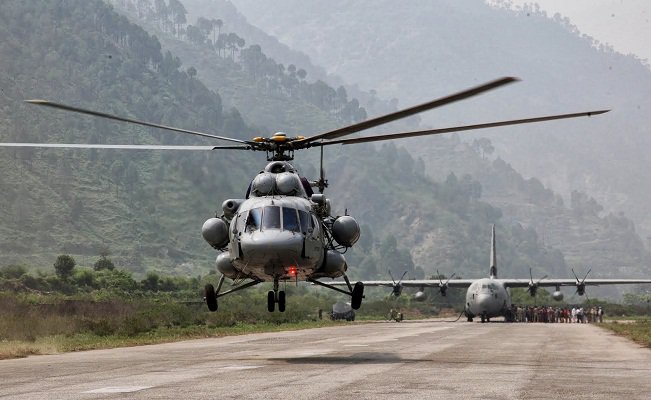
7. Operation Rahat (2013) was one of the biggest civilian rescue operations ever carried out in the world.

It was carried out by the Indian Air Force to evacuate civilians affected by the floods in Uttarakhand in 2013. It was the biggest civilian rescue operations in the world carried out by any Air Force using helicopters. During the first phase of the operation from 17 June 2013, the IAF airlifted a total of about 20,000 people; flying a total of 2,140 sorties and dropping a total of 3,82,400 kg of relief material and equipment.
Advertisement

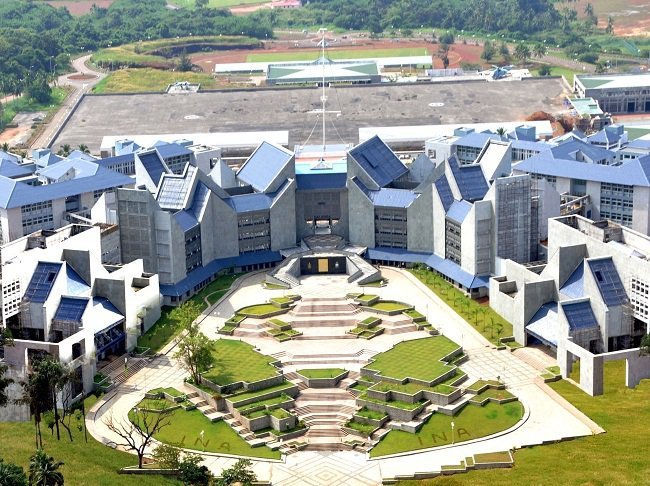
8. The Ezhimala Naval Academy in Kerala is the largest of its kind in Asia.

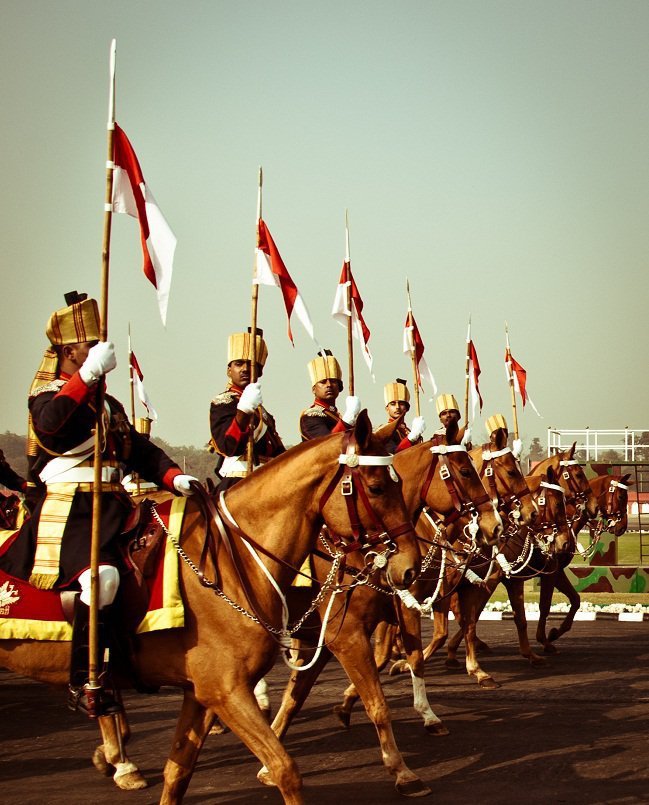
9. The Indian army has a horsed cavalry regiment. It is among one of the last 3 such regiments in the world.

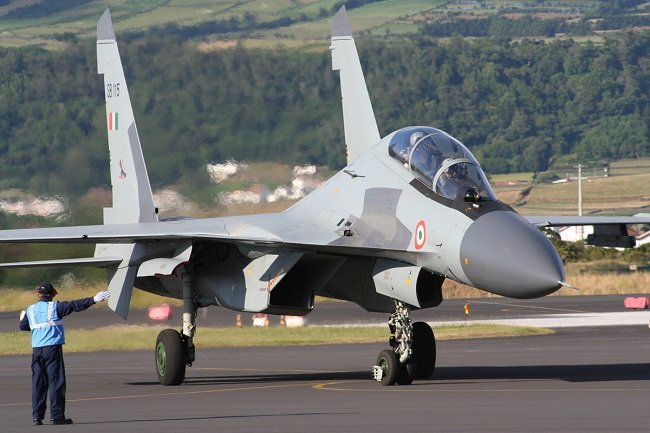
10. The Indian Air Force has an out-station base in Tajikistan and is seeking another in Afghanistan.

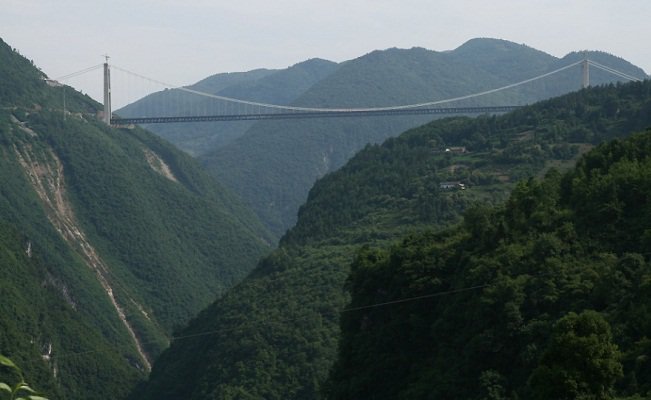
11. The Indian Army built the highest bridge in the world.

The Bailey Bridge is the highest bridge in the world. It is located in the Ladakh valley between Dras and Suru rivers in the Himalayan mountains. It was built by the Indian Army in August 1982.

12. The Military Engineering Services (MES) is one of the biggest construction agencies in India.

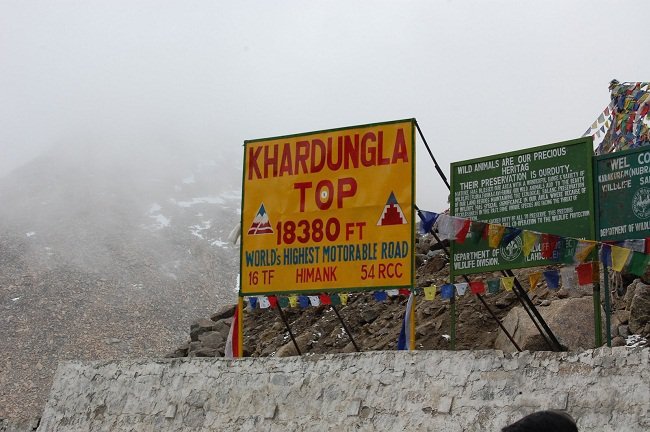
The MES and Border Roads Organisation (BRO) are together responsible for the construction and maintenance of some of the most awesome roads and bridges ever to have been built. To name a few, the Khardungla Pass (the highest motorable road in the world), the Magnetic Hill in Leh, etc.

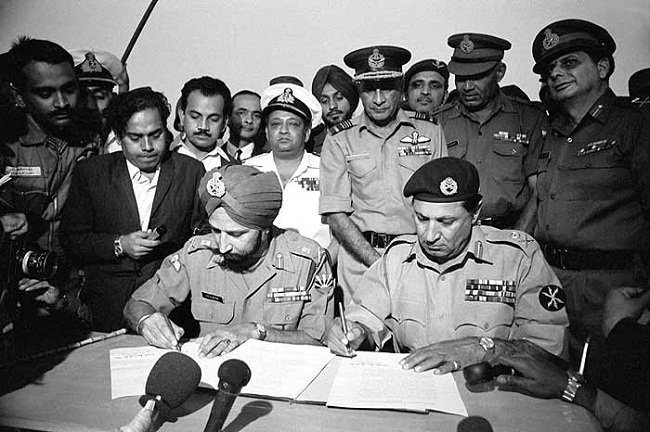
13. The Indo Pakistan War of 1971 came to end with the surrender of about 93,000 combatants and officials of the Pakistani Army.

This is the largest number of POWs taken into custody since World War II. The war resulted in the creation of the independent state of Bangladesh.

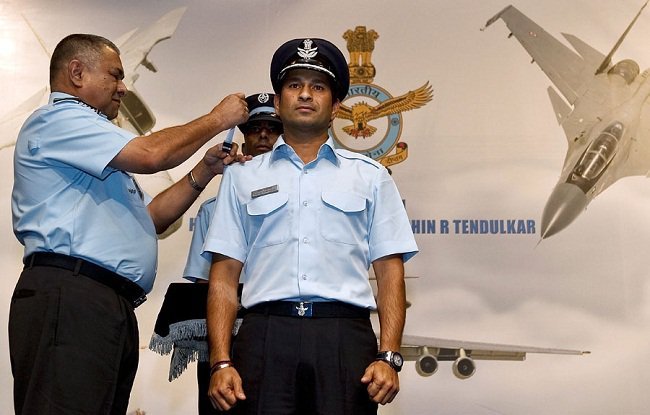
14. Many popular celebrities are often awarded honorary ranks in the armed forces.

While Sachin Tendulkar has been granted the rank of Honorary Group captain in the I.A.F, M.S Dhoni is an Honorary Lt Col in the Indian Army.


The Indian armed forces is not a thing to be joked with. No wonder someone one said "Good men are hard to find.It is because they are in the indian armed forces!


Kudos Heroes.


TOP TEN FACTS YOU MIGHT HAVE IGNORED ABOUT WORLD WAR TWO


1) France had more tanks, guns and men than Germany in 1940

It is always assumed that during the Second World War the Germans bludgeoned their way to victory with a highly modern and mechanised army and Air Force that was superior to anything the Allies could muster in May 1940. The reality was very different.
On 10 May 1940, when the Germans attacked, only 16 of their 135 divisions were mechanised – that is, equipped with motorised transport. The rest depended on horses and cart or feet. France alone had 117 divisions.
France also had more guns: Germany had 7,378 artillery pieces and France 10,700. It didn’t stop there: the Germans could muster 2,439 tanks while the French had 3,254, most of which were bigger, better armed and armoured than the German panzers.

2) The priority for manpower in the UK is surprising

Britain had decided before the war began that it would make air and naval power the focus of its fighting capability, and it was only after the fall of France that British powers realised that the Army would have to grow substantially too.
However, right up until the spring of 1944, the priority for manpower in the UK was not the navy, RAF, army, or even the merchant navy, but the Ministry of Aircraft Production. In the war, Britain alone built 132,500 aircraft, a staggering achievement – especially when considering that Fighter Command in the battle of Britain never had more than 750 fighters.

3) Allied merchant shipping losses were just 1 per cent

Allied shipping losses in the Second World War in the North Atlantic, Arctic and Home Waters were just 1.48 per cent. Overall, there were 323,090 individual sailings, of which 4,786 were sunk. Of these, 2,562 were British, but on average, there were around 2,000 British ships sailing somewhere around the world on any given day.
Convoys, for the most part, were pretty safe, even though a few suffered terribly. Independent sailings and stragglers from convoys suffered the worst, but faster independent sailings were needed to cut down on unloading time and congestion, which was the drawback of the convoy system.

4) Britain had the least rationing in Europe

France and Britain began the war without rationing and, while it was modestly introduced in Britain in January 1940, France had still resisted by the time they were defeated in June 1940. Germany, on the other hand, introduced rationing before the war and struggled to feed its armed forces and the wider population from start to finish.
The country’s demand for food from occupied territories led to a lot of hunger for a lot of people, including the urban French. British people never had to go hungry and, although a number of foods were rationed, there were lots that were not. Certainly, by 1945, Britain had it very easy compared with the rest of Europe.

5) The Japanese had Kamikaze rockets

It was not only the Germans who put rocket-power aircraft into the air in the Second World War. After their initial victories, the Japanese struggled to pace with US and British technology, but they did develop the Ohka – or ‘Cherry Blossom’, a rocket-power human-guided anti-shipping missile, which was used at the end of the war as a kamikaze weapon.
It had to be carried by a ‘mother’ plane to get within range, then once released would glide towards the target – usually a ship – before the pilot would fire the rockets and hurtle in at up to 600 mph. Ohka pilots were called Jinrai Butai – ‘thunder gods’ – but only managed to sink three Allied ships. It was a lot of effort and sacrifice for not very much.

6) Field Marshal Alexander was the most experienced battlefield commander of the war

Field Marshal Alexander was known to every Britain in the country by the war’s end, but he is less well known today. He had an extraordinary career, and was the only officer of the war to lead front-line troops at every rank.
After rising to acting Brigadier in the First World War, he led the Nowshera Brigade on the Northwest Frontier in the 1930s, the First Division in France in 1940, and British forces in Burma in 1942. He commanded Middle East Forces and two army groups before finally becoming Supreme Allied Commander in the Mediterranean.
He was also unique in the British Army for having commanded German troops in Latvia in 1919-20 during the war against Russia.

7) There was a difference between Allied & German fighter aces

The Luftwaffe had an entirely different approach to their ‘aces.’ Not only were pilots expected to fly on operations longer without breaks, they also actively helped their leading shots get big scores with lesser mortals protecting them while the ‘experten’ did the shooting.
On the Eastern Front they came up against badly armed and trained Soviet aircraft and soon the leading pilots began amassing huge scores. Bibi Hartmann was the leading ace of all time with 352 ‘kills’. The leading Allied ace of the entire war was RAF ace, James ‘Johnnie’ Johnson with 38 kills.

8) The missing Luftwaffe fighter plane

At the same time as Messerschmitt was developing the Bf109, rival firm Heinkel were also putting forward a new all-metal monoplane fighter, the He112. Early prototypes of each were pretty evenly matched in terms of speed and rate of climb and both the Me109E, as Messerschmitt’s fighter became, and the He112E had speeds of more than 350mph.
The latter could climb to 20,000 feet in 10 minutes. More importantly, it had a very sturdy inwardly-retracting undercarriage that made it easy to land for newly trained pilots, and a phenomenal range of some 715 miles, which was better even than the twin-engine Messerschmitt 110.
The He112 would have been the ideal partner to the Me109 – and its range was an advantage in the battle of Britain and elsewhere. However, while Willy Messerchmitt was a good party man and Göring had a special (and irrational) fondness for the Me110,  Heinkel had a whiff of Jewish blood – so the Heinkel fighter was dropped.

9) The American Parsons Jacket was designed with comfort in mind

The standard and most widely worn US Army field tunic of the war was the M41, better known as the Parsons Jacket. This was introduced in 1941 following trials by the US 5th Division in exercises in the Midwest and Alaska in the summer and autumn of 1940, and was given its name after Major-General Parsons, the divisional commander.
The design, however, was based on a pre-war civilian windcheater: the rapidly expanding US Army recognised that most of its recruits were conscripts and that comfort, durability and practicality were more important than slick military bearing. With a zip and button front, it was a simple, lightweight and warm short jacket that required little tailoring and wasted no material, and which was designed in consultation with Esquire magazine’s fashion desk.

10) Germany’s motor transport was minimal

German wartime propaganda that the Third Reich had a highly mechanised and modern army is still widely believed, but actually, in 1939, Germany was one of the least automotive societies in the western world, despite the autobahns and Grand Prix victories of Mercedes.
On the outbreak of war, there were 47 people for every motor vehicle in Germany. In Britain, that figure was 14, in France it was eight, and in the USA it was four. This meant the German army was largely dependent on railways, horses and carts and the feet of its soldiers to get around; there were only 16 mechanised divisions in the army in May 1940.
More importantly, however, such comparatively low numbers of motor vehicles meant there were fewer factories, fewer workshops, fewer petrol pumps and fewer people who knew how to drive. In other words, it was a shortage that could not be easily rectified.

THESE MILITARY RETREAT ARE SO AWESOME THAT YOU CAN SKIP CHECKING.

George Washington’s escape from New York

american revolution, military retreats, battle of long island
Continental troops retreating under cover of darkness.
Less than two months after the July 1776 signing of the Declaration of Independence, General George Washington’s Continental Army was in a fight for its life. The Patriots had failed to check a British amphibious attack on Long Island, and following a disastrous defeat at the Battle of Brooklyn, some 9,000 Americans were pinned against the East River. While British General Sir William Howe settled in for a siege, Washington ordered his men to round up all the flat-bottomed boats they could find. As drenching rains fell on the night of August 29, he used his hastily assembled flotilla to silently ferry unit after unit across the river to the safety of Manhattan. The regiment of Massachusetts fishermen that manned the boats used rags to muffle the sound of their oars, and campfires were left burning to deceive the British.
Many Continentals had still yet to be evacuated from Brooklyn by sunrise, but luckily for Washington, a dense fog rolled in and masked the final stages of the withdrawal. By the time the British finally realized what was happening, all 9,000 colonists had slipped away along with most of their equipment and artillery. “In the history of warfare I do not recollect a more fortunate retreat,” Continental officer Benjamin Tallmadge later wrote.

The March of the Ten Thousand

military retreat, ten thousand
The Ten Thousands in battle against the Persians.
The Ten Thousand were a band of Greek mercenaries hired by the Persian prince Cyrus the Younger to wage a civil war against his brother, King Artaxerxes II. The soldiers of fortune arrived near modern-day Baghdad in 401 B.C. and fought valiantly at the Battle of Cunaxa, but after Cyrus was killed, they were left stranded on enemy turf. The historian and soldier Xenophon later described their flight to safety in his legendary work “Anabasis.” Rather than turning on one another or surrendering, the gang of toughs elected new leaders and began an epic fighting retreat out of Persia, often doing battle by day and traveling by night. The 1,500-mile journey pitted them against bands of hostile natives and a bitterly cold winter, but after nine months of running they finally sighted the Black Sea to celebratory cries of “Thalatta! Thalatta!” (“The sea! The sea!”) Amazingly, more than three-quarters of the original mercenary army later returned home to Greece.

The Allied evacuation of Gallipoli

military retreats, gallipoli
Allied troops at Anzac Cove during the Gallipoli campaign. (Credit: Hulton Archive/Getty Images)
In April 1915, British, French, Australian and New Zealand forces launched an amphibious invasion of the Ottoman Empire via the Gallipoli Peninsula. Their landings were met with fierce resistance from Gallipoli’s Turkish defenders, and most of the Allied troops were unable to advance more than a few hundred yards past their beachheads. The campaign soon settled into a trench warfare stalemate. By the time the Allies finally began an evacuation in December 1915, they had suffered over 200,000 casualties.
The Gallipoli invasion had been one of World War I’s great blunders, but the retreat was a stroke of genius. As part of a multi-phase operation, troops were quietly ferried off the beaches right under the Turks’ noses. Extra tents and cooking fires were used to give the impression of larger numbers, and empty equipment boxes were left on the beach to convince the enemy that nothing had been removed. Near the end of the evacuation, some soldiers even covered their getaway with so-called “drip guns”—phantom rifles rigged with strings and water weights to make them fire automatically. The subterfuge worked to perfection. Despite early predictions that a retreat would cost them half their troops, the Allies escaped Gallipoli with only a handful of casualties.

The flight of the Nez Perce

military retreats, nez perce, chief joseph
Chief Joseph (Credit: GraphicaArtis/Getty Images)
In 1877, the United States government seized the ancestral lands of the Nez Perce Indians and ordered them to move to a reservation in Idaho. A band led by the charismatic Chief Joseph reluctantly complied, but after a group of disgruntled warriors killed several white settlers, the tribe found itself at war with the U.S. Army. What followed was one of the greatest fighting retreats in military history. Hoping to find sanctuary in Canada, the Nez Perce led their pursuers on a 1,400-mile chase across Idaho, Wyoming and Montana. Despite numbering just 700—only around 200 of whom were warriors—they outmaneuvered or defeated some 2,000 U.S. cavalrymen in multiple battles and skirmishes. General William Tecumseh Sherman later noted that the Indians “fought with almost scientific skill, using advance and rear guards, skirmish lines and field fortifications.” Finally, after 15 weeks on the run, the Nez Perce were cornered after October 1877’s Battle of Bear Paw and forcibly moved to a reservation. They were just 40 miles from the Canadian border. “My heart is sick and sad,” Chief Joseph said in a famous surrender speech. “From where the sun now stands, I will fight no more forever.”

The Dunkirk evacuation

military retreats, dunkirk, world war
Evacuation of Dunkirk. (Credit: Imperial War Museum)
World War II’s “Miracle of Dunkirk” began on May 27, 1940, when the first of some 338,000 British, French and Belgian troops were evacuated from the French coast. The Allies had retreated to the sea a few days earlier after failing to block Germany’s blitzkrieg invasion of France and the Low Countries. They were cornered and facing imminent destruction, but when Adolf Hitler unwisely halted his Panzer tanks’ advance, the British Expeditionary Force was able to fortify the port of Dunkirk and initiate a frantic retreat codenamed “Operation Dynamo.”
As the Royal Air Force dueled with the Luftwaffe in the skies overhead, the British Admiralty cobbled together a fleet of over 900 Navy ships, merchant vessels, ferries, and paddle steamers and began transporting soldiers to the English mainland under heavy fire. Scores of civilians also chipped in by piloting fishing boats and pleasure craft across the heavily mined English Channel. The British initially feared it would only be possible to retrieve 45,000 men over the course of 48 hours, but the ragtag armada eventually spent nine days executing the largest sea evacuation in history. Allied losses were still sobering—many ships were sunk and some 40,000 men were left behind and captured—but those that escaped later played a crucial role in the continued fight against Nazi Germany.you may download the movie on our blog here. just scroll down to look for the apple adverts and click on one.

The U.N. retreat from Chosin Reservoir

miltary retreats, korean war
View of U.S. troops as they march south from Koto-ri during the Battle of Chosin Reservoir, December 1950. (Credit: PhotoQuest/Getty Images)
“Retreat, hell! We’re not retreating, we’re just advancing in a different direction.” That was how Major General Oliver P. Smith supposedly described the Korean War’s Battle of Chosin Reservoir, where a United Nations detachment made a 78-mile fighting withdrawal along a muddy mountain corridor. The force of U.S. Marines, Army troops and British Royal Marines had been ambushed and surrounded in late-November 1950 by a much larger Chinese army. Led by Smith’s 1st Marine Division, the allies broke out of the enemy encirclement and began a two-week trek to the seaport of Hungnam. Along with enduring arctic conditions—temperatures dropped to 34 degrees below zero—they also battled the Chinese at places like Hell Fire Valley and Funchilin Pass, where combat engineers famously assembled an airdropped bridge after the original one was destroyed. The veterans of the “frozen Chosin” later reached the evacuation point at Hungnam in mid-December. By then, the retreating U.N. army had suffered 17,000 casualties compared to a staggering 60,000 for the Chinese.

Mao Zedong’s “Long March”

military retreats, long march, mao zedong
Painting depicting Mao Zedong during the Long March. (Credit: DeAgostini/Getty Images)
The Chinese Communist Party owes its early survival to a retreat. The exodus began in October 1934, when the First Red Army became trapped at its base in Jiangxi Province by Nationalist forces under Chiang Kai-shek. Once the situation grew desperate, future party leader Mao Zedong and some 86,000 other Communists broke out of the encirclement and fled west. The early stages of their retreat were dogged by Nationalist ground attacks and bombings. Nearly half the Red Army was anhhililated in a matter of weeks, but the survivors continued the flight for a full year, braving starvation, disease and perilous mountain crossings before finally arriving at new headquarters in the northern province of Shaanxi. Mao elbowed his way into power during the journey, and he later used the legend of the “Long March” to cement his position and recruit scores of Chinese to the Communist cause. Historians still debate certain aspects of the ordeal, but there’s no doubt it was brutal. According to some estimates, nine out of every 10 people who began the retreat perished along the way. 


Thanks for reading don't forget to comment and share.

Wednesday, 11 July 2018

COUNTRIES WITH THE HIGHEST MILITARY BUDGET

Global military spending reached $1.739 trillion in 2017, up 1.1% from 2016, according to a report released on Wednesday from the Stockholm International Peace Research Institute.
"Continuing high world military expenditure is a cause for serious concern," Ambassador Jan Eliasson, chair of the SIPRI governing board, said in the report. "It undermines the search for peaceful solutions to conflicts around the world."
China's military spending increased again in 2017, up 5.6% from 2016, SIPRI reported, as did India's, up 5.5% from 2016.
Russia's military spending decreased for the first time since 1998, down 20% from 2016, SIPRI reported.
"The increases in world military expenditure in recent years have been largely due to the substantial growth in spending by countries in Asia and Oceania and the Middle East, such as China, India and Saudi Arabia," Nan Tian, a SIPRI researcher, said in the report. "At the global level, the weight of military spending is clearly shifting away from the Euro–Atlantic region."
Although the US' budget remained unchanged, it "spent more on its military than the next seven highest-spending countries combined," SIPRI reported.
Here are the 15 countries that spent the most on their militaries in 2017:

15. Turkey

Image result for turkey military


Budget: $18.2 billion


14. Canada

Canadian Army soldiers attack during Silver Arrow 2017, the multinational military drills involving eleven NATO member countries in Adazi, Latvia October 29, 2017.  
Budget: $20.6 billion


13. Australia


Budget: $27.5 billion


12. Italy

A soldier patrols in front of the Colosseum in Rome, Italy, April 14, 2017.  A soldier patrols in front of the Colosseum in Rome, Italy, April 14, 2017.
(Reuters)
Budget: $29.2 billion


11. Brazil

A Brazilian Army soldier patrols the border with Colombia during a training to show efforts to step up security along borders, in Vila Bittencourt, Amazon State, Brazil, January 18, 2017.  
Budget: $29.3 billion


10. South Korea

10. South Korea  10. South Korea
(Cpl. Matthew J. Bragg/US Marine Corps)
Budget: $39.2 billion


9. Germany

Leopard 2 tanks are seen during a German army, the Bundeswehr, training and information day in Munster, Germany October 9, 2015.  Leopard 2 tanks are seen during a German army, the Bundeswehr, training and information day in Munster, Germany October 9, 2015.
(Reuters)
Budget: $44.3 billion


8. Japan

Members of Japan's Self-Defence Forces' infantry unit march during the annual SDF ceremony at Asaka Base, Japan.  Members of Japan's Self-Defence Forces' infantry unit march during the annual SDF ceremony at Asaka Base, Japan.
(Reuters/Kim Kyung Hoon)
Budget: $45.4 billion


7. United Kingdom

Prime Minister Theresa May passes tanks as she visits 1st Battalion The Mercian Regiment (Cheshire, Worcesters and Foresters, and Staffords) at their barracks at Bulford Camp on September 29, 2016  Prime Minister Theresa May passes tanks as she visits 1st Battalion The Mercian Regiment (Cheshire, Worcesters and Foresters, and Staffords) at their barracks at Bulford Camp on September 29, 2016
(Reuters)
Budget: $47.2 billion


6. France

French soldier stands guard under the Eiffel Tower in Paris  French soldier stands guard under the Eiffel Tower in Paris
(Thomson Reuters)
Budget: $57.8 billion


5. India

Indian soldiers march during the Republic Day parade in New Delhi. play Indian soldiers march during the Republic Day parade in New Delhi.
(Reuters)
Budget: $63.9 billion


4. Russia

4. Russia play 4. Russia
(Sergei Karpukhin/Reuters)
Budget: $66.3 billion


3. Saudi Arabia

Saudi soldiers wait to greet Saudi Prince Khaled bin Sultan bin Abdul-Aziz, Assistant Minister for Defence and Aviation, during his visit to the Khoba frontline border with Yemen, January 27, 2010. play Saudi soldiers wait to greet Saudi Prince Khaled bin Sultan bin Abdul-Aziz, Assistant Minister for Defence and Aviation, during his visit to the Khoba frontline border with Yemen, January 27, 2010.
(Reuters)
Budget: $69.4 billion


2. China

           play    play People's Liberation Army (PLA) soldiers shout as they practise with knives during a training session on snow-covered ground at a military base in Heihe, Heilongjiang province March 18, 2015.
(REUTERS/China Daily)
Budget: $228 billion


1. United States

A US Marine fires an M777-A2 Howitzer in Syria, June 1, 2017.  A US Marine fires an M777-A2 Howitzer in Syria, June 1, 2017.
(Marine Corps photo by Sgt. Matthew Callahan)
Budget: $610 billion


THANKS FOR READING.

William H. Carney: The first black soldier to earn the Medal of Honor

Image result for william h carvey
Of all the men who wore blue uniforms in the Civil War, none felt more keenly the purpose of his mission than the African American soldier. Every marching step, every swing of a pick and every round fired at Confederate enemies gave him a chance to strike a blow against slavery and prove himself equal to his white comrades.

U.S. Colored Troops were consistently good fighters, performing well in every engagement in which they fought. Even their enemies had to grudgingly admit that fact. One USCT member, William H. Carney, transcended good to become great, and was the first black U.S. soldier to earn the Medal of Honor.
On February 17, 1863, at age 23, Carney heeded the call for African Americans to join a local militia unit, the Morgan Guards, with 45 other volunteers from his hometown of New Bedford, Mass. That unit would later become Company C of the 54th Massachusetts Infantry Regiment.

There was something unique about the new regiment, commanded by Colonel Robert Gould Shaw; it was an all-black unit with the exception of senior officers and a few senior non-commissioned sergeants. The 54th Massachusetts was created to prove that black men could be good soldiers.
Carney was born a slave on February 29, 1840, at Norfolk, Va. His father, also named William, escaped slavery, reaching freedom through the underground railroad. William Sr. then worked hard to buy the freedom of the rest of his family. The free and reunited family settled in New Bedford in the second half of the 1850s. Young William learned to read and write, and by age 15 he was interested in becoming a minister.

He gave up his pursuit of the ministry, however, to join the Army. In an 1863 edition of the Abolitionist newspaper The Liberator, Carney stated: “Previous to the formation of colored troops, I had a strong inclination to prepare myself for the ministry; but when the country called for all persons, I could best serve my God serving my country and my oppressed brothers. The sequel in short — I enlisted for the war.”

That career change had momentous impact on Carney’s life, as the 54th Massachusetts had a chance to prove its mettle in the July 18, 1863, Battle of Fort Wagner outside of Charleston, S.C. During the fight, the 54th made heroic attacks on the garrison, and Carney’s bravery earned him a promotion to sergeant and the U.S. military’s most prestigious award.
Fort Wagner on Morris Island guarded the entrance to the harbor of Charleston. Shaw and the 600 men of the 54th Massachusetts would spearhead the federal assault from a slim strip of sand on the east side of the fort, which faced the Atlantic Ocean.


The 54th burrowed into a sand dune about 1,000 yards from Fort Wagner. Behind it was the 6th Connecticut. Federal land and sea artillery bombarded the fort all day long. By nightfall, orders were passed down and the 54th stood up, dressed ranks and attacked in two wings of five companies each.
As the men advanced they were immediately hit by a barrage of canister, musketry and shelling from the fort. A bullet struck the 54th’s color sergeant, and as the wounded man faltered, Carney threw down his gun, seized the flag and moved to the front of the 54th’s assaulting ranks. He soon found himself alone, on the fort’s wall, with bodies of dead and wounded comrades all around him. He knelt down to gather himself for action, still firmly holding the flag while bullets and shell fragments peppered the sand around him.
Carney surveyed the battlefield and noticed that other Union regiments had attacked to his right, drawing away the focal point of the Rebel resistance. To his left he saw a large force of soldiers advancing down the ramparts of the fort. At first he thought they might be were Union forces. Flashes of musketry soon doomed his hopes. The oncoming troops were Confederates.
He wound the colors around the flagpole, made his way to a low protective wall and moved along it to a ditch. When Carney had passed over the ditch on his way to the fort, it was dry. But now it was waist deep with water.
He seemed to be alone, surrounded by the wreckage of his regiment. Carney wanted to help the wounded, but enemy fire pinned him down. Crouching in the water, he figured his best chance was to plot a course back to Federal lines and make a break for it.
Carney rose to get a better look. It was a fateful move. As he later wrote: “The bullet I now carry in my body came whizzing like a mosquito, and I was shot. Not being prostrated by the shot, I continued my course, yet had not gone far before I was struck by a second shot.”
Despite carrying two slugs in his body, Carney kept moving. Shortly after being hit the second time he saw another Union soldier coming in his direction. When they were within earshot, Carney hailed him, asking who he was. The Yank replied he was with the 100th New York, and asked if Carney was wounded. Carney said he had indeed been shot, and then flinched as a third shot grazed his arm.
The 100th soldier came to his aid and helped him move farther to the rear. “Now then,” said the New York soldier, “let me take the colors and carry them for you.” Carney, though, would not consent to that, no matter how battered he was. He explained that he would not be willing to give the colors to anyone who was not a member of the 54th Massachusetts.
The pair struggled on. They did not get far before yet another bullet hit Carney, grazing him in the head. The two men finally managed to stumble to their own lines. Carney was taken to the rear and turned over to medical personnel. Throughout his ordeal, he held on to the colors.
Cheers greeted him when Carney finally staggered into the ranks of the 54th. Before collapsing, he said, “Boys, the old flag never touched the ground!”
During the battle, Company C of the 54th Massachusetts was able to, for a short time, capture a small section of Fort Wagner. The 54th suffered 272 killed, wounded or missing out of the 600 in the battle. Colonel Shaw was among the dead. Total Union casualties were 1,515 out of about 5,000 in the assault force, while the Confederates had 174 casualties out of about 1,800 defenders.
Although the Union forces were repulsed and had to lay siege to Fort Wagner, which the Confederates abandoned two months later, the 54th was widely hailed for its bravery. Like a pebble dropped into a puddle, the regiment’s heroism had a ripple effect, spurring thousands of other black men to join the Union Army. Even Abraham Lincoln noted that the 54th’s bravery at Wagner was a key development that helped secure final victory for the North.
“The bullet I now carry in my body came whizzing like a mosquito, and I was shot. Not being prostrated by the shot, I continued my course, yet had not gone far before I was struck by a second shot.”
William Carney recovered from the four wounds he received at Fort Wagner, and word soon spread of his unselfish actions. When Carney’s commanders heard about his conduct, he was promoted to sergeant. Later in the war, the 54th fought a rear-guard action covering a retreat at the Battle of Olustee, but Sergeant Carney could not participate in that engagement due to the lingering effects of his wounds. Because of his injuries he was discharged from the Army a little more than a year after the battle, on June 30, 1864.


Image result for william h carvey
Carney subsequently married Susannah Williams, also of New Bedford, on October 11, 1865. They had one child who later became an accomplished music teacher of the New Bedford area.
In 1866 William Carney was appointed superintendent of streetlights for the city of New Bedford. He then went to California to seek his fortune but returned to New Bedford in 1869 and took a job as a letter carrier for the Postal Service. He worked at that job for 32 years before retiring. After retirement he was employed as a messenger at the Massachusetts State House, where in 1908 he would be fatally injured in an accident that trapped his leg in an elevator.
William H. Carney’s valor at Fort Wagner was honored on May 23, 1900, when he was awarded the Medal of Honor. That was almost 40 years after he so proudly served with the 54th Massachusetts Regiment. He was the first black soldier to receive the award. When asked about his heroic actions, he simply said, “I only did my duty.”

This article is sourced as it originally appeared in the February 2012 issue of Civil War Times Magazine, a Military Times sister publication. For more information on Civil War Times Magazine and all of the HistoryNet publications, visit HistoryNet.com by all for military.